
The short answer
Lisa Reihana’s project has a source image, an artistic response and specific installations. Compare all three before assigning a date, length or viewing experience to the work.
Reading the evidence
What each record establishes
Keep the subject of each record and the conclusion it can support in separate columns.
| Record | Identifies | Keep separate |
|---|---|---|
| Wallpaper | A scenic print source for the later project. | The event it imagines or the artist’s response. |
| 2015 interview | Maker’s account and one presentation caption. | A specification for every edition. |
| Venice and catalogue | Two differently described viewing formats. | Undocumented production or conversion steps. |
Identify the image being answered
Te Papa identifies an early nineteenth-century wallpaper associated with Jean-Gabriel Charvet and Joseph Dufour. Its panels brought an imagined Pacific scene to interiors far from the places depicted. A viewer could move along the wall, but the figures remained fixed and the scene carried the assumptions of its producers.
Reihana’s interview explains why that source interested her and why a panoramic video setting offered a way to answer it. What mattered was not just bringing a still image to life. The work could repopulate the landscape with performers and change the point from which a viewer experiences the encounters.
Match the technology to the record
The caption accompanying QAGOMA’s 2015 interview names a four-channel, 32-minute presentation. Te Papa describes the Venice project as a five-channel work. The QAGOMA collection record now lists a single-channel, 64-minute format. These are specifications attached to separate records; a reader should not combine them into one technical description.
Make a row for each source and note whether it describes an interview-era presentation, a specific exhibition or a collection format. The rows can document differences without assuming exactly when or how one configuration was converted into another.
Try a label for a viewer
Write a caption for the historical wallpaper and another for one specified video presentation. In the second, name what a viewer can experience through movement, performance or sound. Then ask what would disappear if only a still image were reproduced. That last question helps explain why the display record matters.
Continue the chronology
Related history guides
Biography context
Explore New Zealand through connected lives
Connected biographies
Explore the people behind the records
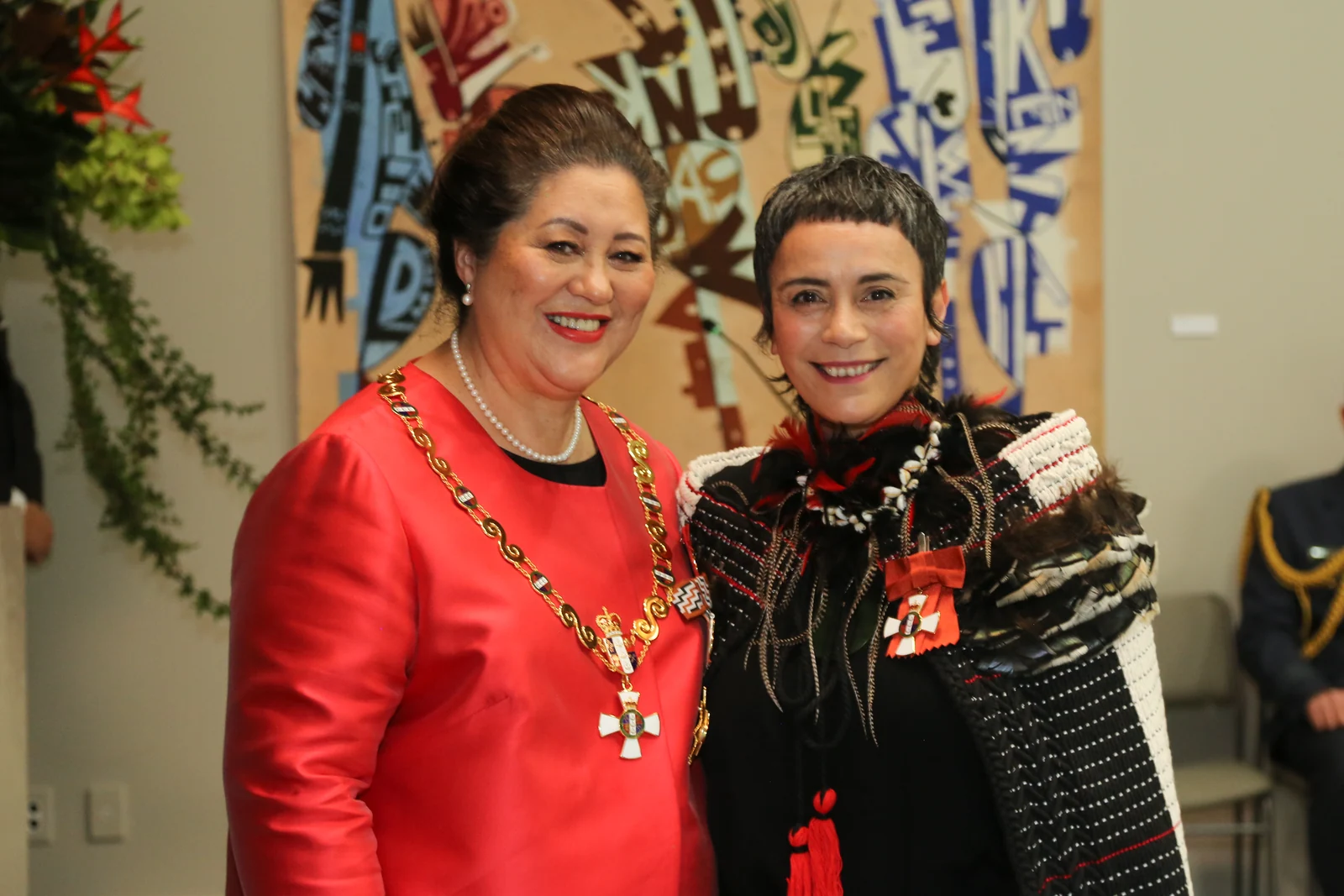
b. 1964
Lisa Reihana
Multimedia artistA Māori artist whose time-based works reconsider the settings and voices through which Pacific histories are represented.Read biographyQuick answers
Common questions
- Why do the sources give different channel counts?
- They describe different records or presentation formats. Keep the number attached to the particular record that supplies it.
Primary and institutional sources
How this history was checked
Selected first-person, exhibition and collection records support the factual claims. The reading exercise and comparison are editorial interpretations. This article was reviewed on 5 November 2026.