
The short answer
If a nutrient restores growth inhibited by a related compound, the reversal narrows the next question. The assay still leaves work to do.
Evidence at a glance
What can restored growth establish about an inhibitor?
Read each observation alongside the particular inference it supports.
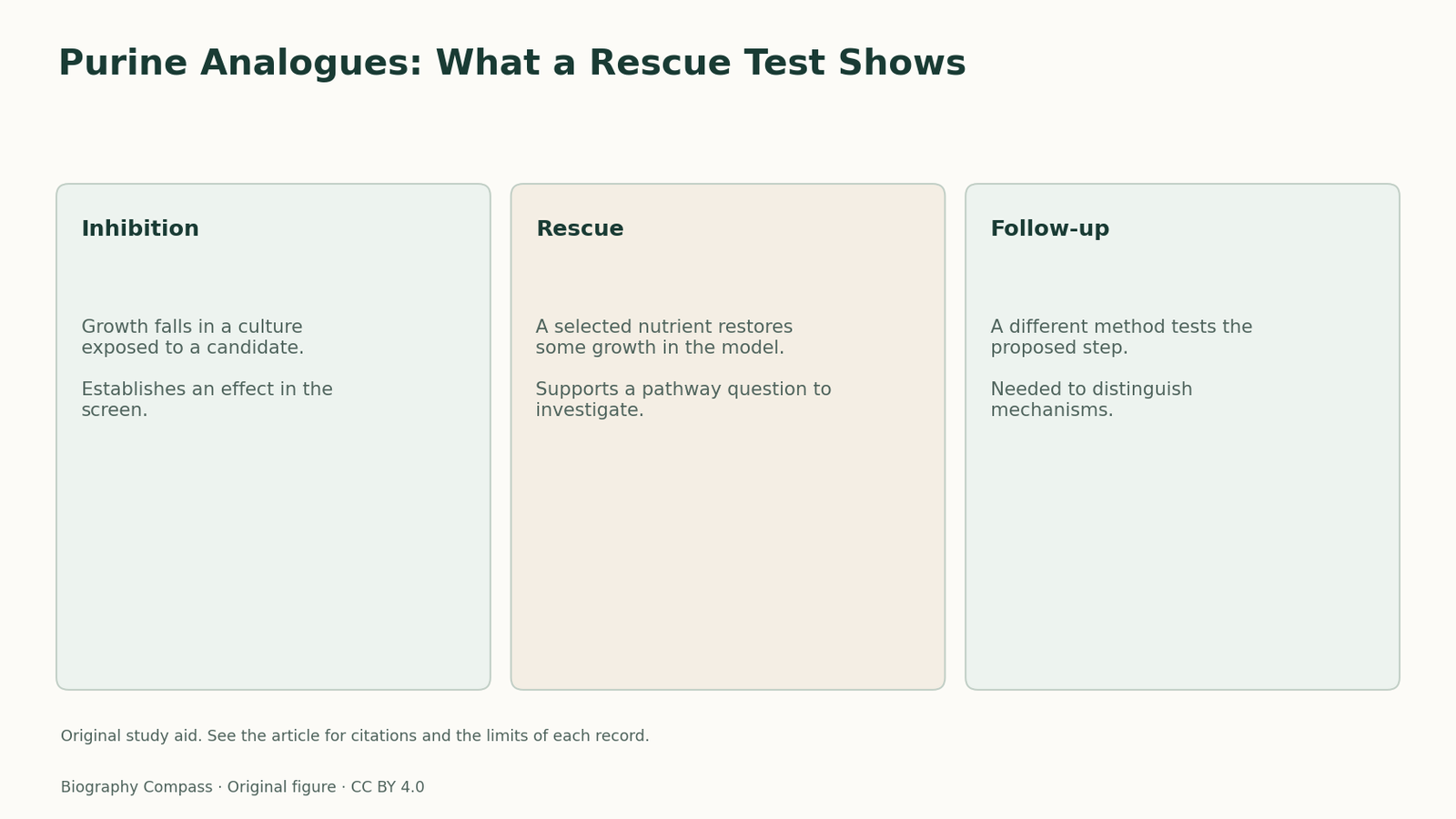
| Record or example | Observation | Interpretation |
|---|---|---|
| Inhibition | Growth falls in a culture exposed to a candidate. | Establishes an effect in the screen. |
| Rescue | A selected nutrient restores some growth in the model. | Supports a pathway question to investigate. |
| Follow-up | A different method tests the proposed step. | Needed to distinguish mechanisms. |
The historical screening clue
Elion recalls a study in which 2,6-diaminopurine inhibited growth of Lactobacillus casei. Adenine could reverse that inhibition under the conditions she discusses. The pattern suggested a possible connection between how the compounds were processed. The group followed it by examining resistant bacteria and by studying how candidates acted in other systems.
Sources for this section: [1]
Build a three-row control
In an invented table, assign a culture with neither compound a growth score of 100. With inhibitor alone, set the score at 25. With inhibitor and nutrient A, set it at 85. The third score shows a partial rescue. Add a fourth culture with A alone: if A greatly raises growth even without inhibitor, a general growth benefit becomes a competing interpretation. All four rows help explain why reversal is a comparison, rather than a direct view of a reaction.
What the model leaves open
Try a second nutrient, B, with inhibitor present. If B fails to restore growth in the classroom table, the result supports a more specific association with A. It still leaves several ways for A to matter. It could change entry into the cell, supply a needed metabolite or compete at a processing step. Distinguishing those explanations calls for measurements other than growth alone.
Follow the compound across records
Elion’s lecture describes candidate activity and adverse effects in other settings. A screen asks which substances are worth investigating. Questions about what happens in a body and whether an intervention is useful require additional evidence. Comparing the lecture to Hitchings’s different enzyme focus also helps readers keep the research program wider than any one compound or assay.
Continue the chronology
Related history guides
Biography context
Explore United States through connected lives
Connected biographies
The researcher behind the records
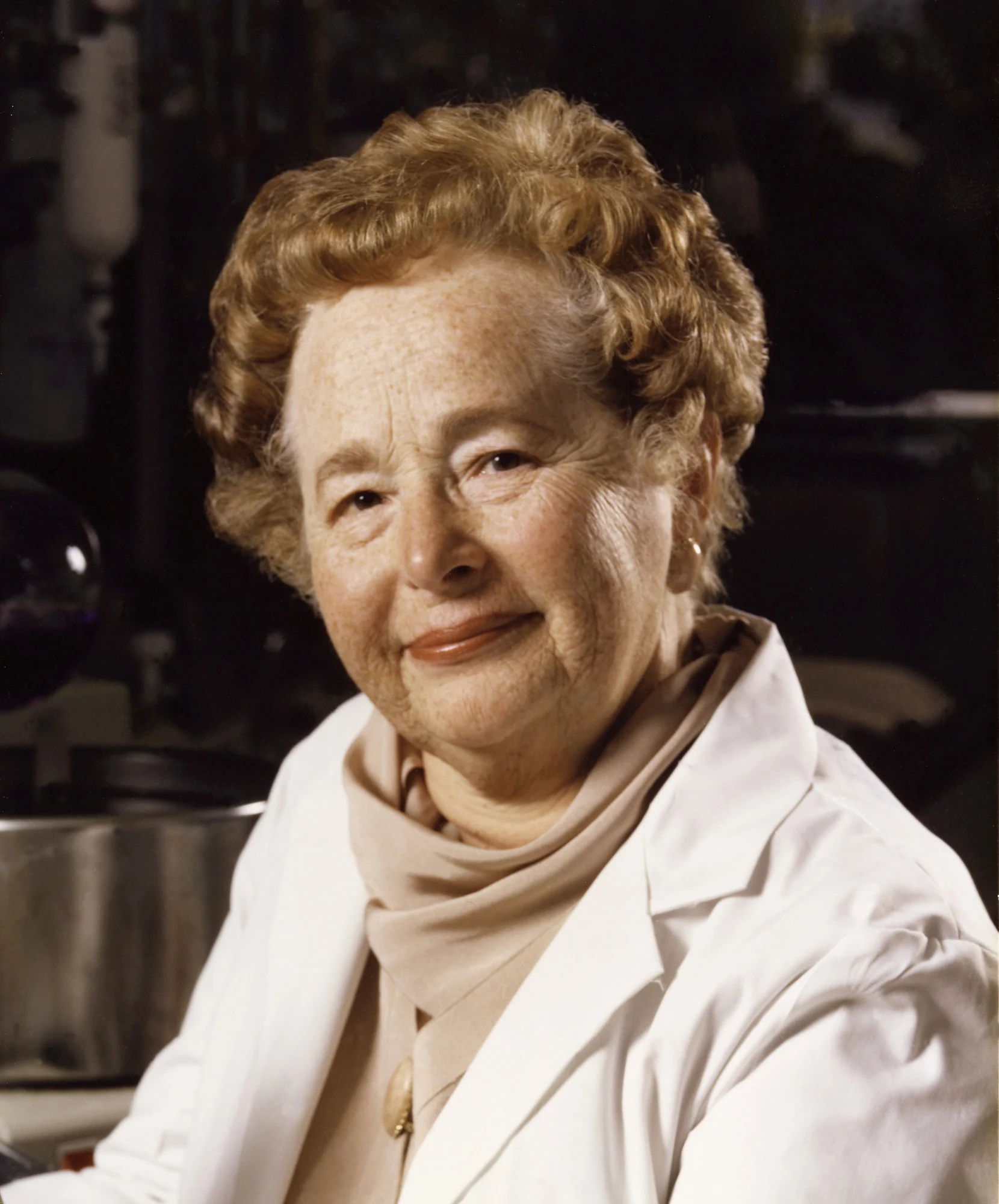
1918–1999
Gertrude Elion
Medicinal chemistElion investigated compounds that interfere with nucleotide metabolism.Read biographyQuick answers
Common questions
- Does a rescue identify one enzyme by itself?
- The assay narrows hypotheses; identifying a particular enzyme requires additional evidence.
Primary and institutional sources
How this history was checked
The notes distinguish period evidence, later interpretation, and original exercises. This article was reviewed on 5 November 2026.