
The short answer
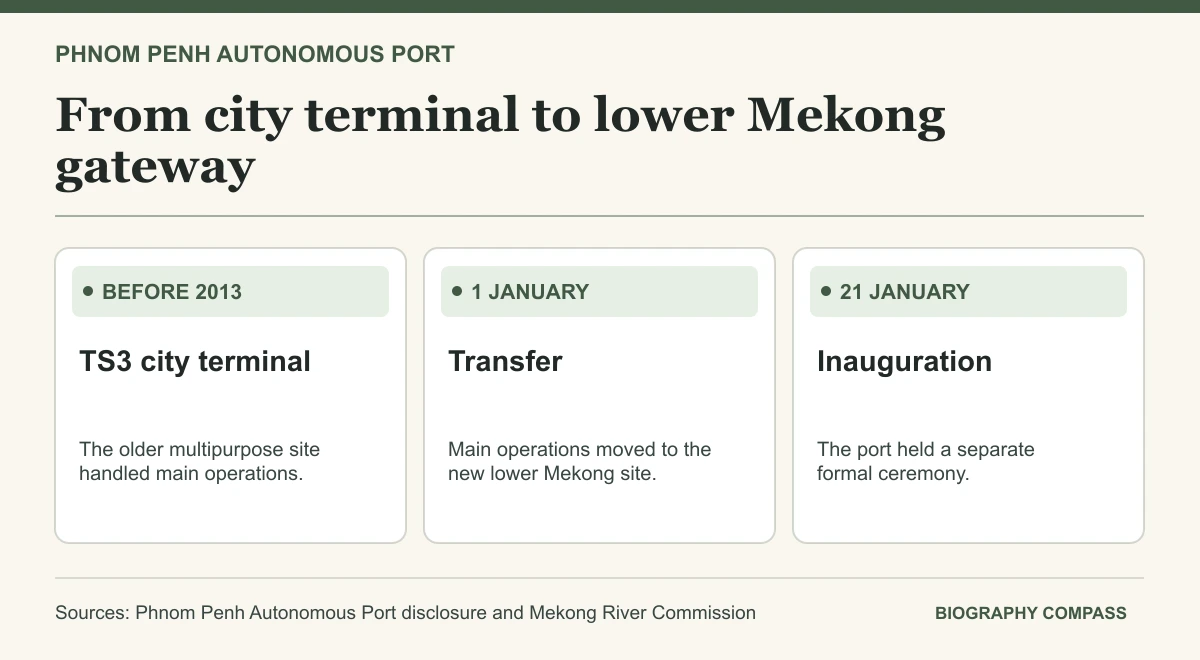
Phnom Penh Autonomous Port transferred its main cargo operations from its older city terminal to LM17 in January 2013. The lower Mekong site provided container yard space and road approaches outside the urban terminal. The port profiles identify different jobs for the downtown facilities and the newer container gateway.
Compare the records
Which Phnom Penh terminal is named
The port is an operator with several locations. The terminal name identifies the handling site.
| Terminal | Location or access | Historical role |
|---|---|---|
| TS3 | Sisowath Quay on the Tonle Sap in Phnom Penh | The older multipurpose facility and the port’s headquarters. |
| LM17 | Lower Mekong in Kien Svay, Kandal | The new handling site for the main container operation outside the city centre. |
Chronology
A timeline of the turning points
Construction begins
The Mekong River Commission records the start of work on the terminal.
Main operations move
The port’s later disclosure document dates the shift from TS3 to LM17 to this day.
Inauguration
The port’s disclosure identifies the formal ceremony and Hun Sen’s participation.
Port operator enters the exchange’s issuer archive
The Cambodia Securities Exchange records the company’s listing.
What moved in January 2013
The port’s disclosure document records that main operations shifted from TS3 on 1 January 2013. It gives 21 January for the inauguration. The Mekong River Commission’s account describes yard and berth development associated with the first phase. Reading the two records together shows where container work changed and why the first operating date and the ceremony have separate entries.
Why the lower Mekong location mattered
The port puts LM17 in Kien Svay, Kandal. Its location connects industries around Phnom Penh by road and allows barge traffic along the lower Mekong towards Vietnam. A container terminal there therefore depends on both sides of the connection: trucks have to reach the yard and vessels have to carry the freight onward. The terminal’s name helps identify where the transfer between those routes happened.
What stayed with the port operator
The port continues to distinguish the older city site and LM17 in its terminal descriptions. These sites have a common operator and serve different roles. The exchange entry records the issuer at corporate level. It is useful for finding company disclosures, while the terminal record establishes the specific location and function of an operation.
Continue the chronology
Related history guides
How Cambodia’s Stock Exchange Began Trading in 2012
Read the earlier history of the exchange where the port later listed.
Read the timeline1950s–1960sWhy Cambodia Built a Deep-Water Port at Sihanoukville
Compare the lower Mekong container gateway with Cambodia’s coastal deep-water port.
Read the timelineConnected biographies
People connected to this history
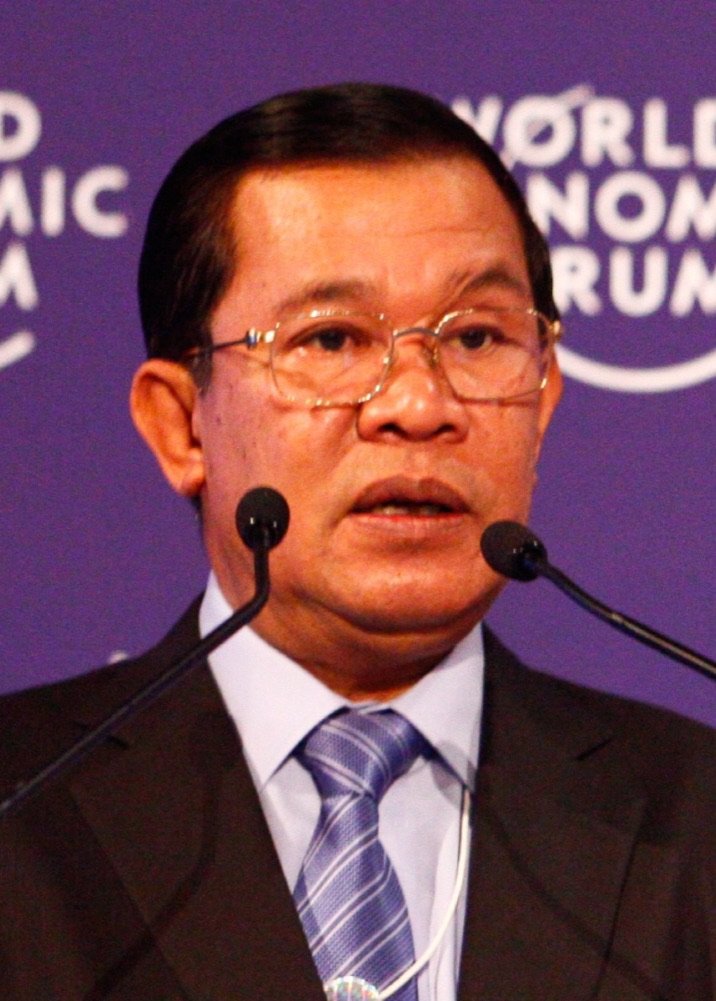
1952—
Hun Sen
Former prime minister and president of the SenateThe politician who became prime minister in 1985, dominated postwar Cambodian politics and transferred the premiership to his son in 2023.Read biographyQuick answers
Common questions
- When did LM17 start operation?
- The port records that main operations moved there on 1 January 2013. Its inauguration followed on 21 January.
- Where is LM17?
- It is on the lower Mekong in Kien Svay District, Kandal Province.
Primary and institutional sources
How this history was checked
Dates, legal milestones and historical claims are checked against the official and institutional records below. This article was reviewed on 19 November 2026.
- Phnom Penh Autonomous PortTerminal LM17 and its lower Mekong and road connections
- Phnom Penh Autonomous Port2015 disclosure document with the January 2013 transfer and ceremony
- Mekong River CommissionWaterborne transport master plan and Phnom Penh terminal history
- Phnom Penh Autonomous PortTerminals in the PPAP network
- Cambodia Securities ExchangeListed companies and their listing dates