
The short answer
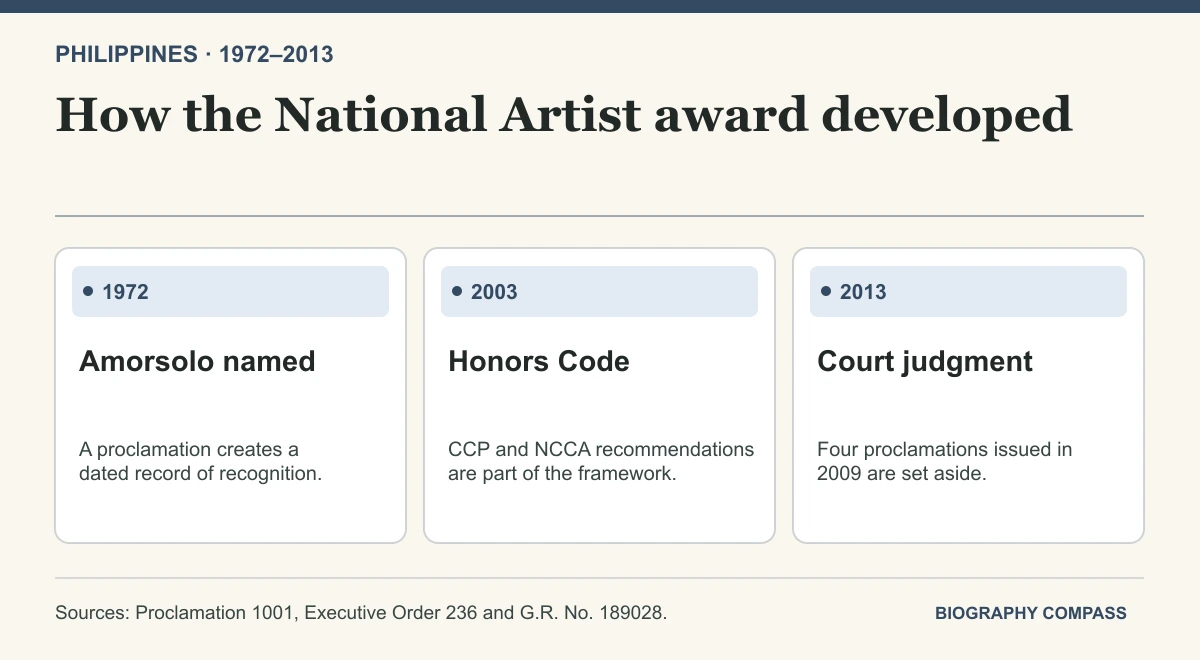
A 1972 proclamation named painter Fernando Amorsolo a National Artist. The 2003 Honors Code set the distinction within a formal order and described who recommends candidates. A dispute about four proclamations later gave the Supreme Court occasion to explain the importance of that process.
Compare the records
Three records behind the award
The award’s early proclamation, formal place in the honours system and a court judgment answer different questions.
| Record | What it addresses | What it establishes |
|---|---|---|
| 1972 proclamation | An identified artist | Amorsolo receives recognition under the National Artist category |
| 2003 Honors Code | National honours framework | An Order conferred on recommendation of the CCP and NCCA |
| 2013 Supreme Court decision | Four disputed 2009 proclamations | What happened when the recommendation process was not followed in that case |
Chronology
A timeline of the turning points
National Artist category recognised
Proclamation No. 1001 declares Fernando Amorsolo a National Artist.
Order included in the Honors Code
Executive Order No. 236 identifies the institutional recommendation process.
Contested proclamations issued
Four proclamations later become the subject of the judgment.
Supreme Court sets proclamations aside
The decision invalidates the four proclamations in the case.
How one proclamation marks the beginning
Proclamation No. 1001 recognises Fernando Amorsolo and sets out the purpose of creating a National Artist category. It is a dated record about a particular painter and a new form of public recognition. The Honors Code later refers back to it. The early proclamation and a modern list of award recipients are different records, each with its own purpose.
How recommendation fits into conferment
Executive Order No. 236 places the Order in the national honours system. It gives the Cultural Center of the Philippines and the National Commission for Culture and the Arts a recommendation role before the president confers the distinction. This separates judgement by the administering cultural institutions from the final act of bestowing the honour. A candidate’s involvement in one stage of the process is evidence for that stage.
What the 2013 ruling decided
The Supreme Court set aside Proclamations Nos. 1826 to 1829, issued in 2009, after finding grave abuse of discretion in issuing those four proclamations. It expressly left open the possibility that the individuals could be considered in the future through the prescribed process. The judgment thus provides specific evidence about the disputed proclamations and the institutional roles. Different records are needed to establish any later recognition.
Continue the chronology
Related history guides
How the Cultural Center of the Philippines Was Established
Trace the establishment of the Cultural Center, now part of the recommendation process.
Read the timeline1987–1992How the Philippines Created Its National Arts Commission
Read how the National Commission for Culture and the Arts succeeded its presidential predecessor.
Read the timelineConnected biographies
People connected to this history
1892—1972
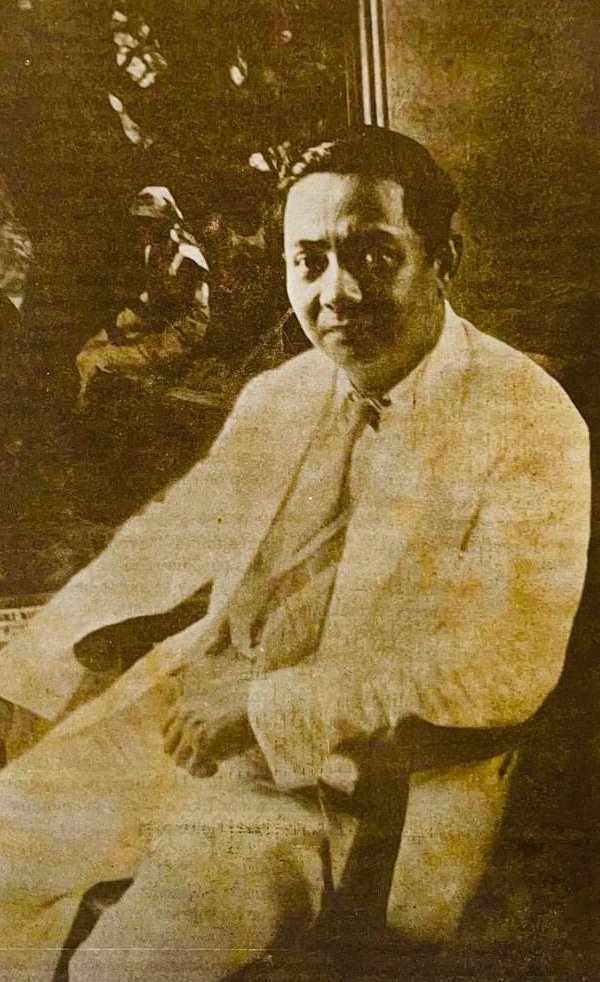
Fernando Amorsolo
Painter and first National Artist of the PhilippinesA painter whose sunlit rural scenes, portraits and wartime works shaped a widely recognised visual image of the Philippines.Read biographyQuick answers
Common questions
- Who was named in the first National Artist proclamation?
- Proclamation No. 1001 declared Fernando Amorsolo a National Artist in 1972.
- Which institutions recommend National Artists?
- The Honors Code names the Cultural Center of the Philippines and the National Commission for Culture and the Arts.
Primary and institutional sources
How this history was checked
Dates, legal milestones and historical claims are checked against the official and institutional records below. This article was reviewed on 19 November 2026.