
The short answer
Participant was founded in 2004 to make entertainment that could encourage social change. Its distinctive question was how a commercial film could also support action beyond the screen. Following the company’s model from financing to partnerships, campaigns and the 2024 wind-down explains both its ambitions and the limits of treating audience attention as proof of lasting change.
Chronology
A timeline of the turning points
Participant begins
Skoll establishes a media business pursuing social change through entertainment.
Selection criteria explained
A published interview discusses story quality, commercial potential and social relevance.
A separate university centre
UCLA announces research, education and public programming supported by Skoll’s gift.
David Linde becomes CEO
An October announcement separates professional operating leadership from the founder’s chairmanship.
Radical links film and partner work
A campaign with Hispanics in Philanthropy announces a fund supporting education organizations.
Operations to wind down
Reporting publishes the founder’s decision and staff memo.
A commercial structure could serve a philanthropic purpose
Participant’s founder approached the company as a way of using private resources for social benefit. That did not make the film company identical to a grantmaking foundation. The 2013 Philanthropy Roundtable interview explains why a commercial structure could attract entertainment partners, recruit industry talent and recycle successful films’ returns into new projects.
The distinction clarifies what to look for in its history. A film could earn revenue while pursuing a cause, and a financier could accept a weaker financial return for that purpose. Neither arrangement demonstrates that the company was a registered charity, that every project made money or that commercial partners shared all of its advocacy positions.
Selecting a story meant balancing three questions
In the 2012 Stanford Social Innovation Review interview, Skoll described evaluating storytelling, potential commercial viability and the possibility of meaningful social benefit. He also said the company could accept an expected loss when it believed a film might advance an issue more effectively than spending the same amount elsewhere. This was his account of decision-making, not an independently audited comparison of impact.
The approach depended on filmmakers and established industry relationships. Early collaborations included Warner Bros. and films such as Syriana and North Country. Financing opened a route for particular stories, but directors, writers, performers, distributors and audiences shaped what reached the screen and how it was understood.
An impact campaign added work beyond releasing the film
Participant’s September 2023 Radical announcement offers a concrete example. It described a partnership with Hispanics in Philanthropy, a campaign linked to the film’s US release and a fund on the HIPGive platform. The planned support concerned education organizations working with Latine students, rather than simply selling tickets or advertising a film.
That record identifies the mechanism and participating institutions. It is an announcement of a programme, not a later evaluation of educational results. To judge its effects, a reader would need evidence about funds distributed, organizations’ work and changes experienced by students. Public attention, donations and improved educational outcomes are related possibilities, but they measure different things.
Sources for this section: [5]
Management and research had responsibilities beyond the founder
Participant announced David Linde’s appointment in October 2015, effective the following month. The release describes film, television and digital work alongside advocacy campaigns. Skoll supplied founding capital and a mission, while an executive team coordinated a media business involving multiple platforms and partners.
The separate UCLA centre, announced in 2014, proposed research on measuring storytelling’s influence, education and public programming. This illustrates why impact required investigation as well as belief. A university initiative’s stated research agenda did not certify each Participant campaign’s success, and an award or strong box-office result alone could not answer whether a particular community benefited.
The 2024 ending tests claims of a self-sustaining model
On 16 April 2024, TheWrap reported the decision to wind down Participant and reproduced Skoll’s staff memo. The founder pointed to major changes in entertainment production, distribution and consumption. The Associated Press independently reported the closure, describing a studio that had paired films with awareness campaigns across two decades.
The ending does not erase the films or demonstrate that every campaign failed. It does show that cultural prominence and a social mission cannot by themselves establish durable commercial viability. Likewise, claims in a farewell memo about policy change require issue-specific evidence before credit is assigned. The useful historical lesson is to examine the business, the campaign and the claimed outcome separately, with dates and collaborators attached.
Continue the chronology
Related history guides
Biography context
Explore Los Angeles, California, United States through connected lives
Jeff Skoll
Follow his Canadian upbringing, eBay presidency, foundation and separate educational commitments.
Explore the biographiesEarlier business contextMeg Whitman
Explore the executive leadership at eBay around its public listing, distinct from Participant’s later film work.
Explore the biographiesCountry archiveCanada biographies
Explore Canadian-connected careers across business, culture and public life.
Explore the biographiesConnected biographies
The founder behind the financing model
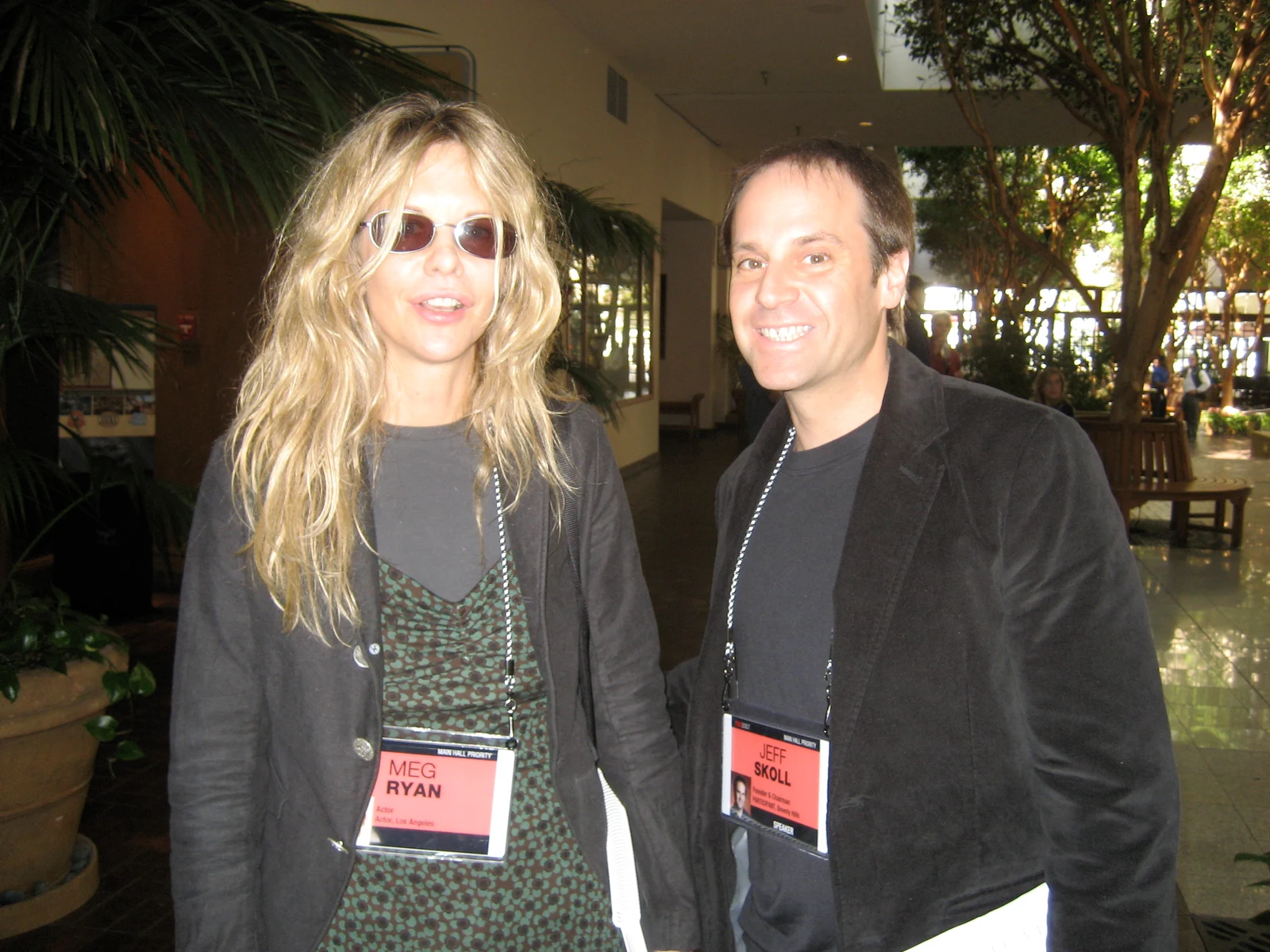
Born 1965
Jeff Skoll
eBay’s first president and Participant founderJeff Skoll combined engineering and business training with an early leadership role at eBay. The wealth created by its public listing helped support a later career in philanthropy, investing and film. He established the Skoll Foundation in 1999 and Participant in 2004; the film company announced its wind-down in April 2024.Read biographyQuick answers
Common questions
- Was Participant a nonprofit?
- The media company operated as a commercial business. Skoll described his personal motivation as philanthropic, a different question from the company’s structure.
- What did a social-impact campaign do?
- It connected a film to activity beyond viewing. The Radical example joined Participant with Hispanics in Philanthropy and a fund supporting education organizations.
- Did a successful film prove a successful campaign?
- No. Audience size, revenue, awareness, donations and changes in people’s lives require different evidence. Awards do not establish all of them.
- Did the studio continue after 2024?
- The decision to wind down was reported on 16 April 2024. Its earlier achievements should not be described as evidence of a currently operating studio.
Primary and institutional sources
How this history was checked
Interviews explain the founder’s stated commercial and social reasoning. Dated Participant releases identify actual managers and campaign partners; UCLA describes a separate research initiative. Independent 2024 reporting establishes the wind-down. No new complete film viewing, audited profit calculation or independent measurement of campaign outcomes is claimed. This article was reviewed on 23 October 2026.
- The Giving PledgeJeff Skoll: signed letter of 20 July 2010
- Philanthropy RoundtableFall 2013: Changing the World Through Storytelling
- Eric Nee / Stanford Social Innovation ReviewSpring 2012 interview: foundation strategy and Participant’s business model
- Stanford Graduate School of Business2010 graduation-speaker announcement: education and early career
- Participant22 September 2023: Radical campaign and partnership with Hispanics in Philanthropy
- Participant13 October 2015: David Linde appointed CEO from 1 November
- UCLA / Sandy Hall12 November 2014: gift establishes the Skoll Center
- Jeremy Fuster / TheWrap16 April 2024: Participant shutdown and founder’s staff memo
- Associated Press16 April 2024: studio winding down after twenty years
- Pierre Omidyar / FlickrMeg Ryan and Jeff Skoll: original photographer’s CC BY 2.0 record
- Wikimedia CommonsMeg Ryan and Jeff Skoll.jpg: full source, history and EXIF
- Creative CommonsAttribution 2.0 Generic licence