
The short answer
A campaign, a petition, a statute and an election leave different kinds of evidence. New Zealand's 1893 women's suffrage victory becomes clearer when each is asked the question it can answer. The records show major change, collective effort and continuing exclusions.
Four different kinds of evidence
Ask each record a different question
This comparison is an original reading aid. It does not imply that every name or every individual voter's eligibility has been independently reconstructed.
| Record | What it can show | What it cannot establish alone |
|---|---|---|
| Petition | A demand, signatures and the form of collective campaigning | Each signatory's later vote or legal eligibility |
| Committee report | A recorded recommendation and its printed report date | That the requested right was thereby enacted |
| Electoral Act | Legal qualifications and limits | How many eligible people used their vote |
| Election returns | Recorded registration and participation | How each voter felt about the suffrage campaign |
Chronology
A timeline of the turning points
Coordinating a national campaign
Kate Sheppard takes the WCTU franchise and legislation role.
Petitioning and setbacks
Campaigners gather signatures; earlier electoral bills fail in the Legislative Council.
Main roll and aggregate report
The surviving large petition is associated with 28 July; the account of all 13 petitions is reported on 11 August. These are distinct records.
Council approval
The Legislative Council passes the bill, 20 votes to 18.
Assent
The Electoral Act becomes law.
Different election dates
General-electorate polling is followed by polling for Māori representatives.
Parliamentary candidacy
The Women's Parliamentary Rights Act becomes law.
The campaign was organised work
The WCTU's local unions gave suffrage organisers a network. Kate Sheppard coordinated franchise work, while campaigners distributed arguments, held meetings, collected signatures and approached parliamentarians. Franchise leagues widened participation beyond temperance membership. The movement's effectiveness depended on many people's local work and on allies inside a legislature whose members were men.
Success was not automatic. Bills passed the House of Representatives in 1891 and 1892 but failed in the Legislative Council. In 1893 the upper house approved the bill by 20 votes to 18. A petition could demonstrate support and exert pressure; parliamentarians still had to pass legislation.
A surviving roll is not the whole petition campaign
The surviving principal petition is Archives New Zealand LE1, 1893/7a. Its first sheet is identified as Mary J. Carpenter and 25,519 others. The roll was assembled from sheets signed in different places. The large physical object and its request are evidence of petitioning, not a register of women who later voted.
NZHistory distinguishes this roll from all thirteen suffrage petitions reported in 1893, with an aggregate contemporary figure of 31,872 signatures. Its database currently transcribes about 24,000 names from the principal roll and flags missing names, duplicated sheets and imperfect location fields. A database search that finds no ancestor therefore cannot prove that she opposed suffrage or signed none of the other petitions.
The parliamentary reproduction also shows a committee report dated 18 August 1893 listing Carpenter and other petitioners. It recommends referring the petitions to the government for consideration. That recommendation is a procedural action, not the enactment of women's voting rights. The modern page's 11 August caption and the report's printed date label different evidence.
Reading the law alongside the campaign
Assent on 19 September 1893 made the Electoral Act law. Its voting provisions included women and retained qualifications, separate arrangements for Māori representation and exclusions, including for people classified as aliens. Section 9 expressly prevented women from parliamentary candidacy or appointment to the Legislative Council.
The contemporary 1895 Year-book explains the property and residence routes to registration. The residential route required adulthood, a year in the colony and three months in the district. It discusses Māori representation separately. Reading those provisions is more accurate than treating a celebratory phrase about all women as a claim that every resident could vote without conditions.
What happened at the polls
The 1895 Year-book records 109,461 women on the general rolls and 90,290 voting in the general-electorate election of 28 November 1893. It separately gives 20 December for Māori polling and a total of 11,269 Māori voters of both sexes. It does not supply an exact female Māori total.
These figures answer questions about participation, not petition support. Registration, voting and a signature on a suffrage petition are different actions. The voting total also should not be read as the number of seats women could occupy. Eligibility for the House came in 1919; the franchise victory had left that further campaign unfinished.
An original source-comparison exercise
Compare four records: the first petition sheet; the committee report reproduced by Parliament; the Act's sections 6, 8 and 9; and the Year-book's 1893 election tables. For each, identify its producer, purpose and one question it cannot answer. Then assess this claim: everyone who signed the petition could both vote and become an MP in 1893.
Suggested answer: the petition presents a demand and signatures, without proving individual eligibility. The committee records a recommendation, without granting a right. The statute defines legal powers and restrictions, without recording turnout. The tables record participation, without identifying petition signatories. The claim is unsupported: candidacy remained barred to women and voter qualifications still applied. Seeking a right, processing a request, possessing a right and exercising it require different evidence.
Connected biographies
Read Kate Sheppard's wider reforming career
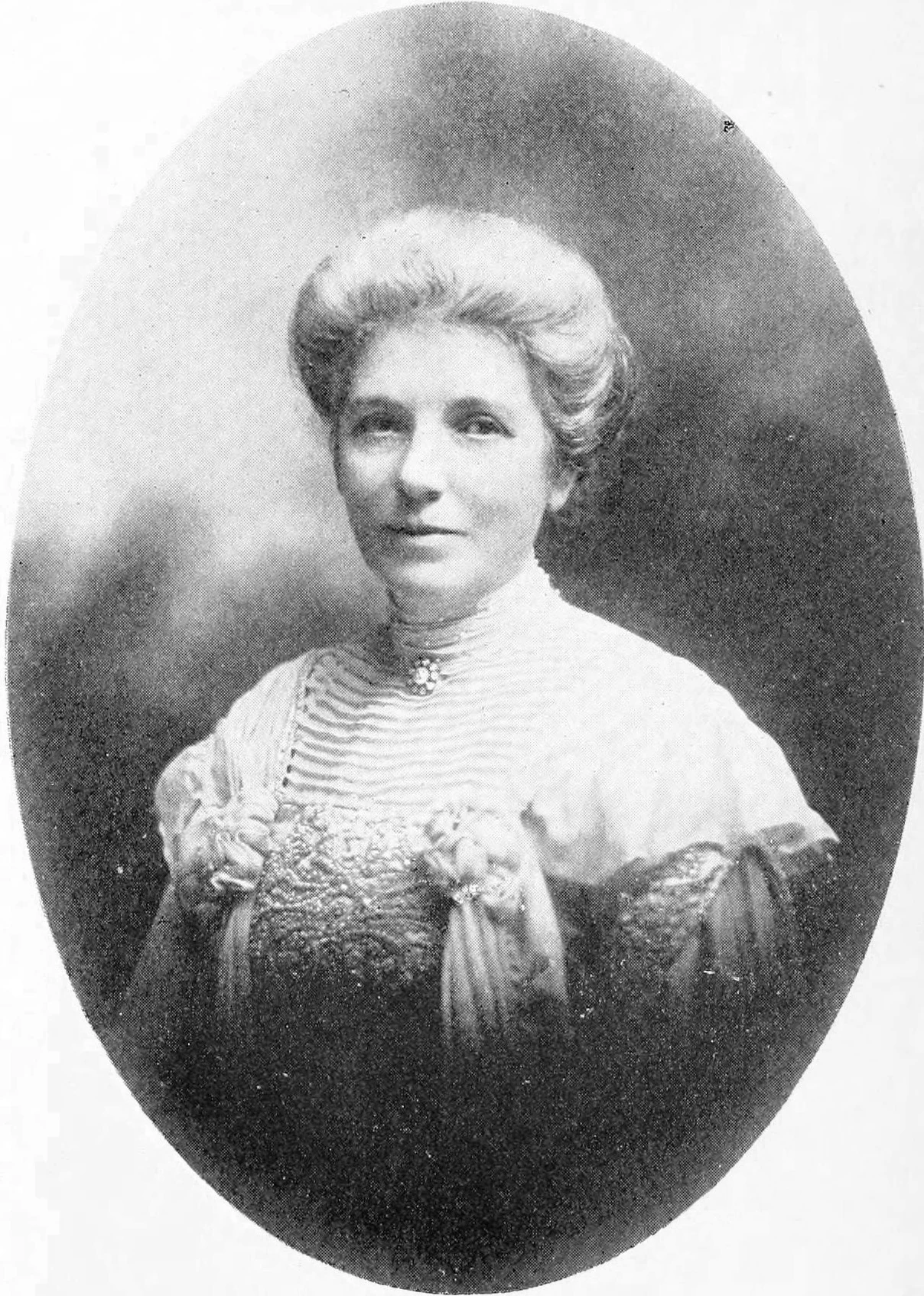
c. 1847–1934
Kate Sheppard
Suffrage organiser, social reformer and editorKate Sheppard was a leading organiser of New Zealand's women's suffrage campaign. Her work connected local unions, pamphlets, petitions and parliamentary lobbying, followed by editorial work and wider campaigns for women's rights.Read biographyQuick answers
Common questions
- Why do different petition totals appear?
- The surviving principal roll, the contemporary aggregate for thirteen petitions and today's transcribed database are different sets. Their figures should retain those labels.
- Does a missing database result prove that someone did not sign?
- No. Names and sheets can be missing or imperfectly transcribed, and twelve smaller 1893 petitions have not survived.
- Were the general and Māori elections held on the same day?
- No. The contemporary Year-book gives 28 November 1893 for general-electorate polling and 20 December for Māori representatives.
Primary and institutional sources
How this history was checked
Compared a visually inspected original petition scan, official indexed enacted text, the Parliament feature's reproduction of an Office of the Clerk record and a contemporary government Year-book. NZHistory explains database limits. Direct statutory HTML/PDF retrieval was blocked; the exact clauses cited were available in the official site's indexed text. No exhaustive transcription, electoral-roll linkage or complete Hansard review is claimed. This article was reviewed on 27 October 2026.
- Archives New Zealand / Wikimedia CommonsWomen's Suffrage Petition 1893: digitised original first sheet, LE1 1893/7a
- New Zealand Parliament, Office of the ClerkA monster petition: reproduced parliamentary petition record and chronology
- New Zealand Parliamentary Counsel OfficeElectoral Act 1893, as enacted
- New Zealand Government, Registrar-General / Statistics New ZealandNew Zealand Official Year-book 1895, chapters 19–20: qualifications and election returns
- Manatū Taonga, NZHistoryAbout the suffrage petition: thirteen petitions and database limits
- Manatū Taonga, NZHistoryBrief history: campaign and Legislative Council division
- Manatū Taonga, NZHistoryWomen can stand for Parliament: 1919 change
- Raewyn Dalziel / WCTU New ZealandHistory: franchise organisation and alliances