
The short answer
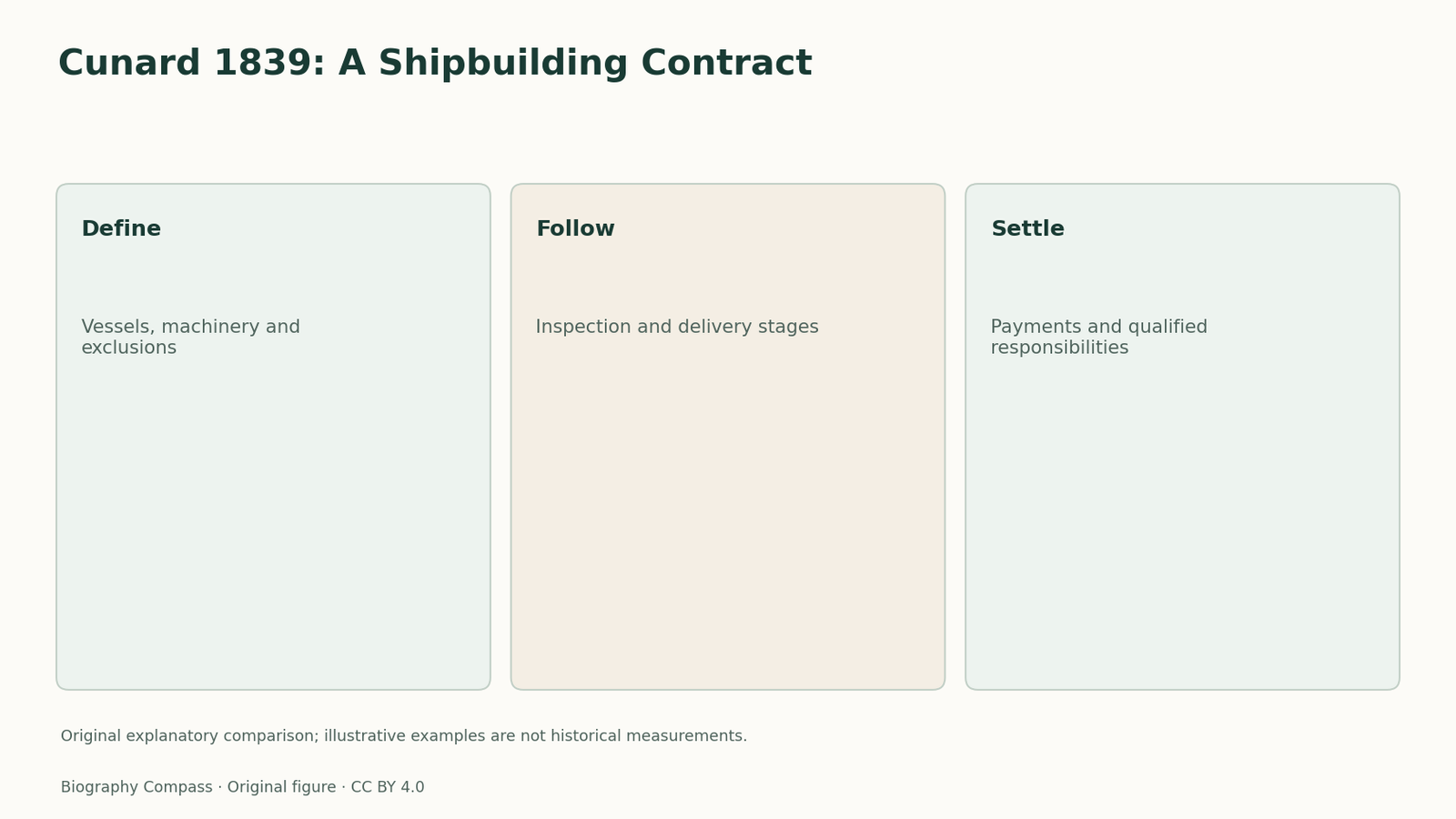
The reproduced agreement of 18 March 1839 bound Robert Napier to supply Samuel Cunard with three completed steam vessels. The specifications covered hulls, machinery and ordinary sailing equipment, while excluding a range of spare and steward’s items. This was broader than an order for engines alone. The distinction matters to the history of a manufacturer who had not yet established the later Govan shipyard: contractual responsibility for supplying a vessel and direct manufacture of every component are different questions. The agreement defines the former, while production records identify the latter.
A worked comparison
What each part contributes
Use the specific distinctions developed in the study.
| Part or record | What it establishes | Why the distinction matters |
|---|---|---|
| Supply obligation | Three completed steam vessels | Not only an engine order |
| Payments | Construction instalments and later balance | Not all cash at signature |
| Guarantee | Defined repair responsibility and exceptions | Not proof of an accepted claim |
What did Napier promise Cunard in March 1839?
The reproduced agreement of 18 March 1839 bound Robert Napier to supply Samuel Cunard with three completed steam vessels. The specifications covered hulls, machinery and ordinary sailing equipment, while excluding a range of spare and steward’s items. This was broader than an order for engines alone. The distinction matters to the history of a manufacturer who had not yet established the later Govan shipyard: contractual responsibility for supplying a vessel and direct manufacture of every component are different questions. The agreement defines the former, while production records identify the latter.
Sources for this section: [2]
Inspection and delivery were part of the bargain
The contract allowed Cunard or his representative to inspect progress, materials and workmanship at building yards and engineering works. It also set separate delivery deadlines for the vessels. These provisions connected payment to a project that unfolded through time rather than a single purchase at a shop counter. An inspection right did not mean that every inspection found the work satisfactory, and a contractual deadline did not prove the actual delivery date. The positive point is that both parties had defined ways to follow the work before accepting a completed vessel.
Sources for this section: [2]
Progress payments and the balance served different stages
The stated total was ninety-six thousand pounds, comprising thirty-two thousand for each vessel. Sixty thousand pounds was payable during construction, with a further twelve thousand associated with delivery of each vessel through specified bill arrangements. The agreement also addressed how parts became appropriated to Cunard while Napier retained rights connected with completion and unpaid prices. Those clauses show why ownership, possession, risk and immediate cash were not necessarily identical. A historical finance account needs to keep the defined stages visible rather than treating the entire contract price as money paid on signing.
Sources for this section: [2]
Guarantees and exceptions defined a limited responsibility
The text required repair or replacement if machinery failed within six months, but excluded failures arising from specified neglect, carelessness and other circumstances outside Napier’s control. Its delivery penalty also included qualifications and a process for resolving disagreement. These were the parties’ stated terms, not evidence that a penalty was ultimately paid or a guarantee claim accepted. Reading the qualifications alongside the promise prevents both exaggerations: a supplier had real obligations, yet the document did not make him responsible for every imaginable later accident.
Sources for this section: [2]
Contract-account exercise and checked answer
Using the agreement’s stated figures, subtract sixty thousand pounds in construction-stage payments from the ninety-six-thousand-pound total. The balance is thirty-six thousand pounds, matching three amounts of twelve thousand. Does that arithmetic establish that all money changed hands on the signing date? No: the document sets out later stages and bill options. A second question asks whether this three-vessel agreement alone proves the terms for every ship in the eventual four-vessel fleet. It does not. The checked answers preserve the actual agreement’s scope and show why price, payment timing, the work supplied and later additions require distinct records.
Sources for this section: [2]
Continue the chronology
Related history guides
White Star: Shipowner and Builder Roles
Explore White Star’s shipbuilding relationship with Harland, engine suppliers and transport arrangements, using the builder’s own 1884 recollection.
Read the timeline1850s–1870sHarland: Hull Form and Yard Production
Compare Harland’s hull proportions, dock constraints and production decisions using his 1884 account, with an original length-to-beam exercise.
Read the timelineBiography context
Explore United Kingdom through connected lives
Connected biographies
People and wider context
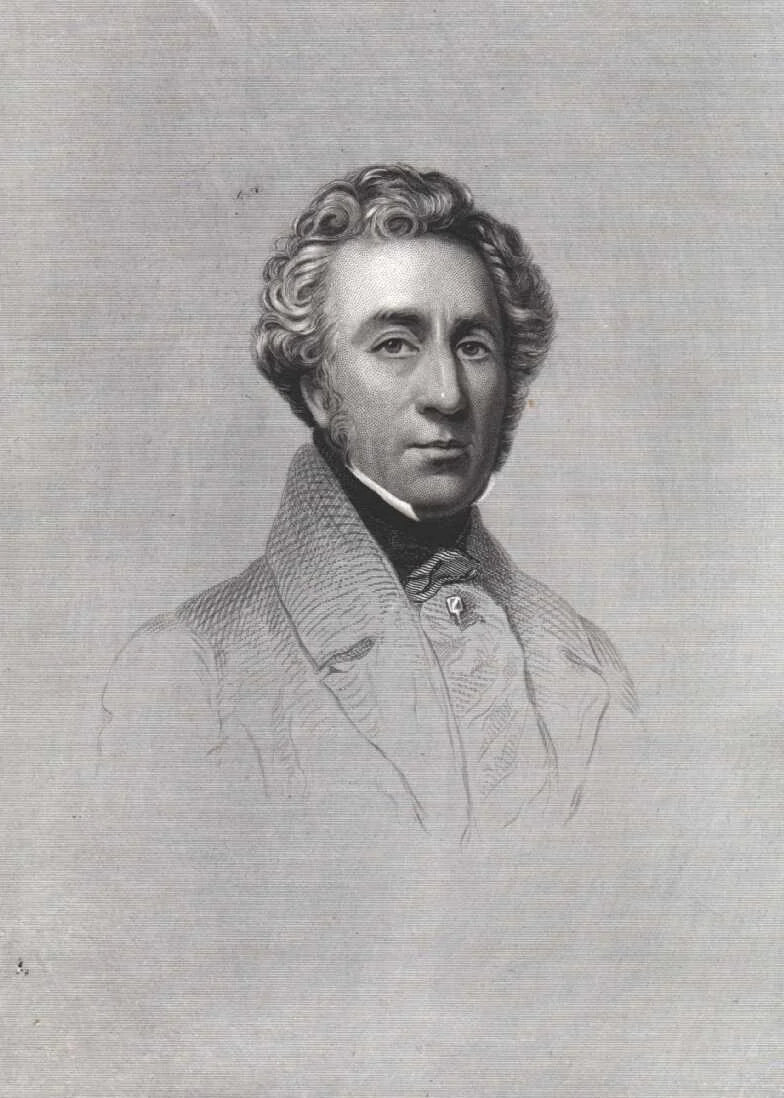
1791–1876
Robert Napier
marine engineer, manufacturer and shipbuilderRobert Napier was a marine engineer, manufacturer and shipbuilder, known for Clyde engine manufacture, early Cunard contracts and the growth of a shipbuilding enterprise.Read biographyQuick answers
Common questions
- Was the inspected 1839 agreement already a four-vessel contract?
- No. Its reproduced text specifies three vessels; the eventual four-steamer fleet belongs to the subsequent undertaking.
Primary and institutional sources
How this history was checked
Read the cited original records, institutional accounts and later interpretations. The comparison and exercise explain the specific evidence used in this study. This article was reviewed on 8 November 2026.
- Dictionary of National Biography, original nineteenth-century entryNapier, Robert (1791–1876)
- Original Samuel Cunard–Robert Napier agreement, reproduced in The Life of Robert Napier of West Shandon, 1904Contract for first Cunard steamers, 18 March 1839
- Lloyd’s Register Foundation Heritage and Education CentreMaritime science and technology: the innovators