
The short answer
How does sustained bodily attention differ from treating a mountain as a summit to collect?
Read the evidence
Sources, interpretation and production roles
The records answer different questions about this work. The final exercise is an original teaching model.
| Record or question | Supported reading | Boundary or contrast |
|---|---|---|
| Publication history | 1940s composition differs from 1977 publication. | A late appearance does not date every experience narrated. |
| Mapped and lived place | Positions and measurements coexist with changing visibility. | One account need not invalidate the other. |
| Original repeated-view task | Retains an uncertain impression as uncertain. | Vivid experience is not proof of a new geographical fact. |
A selected plateau passage states a method
The Living Mountain was written in the 1940s and first published in 1977. The inspected publisher-authorised extract describes the Cairngorm plateau through changing weather, surfaces and light. It also sets practical geographical description beside the experience of living in relation to a place. The guide’s question is therefore precise: how can a writer value maps and named features while insisting that they do not contain the whole encounter? The answer need not reject measurement in order to explain what another form of attention adds.
Returning does not mean completing a collection
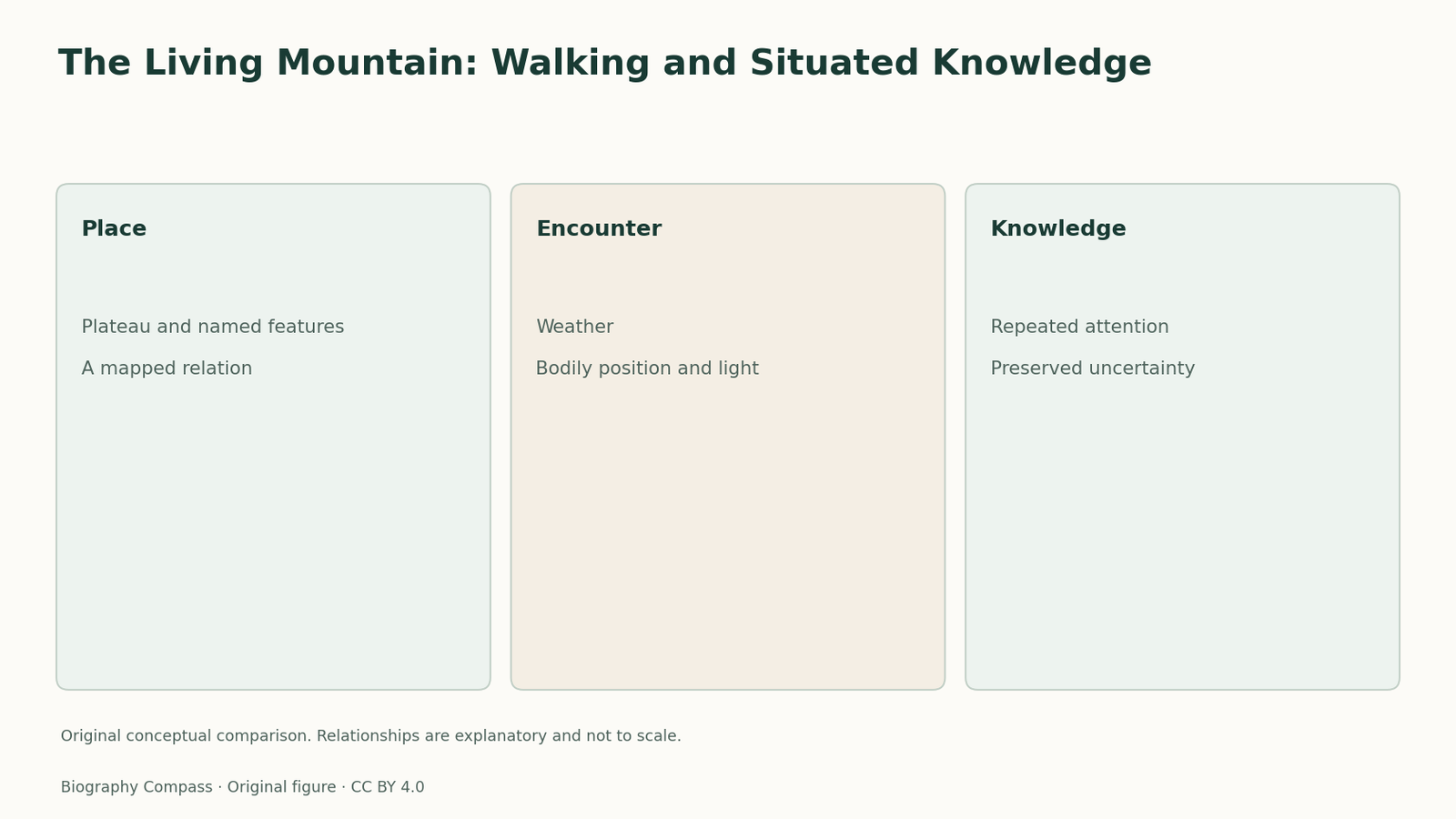
In the passage, repeated visits continue to produce astonishment. In this guide’s reading, familiarity becomes an active practice rather than a certificate of mastery. A walker does not finish knowing a place merely by recording its highest point. Weather changes what can be seen, and bodily position changes relationships among features. The subject is not only a mountain considered from outside; it includes the person’s changing capacity to encounter it. The passage gives that claim a more particular basis than a general slogan about appreciating nature.
Sources for this section: [3]
A map and an uncertain sight answer different questions
Shepherd describes a distant shape that neither a chart nor her companions confirmed. The passage preserves that uncertainty rather than turning the impression into a newly established geographical fact. Its imaginative force depends partly on the limit. In this interpretation, writing can record the intensity of an experience while retaining a distinction between what seemed visible and what was verified. The map is not defeated by a striking sensation. Instead, several forms of knowing remain in relation: measurement, shared observation, memory and imaginative response. The uncertain distant shape is especially useful because it interrupts confidence within an attentive account, rather than allowing accumulated experience to become an infallible authority.
Sources for this section: [3]
Original exercise: revisit an ordinary view
Choose an invented view from a library window, with a hill, a tree and a distant building. Prepare three short records: a labelled plan, an account in bright light and an account in mist. A reference answer explains that the plan can preserve positions while the two accounts disclose different relations of visibility and attention. Now add one uncertain impression and mark what would be needed to check it. Do not invent a confirmed discovery merely to make the story satisfying. Return to Shepherd through the plateau and distant-shape passage, separating the writer’s observation from your interpretation of its method. It gives a concrete way to understand a central relation in this prose: repeated attention can deepen experience without eliminating uncertainty. A strong answer explains what each record contributes instead of ranking sensation and measurement as enemies. Knowing a place can involve continuing among them rather than choosing one final description and declaring the encounter complete.
Sources for this section: [3]
Continue the chronology
Related history guides
Biography context
Explore United Kingdom through connected lives
Connected biographies
People and related creative practices
1893–1981
Nan Shepherd
Scottish novelist, poet and teacherNan Shepherd combined a long teaching career with novels, poetry and a prose account of repeated encounters with the Cairngorms, published late in her life.Read biography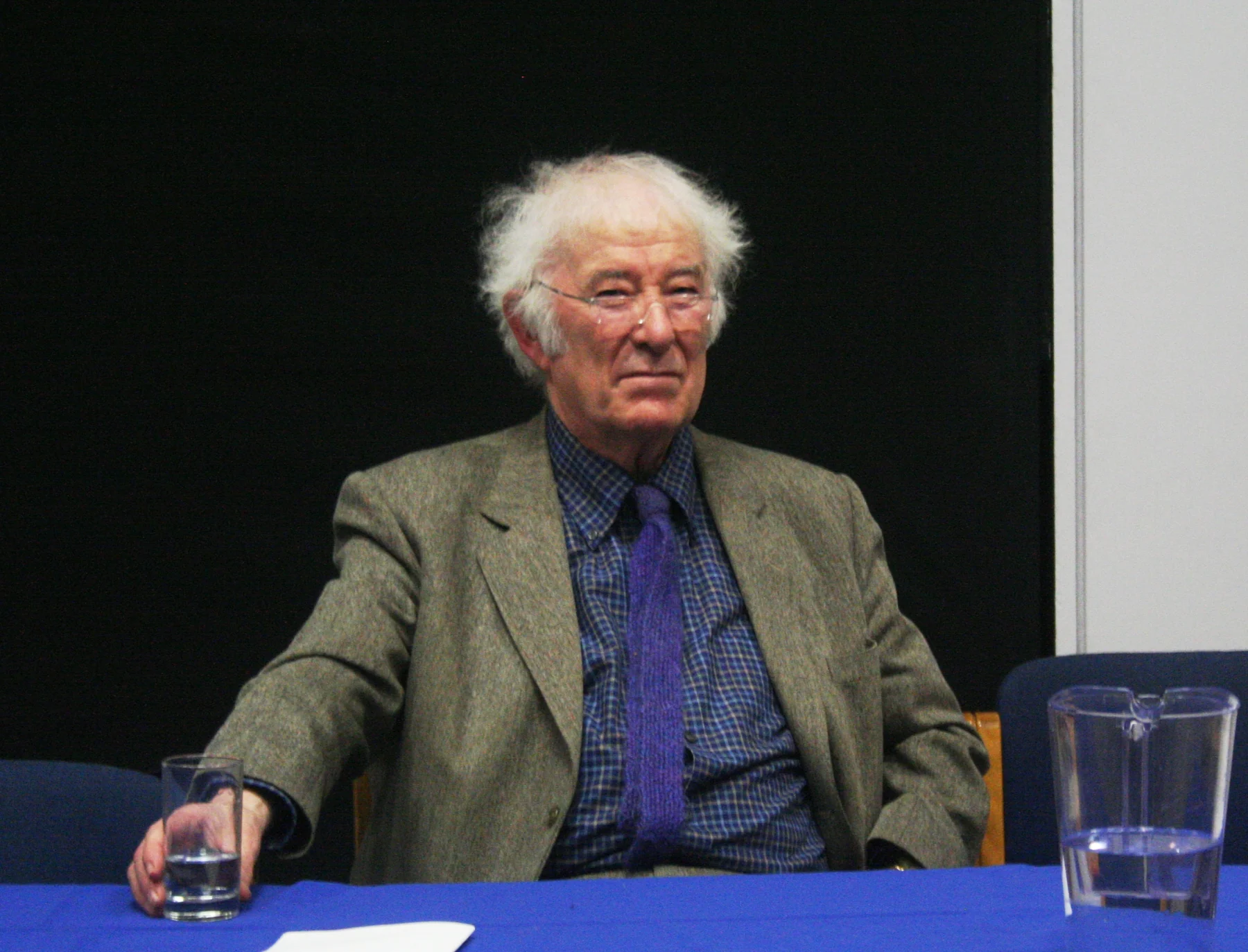
1939–2013
Seamus Heaney
Poet, translator, critic and teacherSeamus Heaney made rural memory, the sound of language and the pressures of history central to an international literary career. His poetry developed alongside criticism, translation, teaching and collaboration in Irish cultural institutions.Read biography1873–1957
Dorothy Richardson
British novelist, essayist and translatorDorothy Richardson developed Pilgrimage through a working life in teaching, London employment, journalism and literary exchange, making perception central to narrative form.Read biographyQuick answers
Common questions
- Does the passage reject maps?
- The guide reads a distinction between mapped information and lived encounter rather than a rejection of measurement.
Primary and institutional sources
How this history was checked
The discussion uses the specifically identified, publisher-authorised extract of The Living Mountain, not the complete book or an audiobook. The reading exercises and comparisons are original analytical models. This article was reviewed on 8 November 2026.