
The short answer
How do a framing introduction and a remembered life alter who controls this story?
Read the evidence
Sources, interpretation and production roles
The records answer different questions about this work. The final exercise is an original teaching model.
| Record or question | Supported reading | Boundary or contrast |
|---|---|---|
| Introduction | An unnamed narrator recalls a later conversation with Jim. | The frame precedes the main recollection. |
| Jim’s account | Affection and selection shape the remembered Ántonia. | A represented life exceeds any one narrator’s account. |
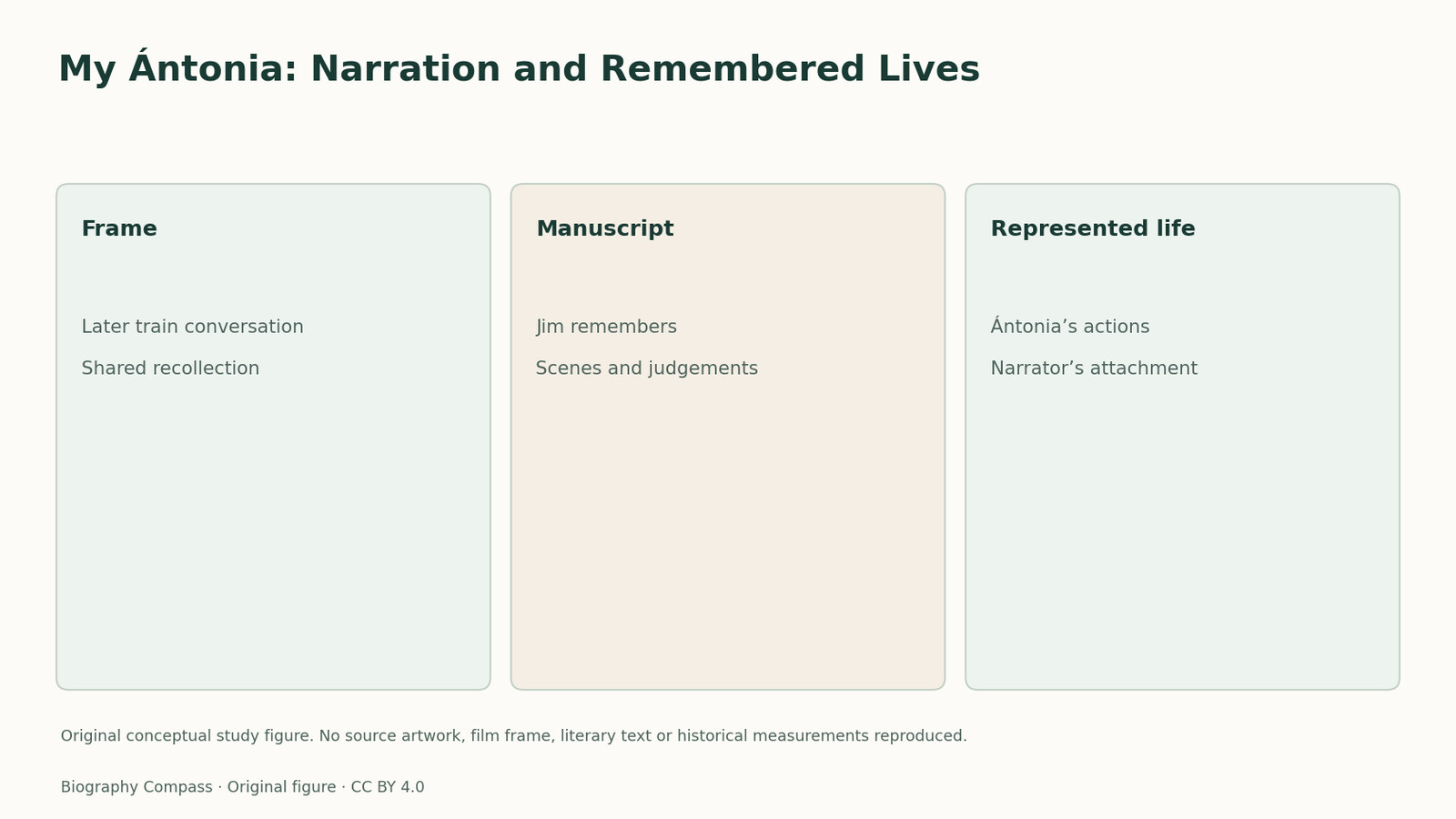
| Original map | Separate author, framing narrator and manuscript narrator. | Their experiences should not be automatically identified. |
Who presents Ántonia to the reader?
My Ántonia appeared in 1918, but its opening does not begin with Ántonia telling her own life. An unnamed narrator recalls meeting Jim Burden on a train. Their conversation about a shared Nebraska childhood turns repeatedly toward a Bohemian girl they had both known. This introduction locates remembrance in a later encounter between adults. The country they remember is already being selected, discussed and interpreted before Jim’s principal narrative begins.
Sources for this section: [4]
The manuscript changes the title’s meaning
The framing conversation leads to Jim’s written account. Its possessive title marks a relationship between the remembered woman and the person remembering her. That need not mean ownership of her life. It does mean that the book makes the narrator’s attachment visible instead of hiding it behind an impersonal biographical format. A reader can ask which scenes Jim supplies through direct recollection, which come through information from other people, and which are his later judgements about their significance.
Sources for this section: [4]
Work, place and remembered difference
Selected early passages show the children encountering prairie space, weather and the labour of farm households. Jim’s observations include his own discomfort and his resistance to Ántonia’s protective superiority. That detail prevents remembrance from being only a smooth celebration of friendship. The same narrative can admire Ántonia and reveal the boy’s gendered assumptions. Near the close, a road joins the landscape of childhood to Jim’s later understanding of a shared past. It is a remembered connection, not evidence that the two lives followed identical paths.
Sources for this section: [4]
An original narrator map
Draw three boxes: opening narrator, Jim’s manuscript and Ántonia’s life as represented. Join them with arrows labelled presents and remembers. Now consider the claim that Cather personally witnessed everything described by Jim. A supported answer rejects that inference: an author has constructed narrators, and a fictional account is not automatically an autobiographical deposition. A second question asks whether Jim’s affection makes him useless as a narrator. A reasonable answer is also no. Affection becomes one of the conditions under which he sees and selects.
Sources for this section: [4]
A method for discussion
Choose one passage where Jim describes Ántonia and separate action from evaluation. What does she do, and which words register his response? Then compare a passage about himself. The exercise turns an abstract debate about reliability into a specific account of narrative distance. Cather’s own moves from Virginia to Nebraska and later professional cities help explain why memory is a useful subject to investigate. They do not license replacing Jim’s name with hers. The novel’s formal frame is part of what makes its remembered lives distinctive.
Continue the chronology
Related history guides
Biography context
Explore United States through connected lives
Connected biographies
People and related creative practices
1873–1947
Willa Cather
Novelist, journalist and editorWilla Cather moved from journalism and magazine editing to fiction that reshaped remembered landscapes and immigrant lives through narrative form.Read biography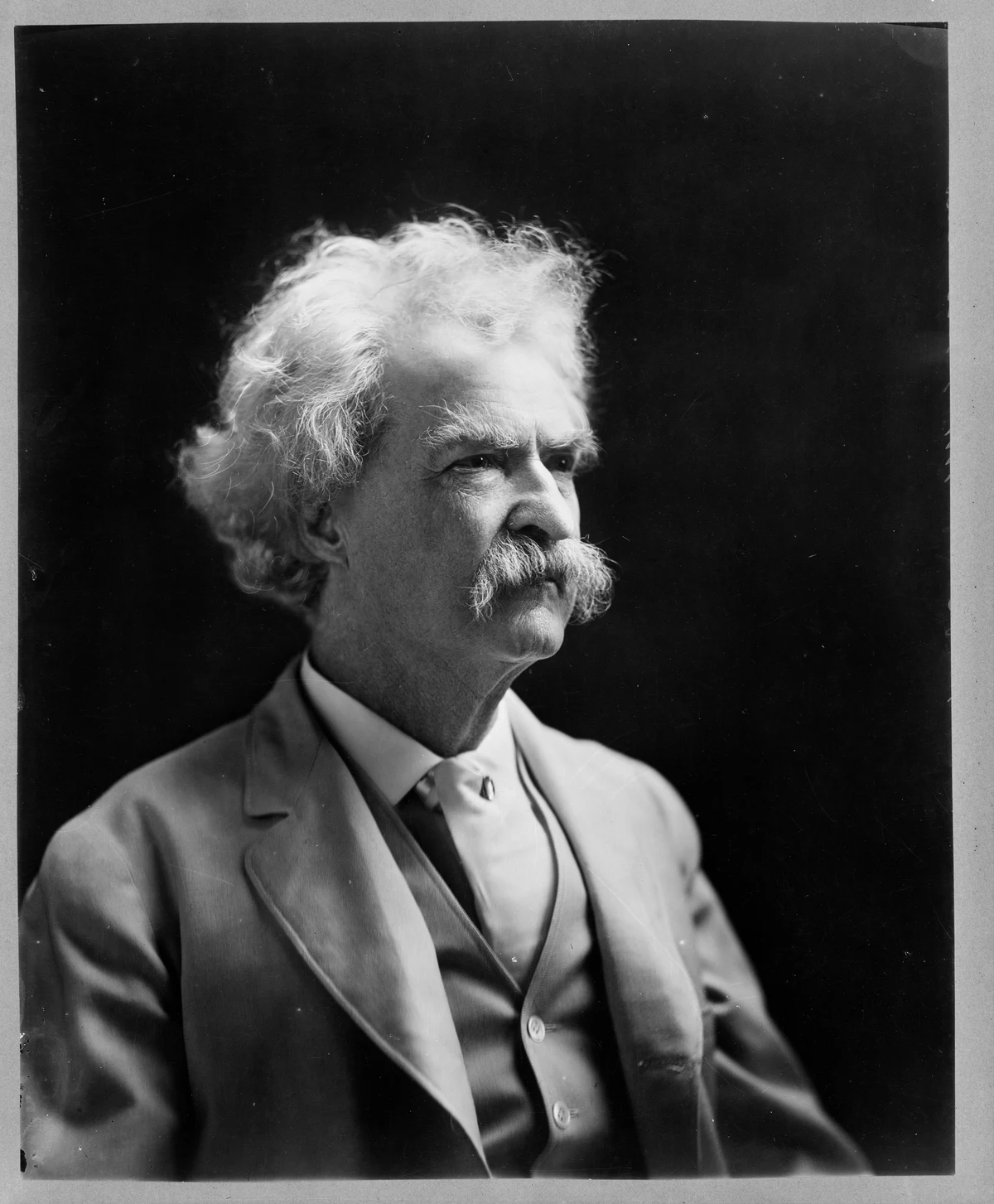
1835–1910
Mark Twain
Writer, humorist and lecturerWriting as Mark Twain, Samuel Langhorne Clemens turned experiences of printing, river work, travel and journalism into fiction, humor and searching criticism of American society.Read biography1849–1909
Sarah Orne Jewett
Novelist and short-story writerSarah Orne Jewett built fiction around Maine households, visits and remembered lives while maintaining a literary partnership and a wider Boston network.Read biographyQuick answers
Common questions
- Does Jim speak directly for Cather?
- He is a fictional narrator whose position and memories the novelist has constructed.
- Why does the frame matter?
- It shows the remembered story being discussed and written after the childhood events.
Primary and institutional sources
How this history was checked
Sources include production records, institutional collections and the specifically identified passages discussed here. Interpretations and teaching models are distinguished from credits and publication facts. This article was reviewed on 7 November 2026.