
The short answer
In 2008 the World Heritage Committee inscribed Melaka and George Town together as historic cities of the Straits of Malacca. Their buildings and streets preserve different periods of trade and settlement. The decision treats the cities as complementary evidence of how port societies developed over time.
Reading the decision
What the three UNESCO criteria emphasise
Several criteria can apply to the same house or street because they ask different questions.
| Criterion | Emphasis | Example to look for |
|---|---|---|
| (ii) | Exchange of influences across port societies | Different influences shaping the layout and architecture of each city. |
| (iii) | Living evidence of multicultural traditions | Places of worship, languages, neighbourhood traditions and practices. |
| (iv) | Distinctive built form | Ranges of shophouses and townhouses from different periods. |
Chronology
A timeline of the turning points
Melaka develops as a trading port
The UNESCO account links its later townscape to the Malay sultanate and Portuguese and Dutch periods.
George Town develops as a British-era port
Commercial and civic buildings reflect the period as well as a diverse society.
The World Heritage Committee inscribes them together
The decision describes their complementary evidence under three criteria.
What each city contributes
Melaka brings evidence of earlier phases, including the Malay sultanate and Portuguese and Dutch rule. The Committee points to public spaces, civic buildings, places of worship and fortifications. George Town illustrates the growth of a later port, with its own civic, commercial and residential architecture.
The cities’ evidence works together because their prominence belongs to different periods of the Straits trade. The joint designation makes the historical sequence part of its value.
Why the listing includes living traditions
The evaluation concerns the people and practices associated with the built environment as well as its fabric. Religious buildings, languages and festivals show how communities use the town. A surviving facade helps establish the architectural record, while a local practice can show how the place continues to operate.
The architectural criterion separately emphasises the variety of shophouse and townhouse types. That gives a reader a way to compare buildings across streets and periods without expecting them all to represent one style.
How to use an image of only one component city
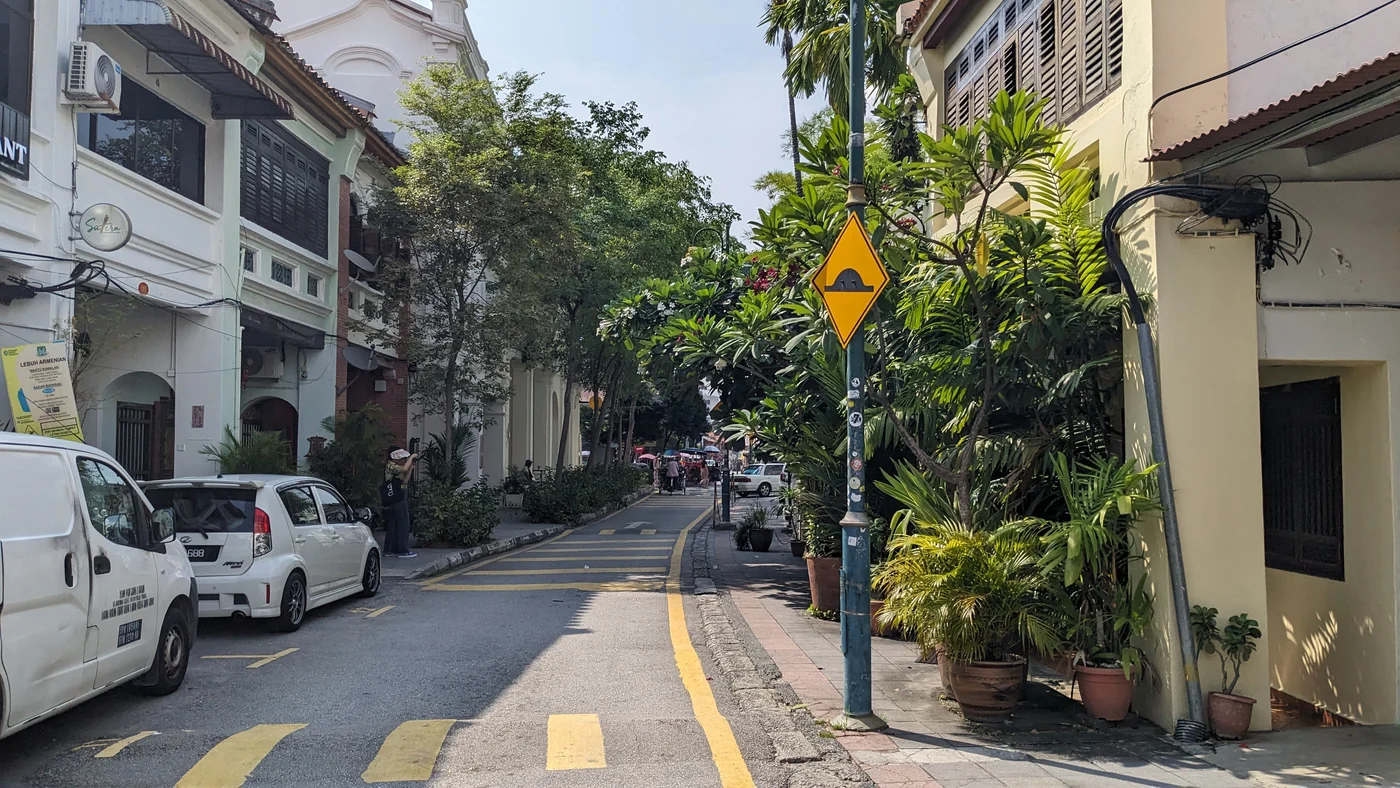
The image shows a street in George Town. To understand what Melaka contributes, consult the property documentation for maps and architectural evidence from both cities. The Committee decision and the ICOMOS evaluation are especially useful when comparing a particular street view with the wider argument for the joint inscription.
Continue the chronology
Related history guides
How Hội An’s Streets Worked as a Trading Port
Compare another Southeast Asian port, where streets and access from the river shaped the layout.
Read the timeline2012Why UNESCO Listed Bali’s Subak Landscape
Compare how a different multipart property connects tangible places and living practices.
Read the timelineConnected biographies
People connected to this history
Quick answers
Common questions
- When were Melaka and George Town listed?
- The World Heritage Committee inscribed them together in 2008.
- Why were the two cities listed together?
- They document complementary phases of Straits port history and share evidence of cross-cultural exchange and living traditions.
Primary and institutional sources
How this history was checked
Dates, legal milestones and historical claims are checked against the official and institutional records below. This article was reviewed on 19 November 2026.