
The short answer
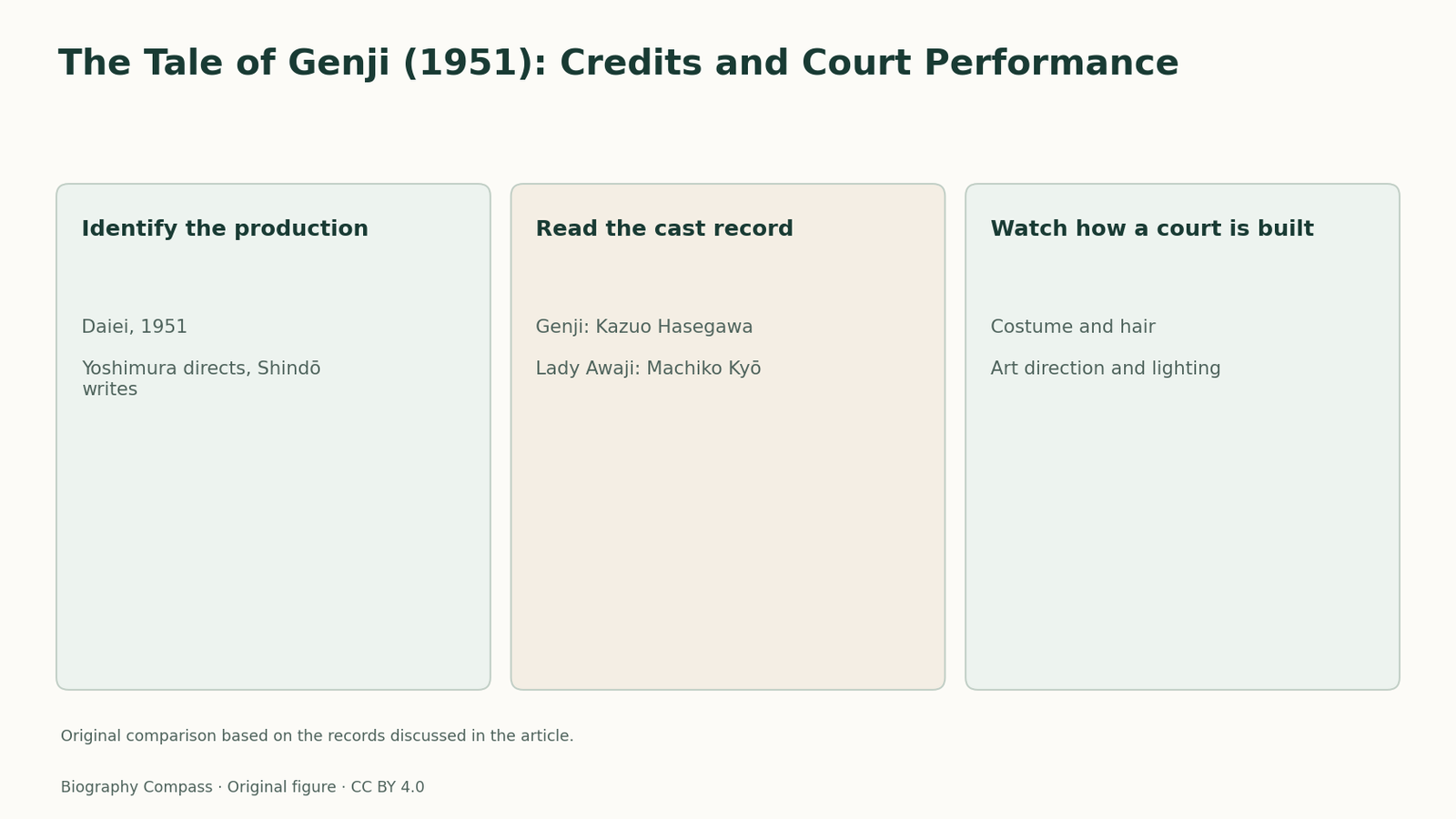
The 1951 Tale of Genji has both a literary source and a detailed cast record. The latter is essential for placing Machiko Kyō in the film’s court ensemble.
Evidence comparison
Four credited court roles
Use the film record to match names before interpreting an adaptation.
| Role | Performer |
|---|---|
| Hikaru Genji | Kazuo Hasegawa |
| Fujitsubo | Michiyo Kogure |
| Murasaki | Nobuko Otowa |
| Lady Awaji | Machiko Kyō |
Identify the 1951 adaptation first
This record concerns the 1951 film directed by Kōzaburō Yoshimura, with a screenplay by Kaneto Shindō. The BFI places it among Daiei’s prestige projects and says it marked the studio’s tenth anniversary. Those details distinguish the production from the much older prose narrative by Murasaki Shikibu, later films with similar titles and stage adaptations. The film record can answer who made this screen version. The literary work is the place to investigate the earlier narrative. Date and medium are necessary identifiers before transferring the name of a character or an episode from one account to another.
Read the court through the cast list
The Japanese archive lists Kazuo Hasegawa as Hikaru Genji, Michiyo Kogure as Fujitsubo and Nobuko Otowa as Murasaki. The first character of Kyō’s role appears as a placeholder in the online archive entry. Kadokawa’s edition record supplies the full Japanese credit, Awaji no Ue, or Lady Awaji. This cross-check matters because two other prominent court roles belong to different performers. A second record can make one cast entry legible while the archive’s wider table retains its value as evidence of the production’s ensemble.
Production design is part of a court film
The film archive separately credits art direction, lighting, costume, makeup and hair work. That division offers a starting point for discussing a period adaptation as a built production. A literary account can describe rank in words. A filmed scene can supply visual distinctions through a garment, a figure’s position or who can enter the same space. The archive does not assign individual on-screen effects to one worker. It identifies the departments involved, allowing a viewer to look for their contributions without assuming that the director alone chose every visible detail.
Put Kyō’s other Yoshimura roles beside it
The BFI survey also places Kyō in Yoshimura’s Clothes of Deception and The Naked Face of Night. The same partnership moves between a period court, the professional life of a Kyoto geisha and the world of classical dance. That makes a comparison of access possible. Think about which spaces a character is entitled to enter, who provides the rules of conduct and what a change of professional status would cost her. By keeping director and performer in view, the comparison gives social setting more explanatory weight than a general label about the actor’s screen persona.
Try a credit and scene exercise
Choose a court scene when you can consult the film. Before discussing its meaning, build two small lists. In the first list put only the credited character names that can be matched confidently to performers. In the second describe what can be observed about entrances, distance and gestures of deference. A name missing from the first list can remain unresolved while the second list continues to accumulate evidence. The exercise preserves both the value of a cast table and the viewer’s freedom to ask how the space conveys rank. It also makes corrections to names straightforward later.
Continue the chronology
Related history guides
Biography context
Explore Japan through connected lives
Connected biographies
People connected to the work
1924–2019
Machiko Kyō
Film, theatre and television actorMachiko Kyō was an Osaka-born performer who moved from revue dancing into Japanese studio cinema and became widely known for her work at Daiei.Read biography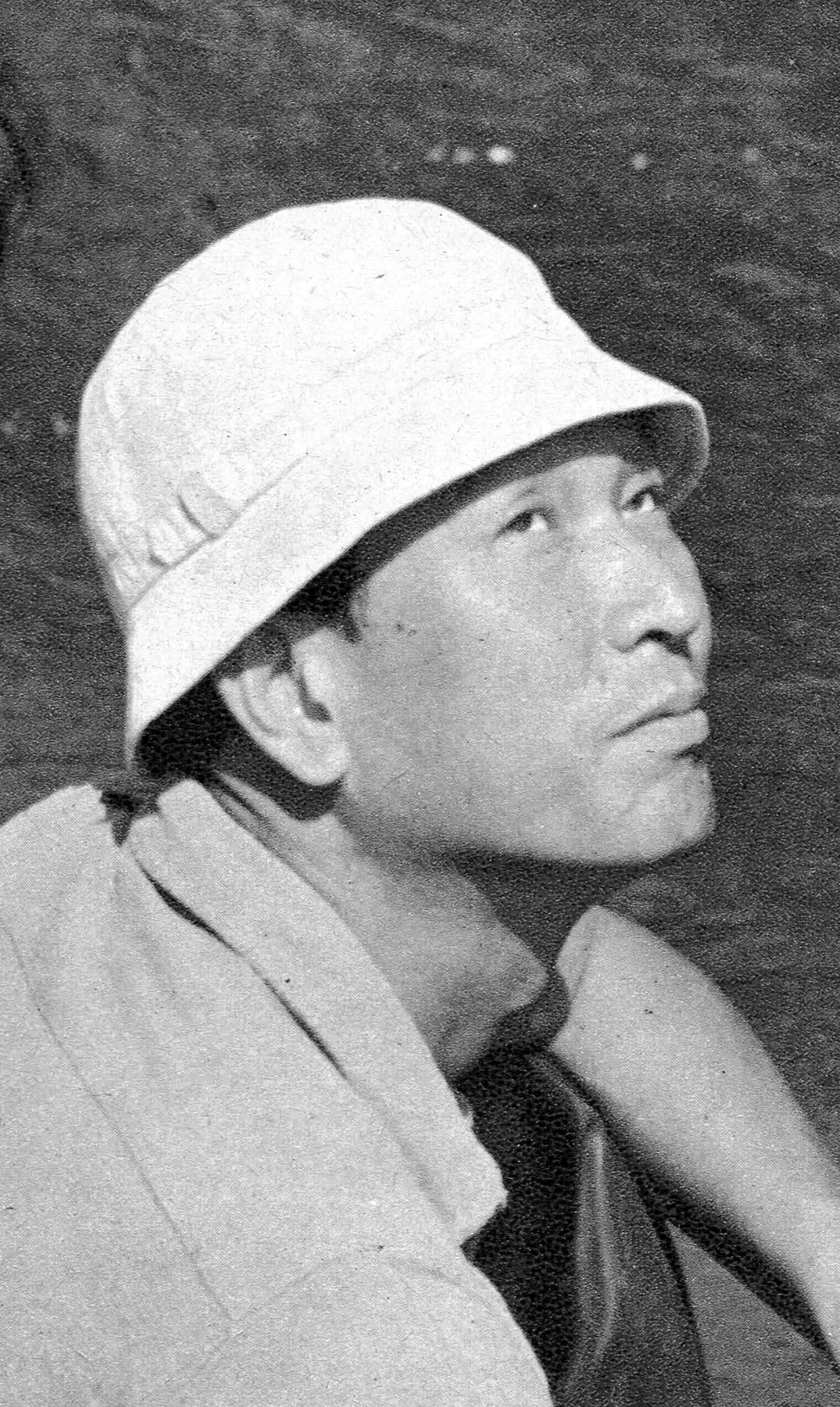
1910–1998
Akira Kurosawa
Film director and screenwriterAkira Kurosawa directed films across historical action, contemporary drama and literary adaptation. His work joined forceful visual storytelling with recurring questions about responsibility, social power and the stories people tell about themselves.Read biographyQuick answers
Common questions
- Who directed the 1951 Tale of Genji?
- Kōzaburō Yoshimura directed it, with Kaneto Shindō credited as screenwriter.
- Who does Machiko Kyō play in the 1951 film?
- Kadokawa’s edition credits her as Lady Awaji. Michiyo Kogure plays Fujitsubo.
Primary and institutional sources
How this history was checked
Dates, legal milestones and historical claims are checked against the official and institutional records below. This article was reviewed on 13 November 2026.