
The short answer
A pumping engine’s beam moves up and down. A factory needs a shaft that keeps turning. The mechanisms covered by Watt’s 1781 patent helped bridge that difference, but the change involved collaborators, competing rights and several linked improvements rather than one gear alone.
Chronology
A timeline of the turning points
A more efficient pumping principle
Watt’s earlier patent addressed heat loss through a separate condenser; rotary transmission was a different problem.
A patent constraint and alternatives
Pickard’s crank patent preceded Watt’s patent for other means of continuous rotary motion.
Demonstrating the gearing
The Science Museum’s sun-and-planet model belongs to these years, after the 1781 patent.
Power for polishing
The Lap engine applied a combination of improvements to manufacturing at Soho.
Why pumping and turning were different jobs
Early atmospheric steam engines were particularly useful for pumping water from mines. Their pistons and beams moved backwards and forwards, a motion naturally suited to a pump. The same movement did not automatically provide continuous rotation for the shafts and belts of manufacturing machinery. Improved fuel economy and useful rotary transmission were therefore different technical achievements.
Some engines powered factories indirectly by returning water to a waterwheel. A direct rotative engine offered another arrangement: steam could drive the machinery without first circulating water through that intermediate system. Boulton’s interest in factory power made this a commercial objective, not simply a mechanical puzzle. The separate condenser was an important foundation, but not the whole answer.
A patent constraint helped shape the mechanism
A crank and connecting rod offered a familiar way to convert back-and-forth movement into rotation. James Pickard’s 1780 patent, however, created an obstacle for the Boulton & Watt business. Rather than use that arrangement on a competitor’s terms, Watt patented alternative mechanisms in 1781. The Science Museum catalogue identifies sun-and-planet gearing as the one among these alternatives that entered practical use.
The name on the patent is not a complete account of authorship. The Library of Birmingham credits the initial sun-and-planet invention to William Murdoch, the firm’s engineer. Watt’s development and patenting, Murdoch’s contribution, and Boulton’s commercial requirements should be read together. No unproven story about a worker stealing the crank idea is needed to explain the constraint.
What the sun and planet actually did
The sun wheel was attached to the flywheel shaft. The planet wheel was fixed to the end of the connecting rod and carried around the sun while their teeth remained engaged. The resulting motion turned the shaft continuously. This was a geared transmission of the beam’s movement, not a steam turbine or an engine driven by the gears alone.
The Science Museum’s model makes the geometry unusually clear. Where the two wheels had equal diameters, the shaft made two revolutions for one complete up-and-down cycle of the beam. Other proportions were possible, so that ratio should not be applied to every engine. The model demonstrates an operating principle; its 1782–84 catalogue date should not be mistaken for the date of the 1781 patent.
Factory power needed more than rotary gearing
A useful manufacturing engine also needed to transmit force reliably and behave predictably under load. Double-acting engines applied steam to produce power in both directions of the piston’s travel. A rigid connection then replaced the older hanging chain, while Watt’s parallel-motion linkage guided the piston rod along a near-straight path. These developments addressed problems that a change of gearing alone could not solve.
The centrifugal governor helped regulate speed as machinery demanded more or less power. The surviving 1788 Lap engine combines several such features and drove polishing machinery at Soho. It is evidence of a mature working system, not proof that every component was already installed in exactly that form in 1781. Technical change accumulated through models, construction and operating experience.
What changed for industry—and what did not
Rotative engines widened the market for steam from pumping towards the direct operation of mills, workshops and breweries. The Whitbread engine preserved by Powerhouse supplies an industrial example beyond a diagram or patent claim. Such installations also required buildings, foundations, components, local labour and continuing maintenance. Steam power was a purchased service and infrastructure commitment, not a frictionless substitute for every other power source.
The outcome was increased production and a wider demand for coal-powered machinery, with consequences for working life and the environment. It did not make water power disappear immediately, nor make Watt the sole author of industrialisation. Reading the gearing, the complete engine and the installation business at different scales gives a more useful explanation than treating the 1781 patent as a single miraculous turning point.
Continue the chronology
Related history guides
Biography context
Explore United Kingdom through connected lives
Connected biographies
People behind the engine business
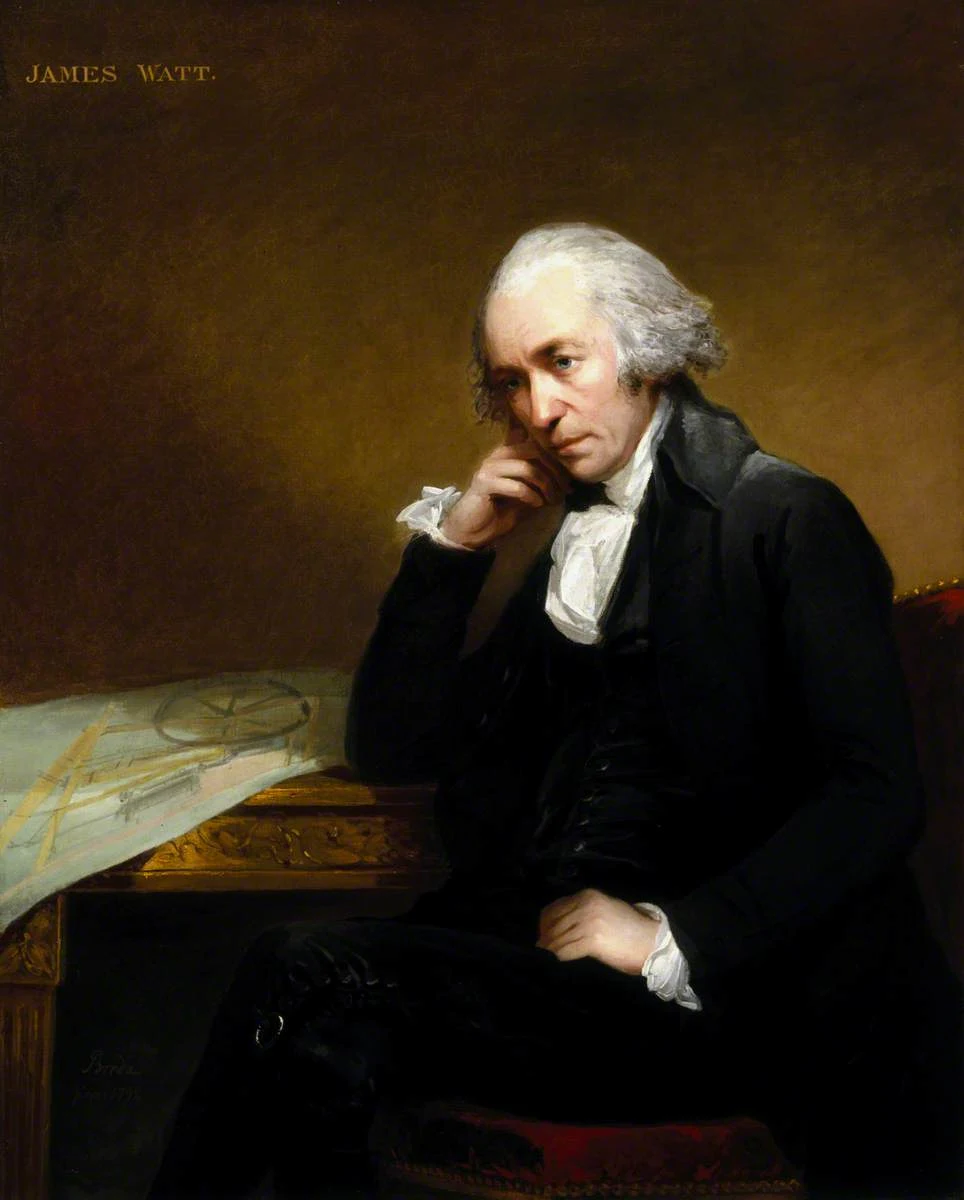
1736–1819
James Watt
Engineer, instrument maker and steam-power entrepreneurJames Watt made existing steam-engine technology substantially more efficient and helped turn it into an industrial business. His achievements depended on scientific exchange, skilled collaborators and Matthew Boulton’s commercial organisation; his life also had documented connections to slavery.Read biography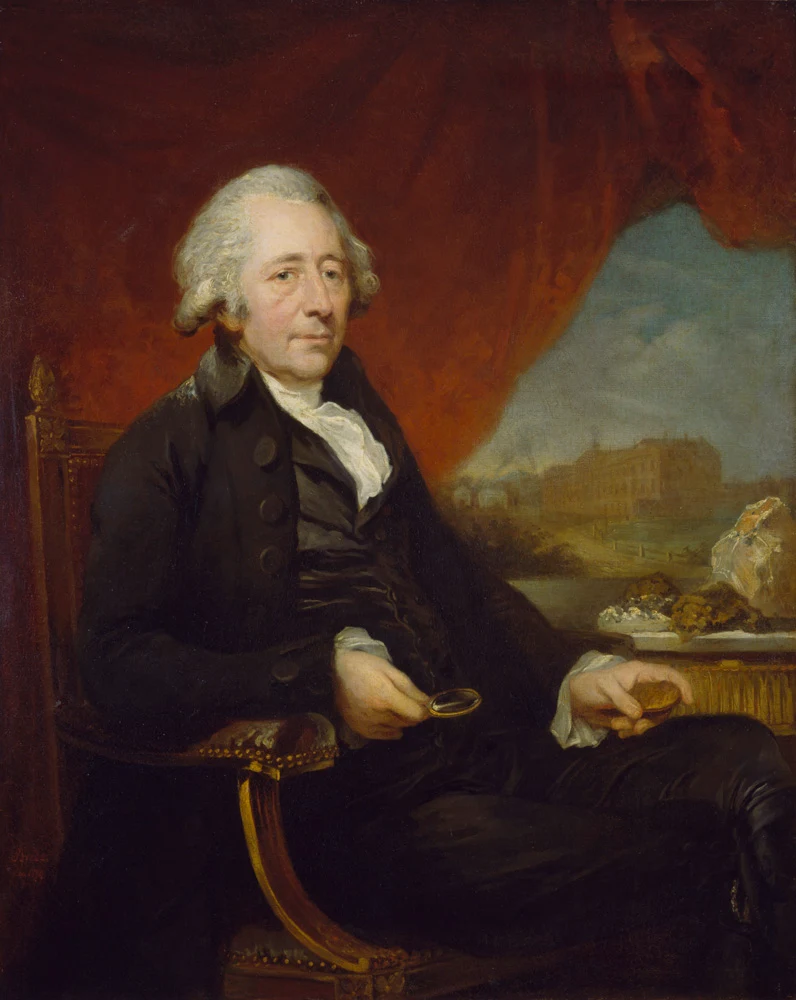
1728–1809
Matthew Boulton
Metalware manufacturer, steam-engine entrepreneur and mint proprietorMatthew Boulton developed Birmingham metalware manufacturing before partnering with James Watt in 1775. He supplied capital, commercial organization and customers for steam engines, while his Soho Mint used industrial machinery to produce coinage.Read biographyQuick answers
Common questions
- What does “rotative” mean here?
- An engine that supplies continuous rotary motion to a shaft, rather than only a reciprocating movement suited to pumping.
- Did Watt invent sun-and-planet gearing alone?
- The mechanism was included in Watt’s patent, but the Library of Birmingham credits its initial invention to William Murdoch. The guide distinguishes patent ownership from the contribution of collaborators.
- How was the separate condenser different from rotary gearing?
- The condenser reduced wasted heat by cooling steam outside the working cylinder. Rotary gearing solved a different problem: transmitting the beam’s back-and-forth movement to a continuously turning shaft.
Primary and institutional sources
How this history was checked
Museum object descriptions, the Library of Birmingham’s indexed historical text and institutional accounts support this explanation. The 1782–84 model and 1788 engine are distinguished from the 1781 patent. No claim is made to reading the complete original patent file, drawings archive or engine test logs. This article was reviewed on 23 October 2026.
- Science Museum / Nick GuddeJames Watt, office equipment and high-street fashion: instruments, engines and business
- Historic Environment ScotlandJames Watt: engineering, commercial applications and retirement
- Science Museum GroupModel of Sun and Planet Gearing, 1782–1784: object 1876-1258
- Science Museum GroupRotative Steam Engine by Boulton and Watt, 1788: the Lap engine
- Powerhouse / Debbie RudderBoulton and Watt rotative steam engine: the Whitbread engine
- Library of BirminghamArchives of Soho: Steam engines and William Murdoch’s sun-and-planet contribution
- Wikimedia Commons / Science MuseumCarl Frederik von Breda’s 1792 portrait of James Watt: public-domain record
- Creative CommonsPublic Domain Mark 1.0