
The short answer
How do a portrait’s title, the maker’s viewpoint and a later museum juxtaposition change the questions viewers ask?
Read the evidence
Sources, interpretation and production roles
The records answer different questions about this work. The final exercise is an original teaching model.
| Record or question | Supported reading | Boundary or contrast |
|---|---|---|
| 1945 title | Offers a broad category for approaching the sitter. | It does not by itself provide a complete personal identity. |
| Iziko 2019 juxtaposition | Adds Eddie’s named portrait of an imam from the same year. | The comparison does not make the two people interchangeable. |
| Loan records | Document Qatar ownership and South African display. | Custody and representational viewpoint are different questions. |
A portrait with a particular title
Irma Stern’s Arab Priest is a 1945 painting associated with her Zanzibar work. The title offers a category through which a viewer approaches the sitter. That is different from a name, a full personal biography or an independently verified statement of the person’s religious office. The title can remain part of the object’s history while readers ask what information it gives and what it leaves unspecified.
Sources for this section: [3]
A museum deliberately added a comparison
Iziko’s 2019 exhibition placed the painting beside James Eddie’s Portrait of Hadjee Izik Fatah, also painted in 1945. The latter identifies an imam by name and belongs to Iziko’s collection. This juxtaposition made different representational approaches visible within a shared historical period. The exhibition explicitly raised Orientalism and the colonial viewpoint, rather than presenting Stern’s travels as an automatically objective record of another culture.
Sources for this section: [3]
Painting, ownership and later display
The 2019 record also identifies Qatar Museums as the owner and explains the loan back to South Africa. A later Javett notice records an extended display during the Covid period. These are stages in the work’s public life, distinct from its 1945 production. They matter because the questions a museum asks, and the neighbouring works it selects, can change how a familiar painting is read without physically altering the painted surface. The 1945 date is especially useful in this juxtaposition. It holds the broad historical period constant while the viewer examines different ways of identifying and representing a sitter, rather than explaining every difference through a change of era.
Original exercise: three possible labels
Write three short original labels for an imaginary portrait. One gives only a broad category, one gives a documented personal name, and one explains the maker’s place and circumstances. A reference answer notes that each selects a different relationship: type, individual and act of representation. Now return to the actual museum juxtaposition and explain what the named 1945 portrait adds to a discussion of Stern’s titled work. A supported response says it directs attention to how identification works and how one artist’s viewpoint differs from another’s; it does not prove that the two sitters had identical lives or that one painting exhausts the truth about either person. Add the loan history as a fourth label and ask whether ownership alone answers the representational question. It does not: ownership establishes custody, while the exhibition’s comparison concerns how a person is pictured and presented. This exercise supplies an explicit way to connect formal achievement, naming and institutional framing without reducing the discussion to either praise for colour or a general accusation detached from a specific work.
Continue the chronology
Related history guides
Biography context
Explore Zanzibar, Tanzania through connected lives
Connected biographies
People and related creative practices
1894–1966
Irma Stern
South African painter, sculptor and collectorIrma Stern developed her art between Germany and South Africa, moving from contested modernist exhibitions to a nationally recognised painting career.Read biography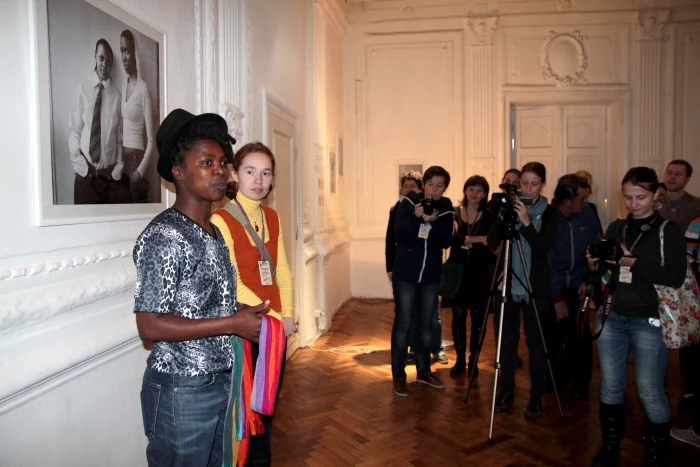
b. 1972
Zanele Muholi
Photographer and visual activistA South African visual activist building an archive of Black LGBTQIA lives through photography and other media.Read biography1913–1993
Gerard Sekoto
South African painter and musicianGerard Sekoto left teaching for painting, developed important urban images in South Africa and continued making art and music after moving to France.Read biographyQuick answers
Common questions
- Does the title identify the sitter by name?
- No. The inspected record preserves a categorical title; Iziko’s comparison draws attention to a separate, personally named portrait.
Primary and institutional sources
How this history was checked
Sources include production records, institutional collections and the specifically identified passages discussed here. Interpretations and teaching models are distinguished from credits and publication facts. This article was reviewed on 8 November 2026.