
The short answer
How do painted cutouts and spoken names change the terms of a group portrait?
Compare the records
What the sources allow us to say
Read the object record alongside the contextual account.
| Record | Evidence | Reading limit |
|---|---|---|
| Artist overview and letters | One hundred figures and the writing of their stories. | Imagined biographies are not recovered archival identities. |
| UCCA 2025 work list | Ten cut-out figures in that presentation. | A selection does not redefine the complete installation. |
One hundred figures, several channels
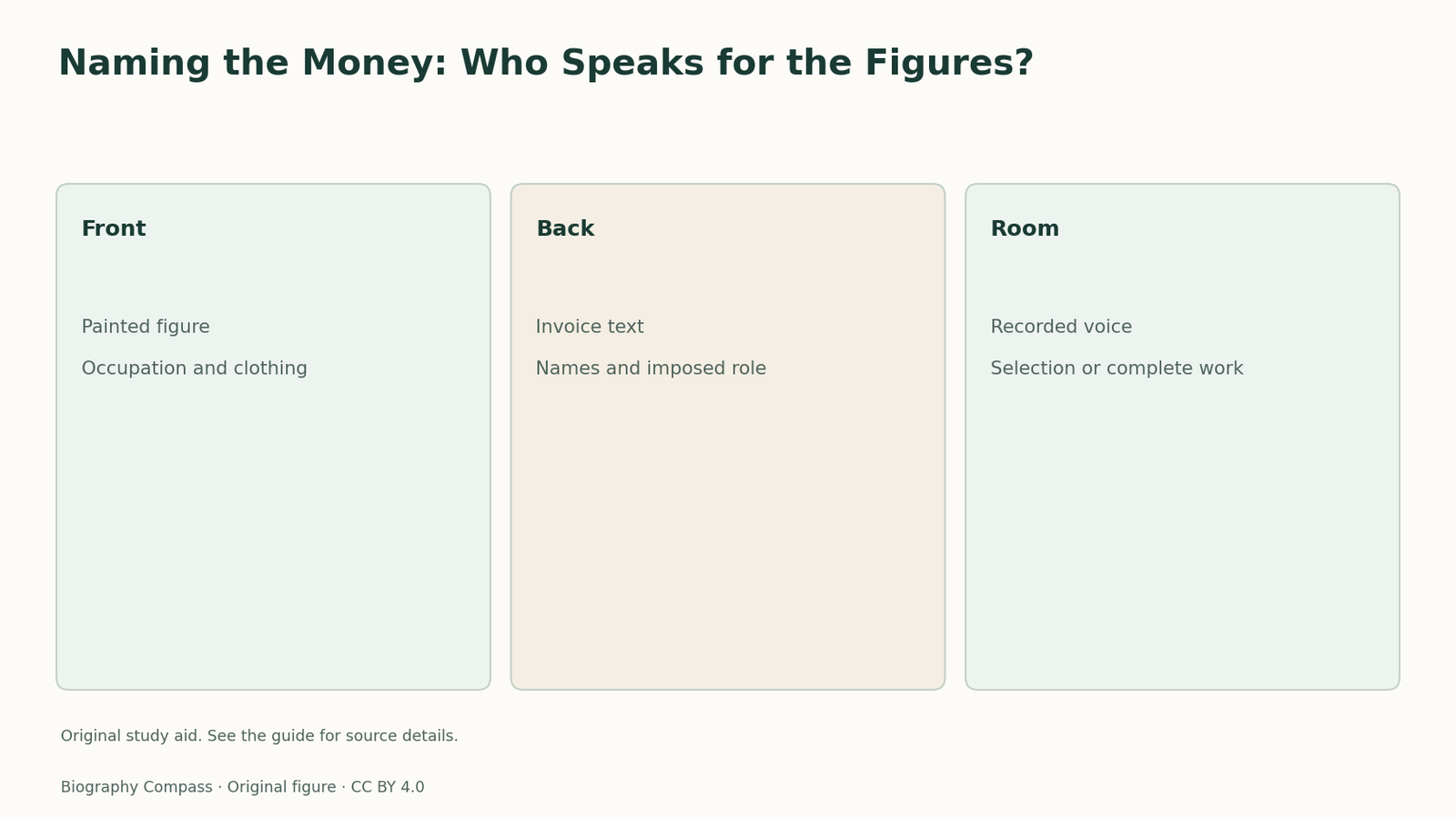
The artist’s account identifies one hundred life-sized painted cut-outs in Naming the Money. Texts placed on their backs and a soundtrack give the figures histories and voices beyond their visible clothing or occupation. The format changes how a visitor encounters a painted person. Walking around a figure can reveal information unavailable from the front, while sound introduces another temporal layer. The work therefore asks for more than a rapid scan of a crowded painted scene.
Sources for this section: [2]
The development letters identify invention
Himid’s letters describe abandoning an earlier plan for ten canvas paintings and developing the larger group of cut-outs. She also describes naming and writing the figures into being. These passages explain the work’s imaginative process. They should not be converted into a claim that the artist recovered one hundred documented identities from an archive. The historical problem of erased or imposed identities is real; the installation addresses it through constructed stories that allow figures to articulate different relations between a remembered name and a coerced social role.
Sources for this section: [2]
A display can show a selection
UCCA’s 2025 work list specifies ten figures from Naming the Money, while the artist describes the complete work as one hundred. The numbers are compatible when the distinction between a whole installation and an exhibited selection is preserved. Diagram three layers: painted appearance, written identity and audible voice. A supported answer explains how each contributes different information. It also states which version or selection is being discussed. This prevents a photograph of a limited display from silently becoming evidence for the size and arrangement of every presentation of the complete work.
Continue the chronology
Related history guides
Biography context
Explore United Kingdom through connected lives
Connected biographies
Read the artist’s biography
b. 1954
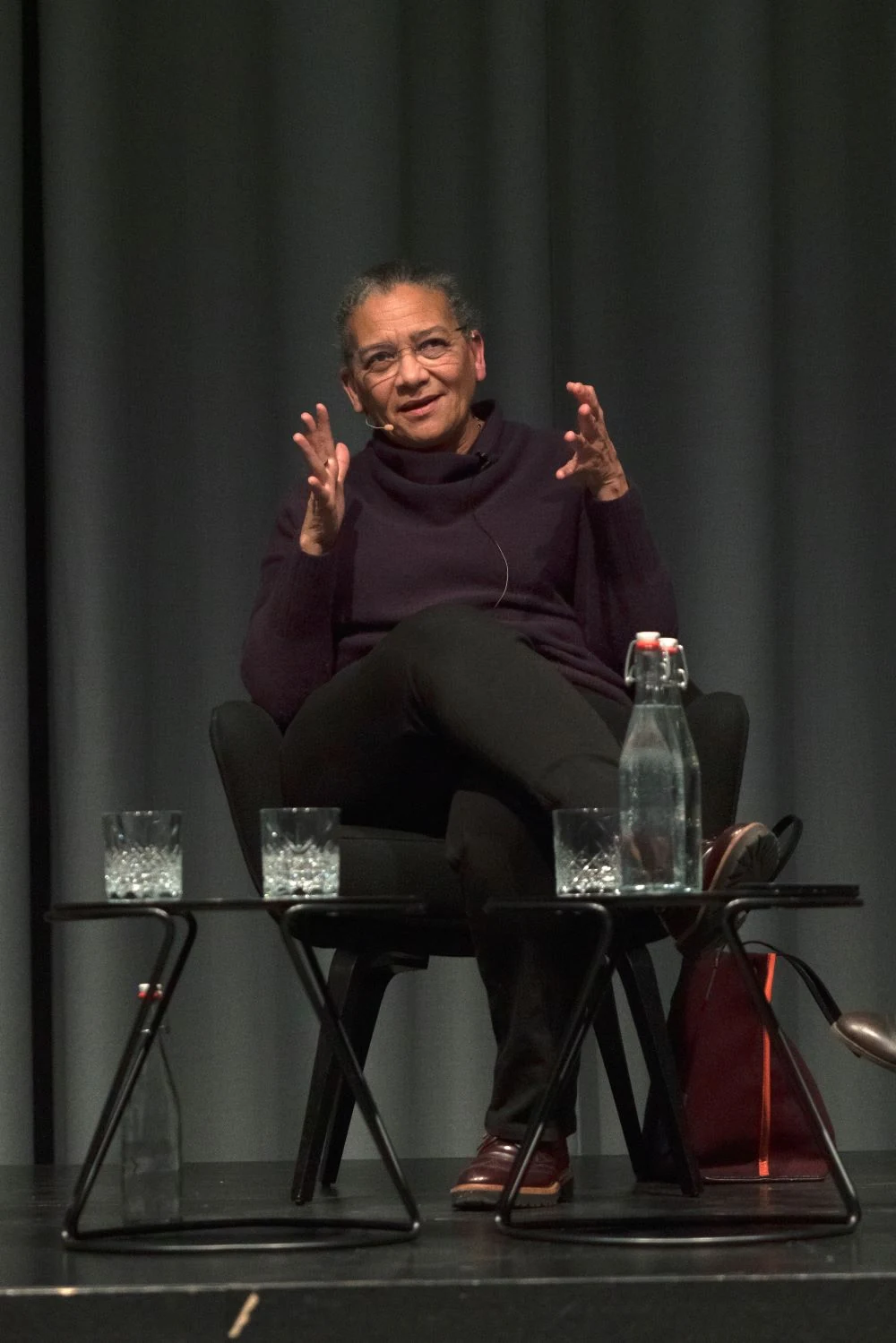
Lubaina Himid
Painter and installation artistA British artist who reimagines Black histories through painting, cut-out figures, objects and sound.Read biographyQuick answers
Common questions
- Are the hundred figures portraits of known historical individuals?
- Himid’s development letters describe inventing and naming their stories; the work reimagines erased histories rather than documenting one hundred verified sitters.
Primary and institutional sources
How this history was checked
The listed records support the facts. Observation exercises and arguments are Biography Compass editorial interpretations. This article was reviewed on 7 November 2026.