
The short answer
Did Hero Honda end on one day? The familiar “2010 split” was a series: a new agreement, a share transfer, licensing arrangements and a different corporate identity. Manufacturing and customer service had to continue while those changes took place.
Chronology
A timeline of the turning points
Memorandums signed
Honda and the Indian partners agree a share sale and replacement product licences.
Ownership transfer
The company’s accounts record the end of the joint venture following the share transfer.
Hero MotoCorp legal name
A fresh incorporation certificate records the changed company name.
Independent brand presentation
A new public identity is unveiled while product development becomes a central question.
The partners had developed different paths
Hero Honda had combined Honda’s technology with the Indian partners’ manufacturing and market relationships for more than two decades. Honda also developed its wholly owned Indian two-wheeler subsidiary. That separate business changed the competitive setting in which the joint venture operated.
Contemporary analysis describes different growth ambitions and the prospect of the former partners competing more directly. The separation was not simply the disappearance of a successful brand. It rearranged ownership and freedom to pursue products and markets, while leaving an operating company with factories, dealers, workers and millions of existing customers.
The December announcement was an agreement to change ownership
On 16 December 2010 Honda announced that it would sell its entire 26 per cent Hero Honda holding to the Indian partners. The release identifies Brijmohan Lall Munjal, Pawan Munjal, Sunil Kant Munjal and Honda’s Fumihiko Ike at the announcement. It describes memorandums and intended subsequent arrangements, rather than saying every transfer had already closed that day.
Hero’s 2010–2011 accounts then record 22 March 2011 as the date the joint venture ceased following the transfer of Honda’s shares. A business history can use “2010 split” as a familiar label while still giving the later legal transaction date. Agreement, economic terms and completed ownership transfer are related but different events.
Ownership ended before every technology relationship ended
Honda agreed to replacement licences allowing the company to continue manufacturing, selling and servicing existing products, with additional licences for new products. This supported continuity for customers and the operating business. Selling shares did not automatically extinguish the permissions needed to make every motorcycle already in the portfolio.
The annual report records the costs and amortisation of licensed rights, with the relevant period extending to June 2014. Those accounting entries help explain why an independent shareholder structure could coexist with continuing reliance on licensed technology. They do not imply that Hero had already replaced all Honda-derived engineering immediately after the announcement.
A company name and a public brand changed through their own steps
Shareholders approved the company-name change in June 2011, and a fresh certificate dated 28 July recorded Hero MotoCorp Limited. The new identity was then presented publicly in August. Legal registration, board adoption of a logo and a launch event were different parts of making the new brand operational.
Independent accounts describe the communication work around the new identity, including designers, advertising teams and a public anthem. These contributors helped communicate continuity and change to dealers and consumers. A rebrand could express an ambition, but the ambition still depended on products, reliable supply and support for customers who had bought under the earlier name.
The more difficult transition was building future capability
The former joint venture retained valuable products and a large distribution base. It also faced the need to strengthen research and development and establish technical relationships outside the old partnership. Contemporary commentary asked how it would protect margins, compete with Honda’s own business and supply future models.
These questions make the episode more than a ceremonial renaming. Pawan Munjal and his colleagues had to connect an independent corporate strategy with capabilities once obtained through a partner. The relevant test was whether the organisation could keep producing, improving and supporting vehicles after the ownership transaction, rather than whether the new logo attracted attention on its first day.
Continue the chronology
Related history guides
Biography context
Explore India through connected lives
Connected biographies
A documented executive participant
1954–present
Pawan Munjal
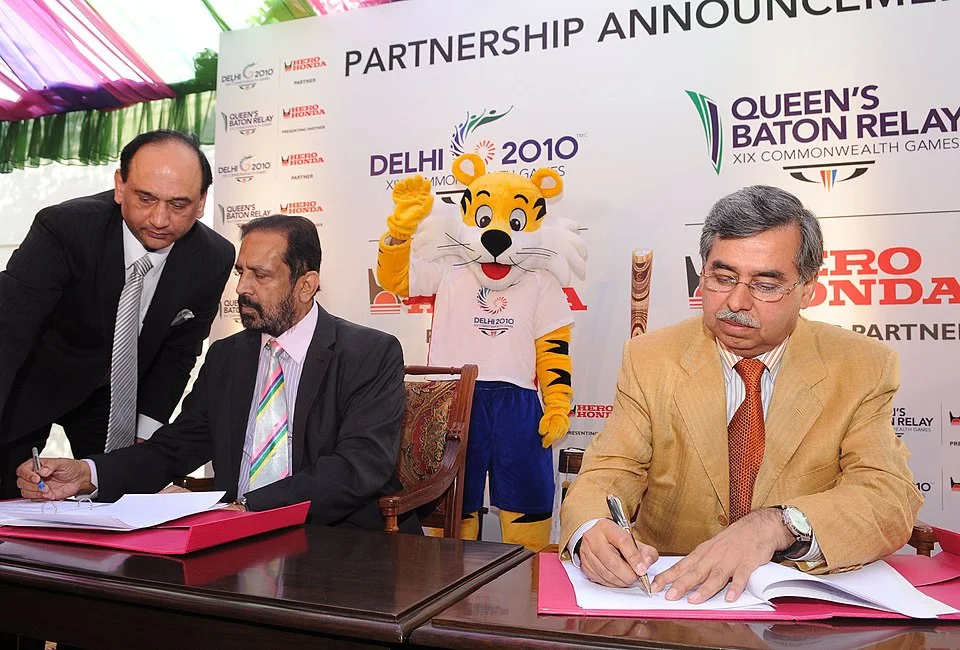
Hero MotoCorp executive chairmanPawan Munjal developed his career within the Hero manufacturing businesses and became a senior leader of Hero Honda. He helped negotiate the Honda separation announced in 2010 and the transition to Hero MotoCorp in 2011. He became chairman in 2015 and is executive chairman in the reviewed company record.Read biographyQuick answers
Common questions
- Why do accounts use both 2010 and 2011?
- The agreement was announced in December 2010; Honda’s shares transferred in March 2011 and the legal name changed in July.
- Did share ownership and technology licensing end together?
- No. Replacement licences allowed specified products and service to continue after the share sale.
- Did a new name prove complete engineering independence?
- No. Brand identity and product-development capability are different. Building future research and technical relationships remained necessary.
Primary and institutional sources
How this history was checked
The announcement is read alongside the annual report’s completed share-transfer and name-change dates. Contemporary independent analysis supplies the competitive and engineering questions; later brand recollections are not substituted for the legal record. This article was reviewed on 23 October 2026.
- Hero MotoCorpCurrent board and leadership: executive chairman and separate operating offices
- Bahadur Chand InvestmentsGovernance filing, March 2025: Pawan Munjal birth date and DIN
- UK Companies HouseHero Future Energies Global directors: Indian nationality and October 1954 birth month
- Hero Corporate ServiceOur Heritage: bicycle business, 1984 joint venture and supplier network
- Honda75 Years of Honda History: India, local partners, Dharuhera and CD100 production
- HondaHero Honda twentieth anniversary and production milestones, 10 December 2004
- HondaDissolution agreement and new product licences, 16 December 2010
- Hero MotoCorpAnnual Report 2010–2011: share transfer, legal name, brand and licence accounting
- Hero MotoCorp2016 AGM notice: Pawan Munjal executive tenure and June 2015 chairmanship
- Rediff / Business StandardCan Hero live up to its name? Contemporary brand and R&D analysis, August 2011
- Rediff / Business StandardBrijmohan Lall Munjal: family origins, partnerships, branding and succession, June 2015
- Rediff / Business StandardDifficult road ahead for Honda: separate subsidiary and post-split competition, March 2011
- PTI / The WeekDelhi High Court quashes DRI summons, 24 July 2024
- Hero FinCorpKey Information Document, 11 March 2026: disclosed tax appeals and ED proceedings
- Delhi High Court / Indian KanoonPawan Kant v. Directorate of Enforcement, 11 February 2026: property substitution order
- Ministry of Youth Affairs and Sports / Wikimedia CommonsPIB 26195: complete 2009 photograph, official authorship and EXIF credit
- Press Information BureauPrimary accurate-reproduction permission; third-party material excluded