
The short answer
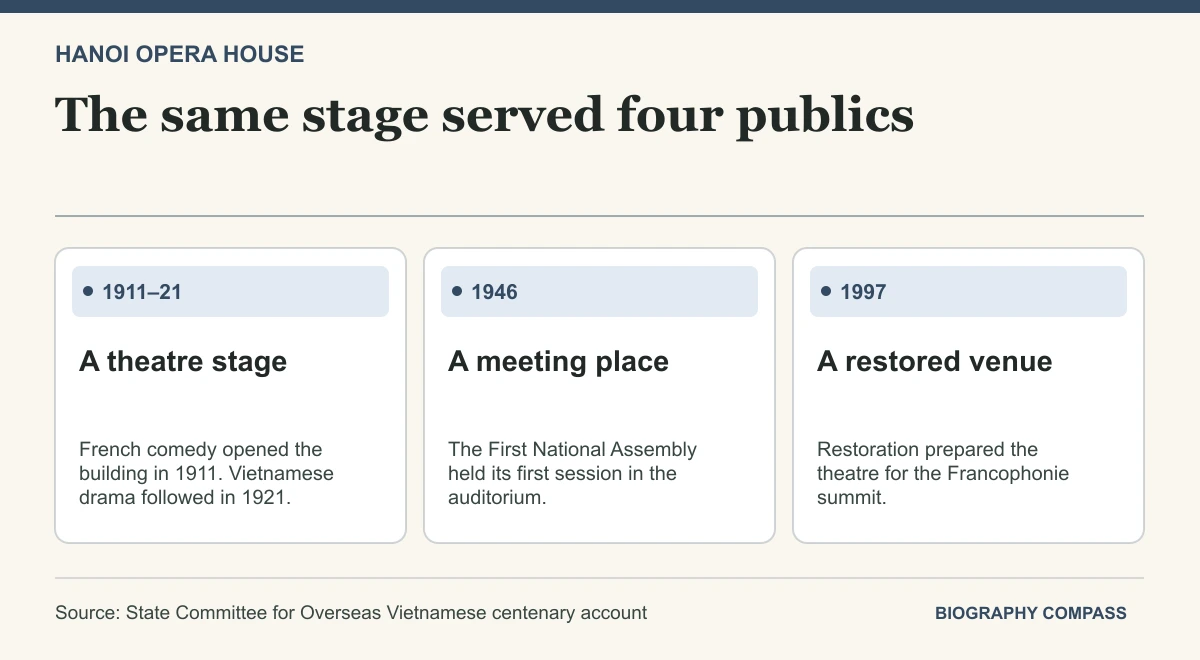
Hanoi Opera House opened with a French comedy in 1911. Ten years later it staged Vũ Đình Long’s Vietnamese drama Chén thuốc độc. In March 1946 its auditorium served as the meeting place of the first National Assembly session. The same building held these roles because its stage, seating and central location let different groups address a public audience.
Compare the records
Four events, four uses of the auditorium
The programme changed with the group making use of the theatre and the audience it addressed.
| Event | Type of gathering | What the record shows |
|---|---|---|
| 1911 opening | French theatre | A comedy marked the inauguration of the colonial building. |
| 1921 Chén thuốc độc | Vietnamese theatre | An original Vietnamese play used the prominent public stage. |
| 1946 Assembly session | Parliamentary business | Deputies met and approved the list of the government. |
| 1997 summit | International conference | A restoration prepared the building for the event. |
Chronology
A timeline of the turning points
Construction begins
The colonial administration began building the theatre.
Opening performance
Le Voyage de Monsieur Perrichon inaugurated the theatre.
Vietnamese play premiered
Vũ Đình Long’s Chén thuốc độc was presented in the auditorium.
National Assembly convenes
The First National Assembly held its first session at the theatre.
Restoration serves the Francophonie summit
Repairs prepared the theatre for the international gathering in Hanoi.
The opening and a change in drama
The government’s centenary account gives two precise dates: work began on 7 June 1901 and the theatre opened on 9 December 1911 with the French comedy Le Voyage de Monsieur Perrichon. It also records the staging of Vũ Đình Long’s Chén thuốc độc on 22 October 1921. The published account of the 1921 evening stresses its use of Vietnamese social settings and dialogue, giving readers a specific point at which to compare the repertoire.
The first National Assembly session in 1946
On 2 March 1946 the First National Assembly of the Democratic Republic of Vietnam met in the theatre. Deputies approved the government headed by Hồ Chí Minh and approved the membership of the constitutional drafting committee. The record matters to the history of the building as well as to the Assembly: an auditorium designed for performance held the delegates who conducted the session.
How the 1997 restoration handled the building
Vietnam undertook restoration ahead of the 1997 Francophonie summit. The government anniversary account notes that the restoration used slate from Lai Châu to replace roof material originally brought from France. That is a practical example of how repair can preserve the visual character of a roof while the material’s source changes. The museum openings associated with the same summit can be followed through their own institutional records.
Continue the chronology
Related history guides
Connected biographies
People connected to this history
1890—1969
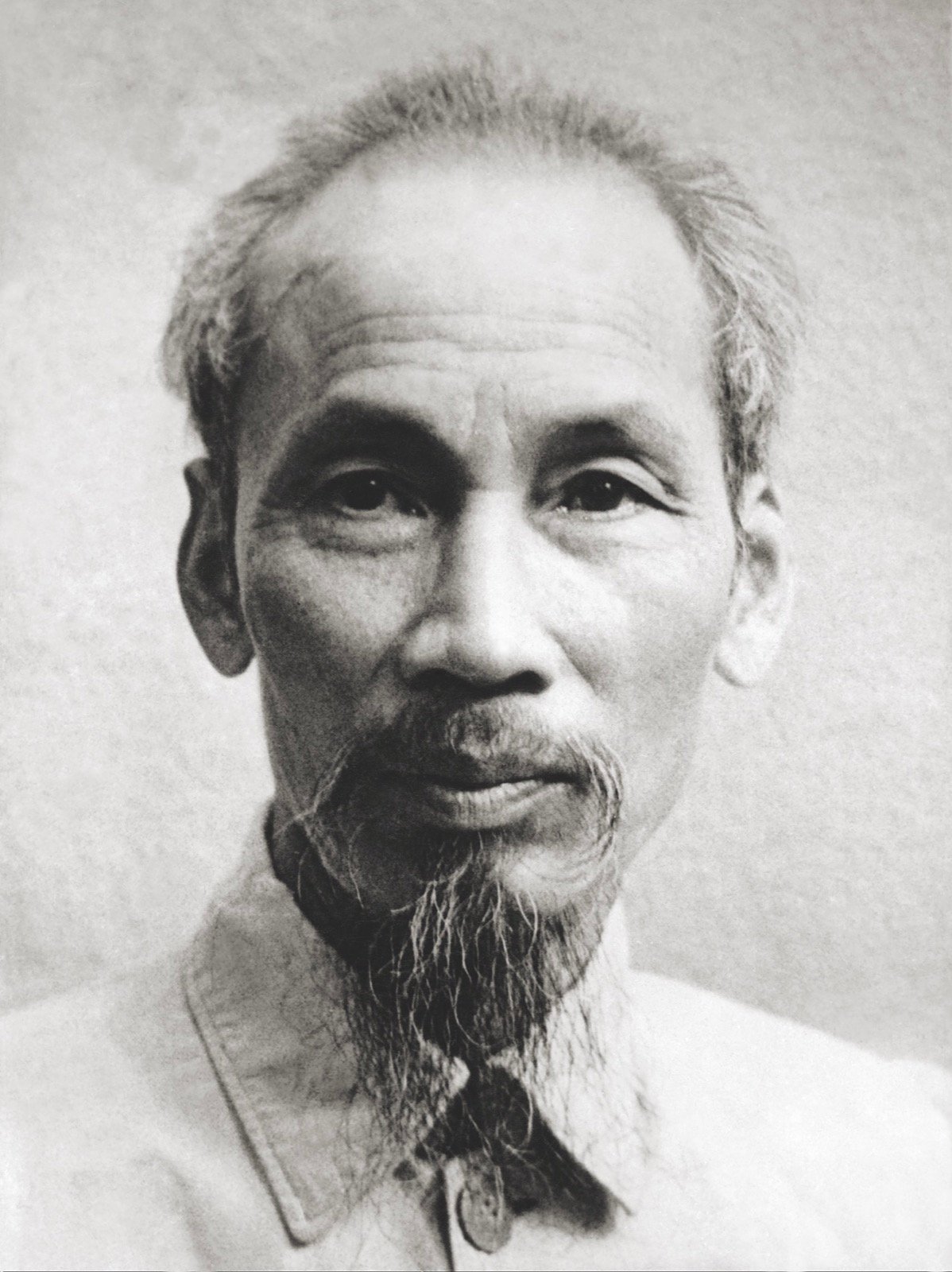
Hồ Chí Minh
Revolutionary leader and president of North VietnamThe revolutionary leader who declared Vietnamese independence in 1945 and served as president of North Vietnam until his death in 1969.Read biographyQuick answers
Common questions
- When did Hanoi Opera House first open?
- The opening performance took place on 9 December 1911.
- When did Vietnam’s First National Assembly meet there?
- It held its first session in the Opera House on 2 March 1946.
Primary and institutional sources
How this history was checked
Dates, legal milestones and historical claims are checked against the official and institutional records below. This article was reviewed on 19 November 2026.
- State Committee for Overseas VietnameseA century of the Hanoi Opera House
- Hanoi Department of Culture and SportsThe capital and its cultural landmarks
- Vietnam cultural databaseHanoi Opera House
- Vietnam Museum of EthnologyMuseum history
- Vietnam National Museum of HistoryHistory of the two predecessor museums