
The short answer
Glencore’s flotation changed how an established commodity business was owned and financed. It combined new company shares with sales by existing holders, followed by a public market in those shares. Understanding that structure explains why several different proceeds and valuation figures appeared in contemporary reporting.
Chronology
A timeline of the turning points
Pricing and conditional trading
The offer is priced and London conditional dealings begin.
London admission
Unconditional London dealings follow the earlier pricing.
Hong Kong admission
The second market follows on its own timetable.
Structure disclosed
Accounts explain reorganisation, issued shares and proceeds.
An existing physical business became a public issuer
Glencore entered the market with trading, logistics and industrial investments already in place. Its annual report described sourcing and moving physical commodities, supported by assets such as mines and storage facilities. Investors were buying an interest in this operating network, rather than financing the first shipment of a new venture.
Euromoney highlighted the combination of producing assets, interests in other companies and a trading and transport division. Understanding all three mattered when assessing the offer. A business with commodity exposure and industrial investments cannot be understood solely as a stock-market trading desk or solely as a collection of mines.
Company capital and existing-holder sales went to different recipients
The 19 May pricing announcement described approximately $10 billion of gross proceeds before the over-allotment option. About $7.9 billion was primary capital from newly issued shares, while approximately $2.1 billion came from secondary sales by existing shareholders. The two components did not represent the same flow of money.
New equity supplied funds to the business. Secondary sales allowed existing holders to sell part of their interests. Consequently, neither the entire offer value nor the company’s much larger market capitalisation should be described as a payment to its chief executive. Ownership valuation, seller proceeds and company financing answer different questions.
Sources for this section: [2]
Ownership changed without an immediate complete employee exit
The annual report explains that profit-participation balances were exchanged for ordinary shares before listing, and that Glencore International plc became the ultimate parent. This was a reorganisation of ownership rights as well as an invitation to outside investors. The accounting record helps explain what the listed shares represented.
A contemporary profile reproduced by Wits described the earlier difficulty of funding retiring partners’ exits from inside the business. Marketable shares offered an alternative: a departing partner could find an outside buyer while the company retained its assets. A stock market thus changed the relationship between personal liquidity and the enterprise’s operating resources.
Pricing, conditional dealings and admission were separate stages
The London offer price was 530 pence. Contemporary Reuters reporting placed the transaction within a changing pricing range and distinguished the offered stake from possible over-allotment. An option to sell additional shares could change the final scale, so headlines using $10 billion and $11 billion could describe different transaction assumptions.
Conditional London trading began on 19 May; unconditional London and Hong Kong trading followed on 24–25 May.
Public visibility did not guarantee investment performance
Euromoney’s later account described weak share performance after the offer, alongside the success of raising capital. The issuer’s financing objective and an investor’s subsequent return were different outcomes. Strong demand during book-building did not guarantee that a buyer could later sell at a higher price.
The published accounts also exposed ownership arrangements, operations and risks to wider examination. Their discussion of working capital, hedging and counterparties showed that moving goods required funding and carried losses as well as opportunities. Public disclosure made those questions more inspectable; it did not remove the underlying commercial or governance risks.
Continue the chronology
Related history guides
Biography context
Explore London, United Kingdom through connected lives
Connected biographies
The executive within the ownership change
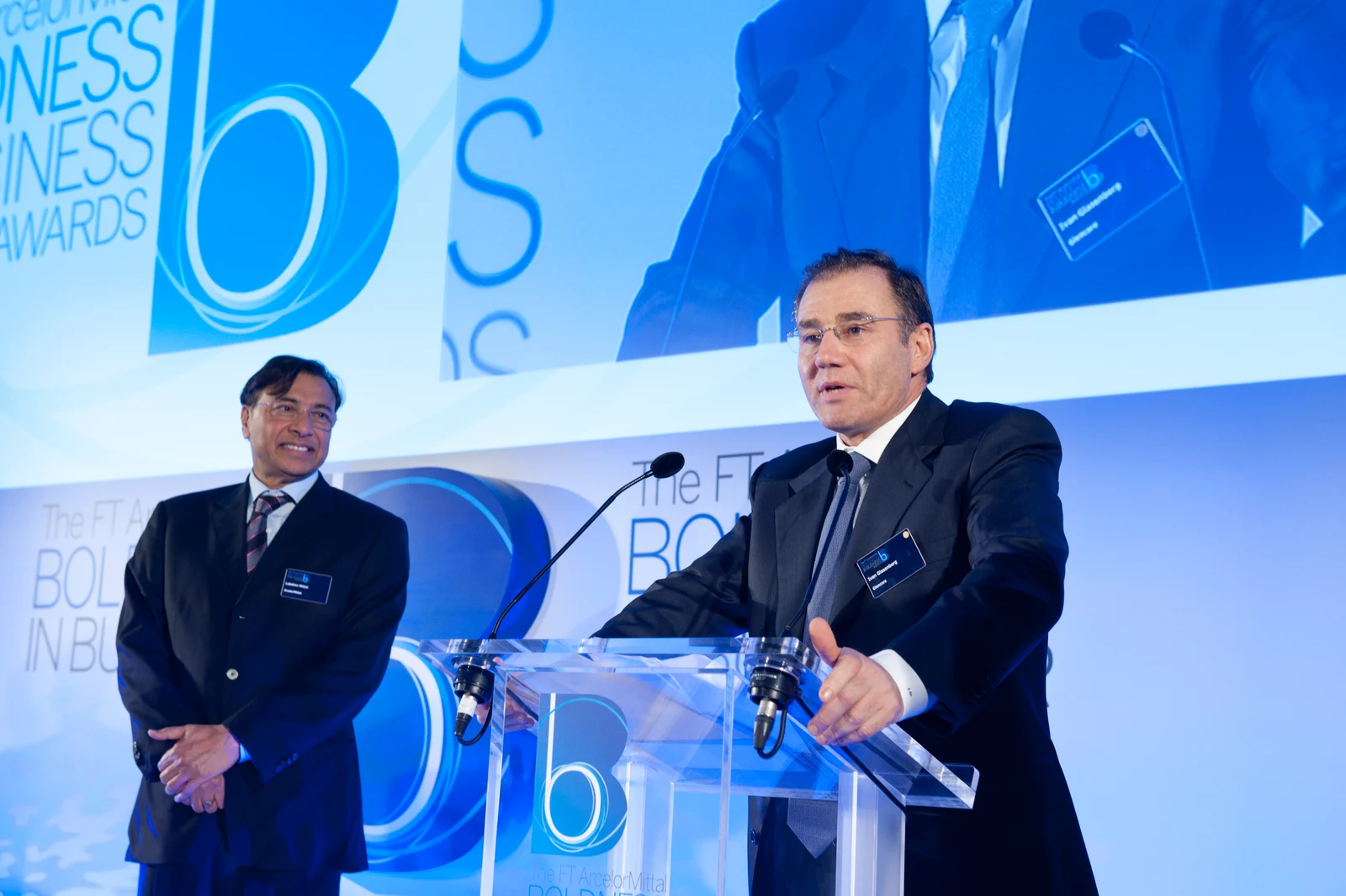
1957–
Ivan Glasenberg
Former Glencore chief executive and commodities traderIvan Glasenberg moved from accountancy into international coal trading before leading Glencore for almost two decades. Its flotation and Xstrata combination changed the business’s scale and ownership. Assessing that career also requires attention to corporate misconduct, the distinction between executive office and shareholding, and his later departure from management.Read biographyQuick answers
Common questions
- Did all the offer proceeds go to Glencore?
- No. The announcement separated new company capital from sales by existing holders.
- Was market capitalisation cash received by the CEO?
- No. It valued the company’s equity at the offer price; it was not a personal cash payment.
- Why are there several May debut dates?
- Pricing and conditional dealings preceded unconditional admission; London and Hong Kong also followed different dates.
Primary and institutional sources
How this history was checked
The dated pricing release and selected annual-report passages establish mechanics. Contemporary Reuters reporting and later Euromoney analysis distinguish expectations from outcomes. Report sections share one source allowance; no full prospectus, current share-price assessment or investment recommendation is claimed. This article was reviewed on 24 October 2026.
- Glencore2011 report: selected business, restructuring and risk passages
- Glencore / RNS19 May 2011 pricing announcement: proceeds and retained ownership
- Reuters / Miningmx19 May 2011: offer price, flotation and timing
- EuromoneyDeals of the Year 2011: business model and subsequent market performance
- Wits University, republishing a contemporary business profileMay 2011: partner exits and the change to marketable shares
- Financial Times photos / Wikimedia CommonsFull Ivan Glasenberg event photograph, Flickr item 8577530818
- Financial Times photos / FlickrOriginating item with current explicit CC BY 2.0 grant
- Creative CommonsAttribution 2.0 Generic