
The short answer
How did Lillian Gilbreth apply motion study beyond the factory?
Compare the evidence
Observation, method and result
Compare the inspected records and the different claims they support.
| Record | Evidence | Limit |
|---|---|---|
| Smithsonian kitchen account | Treats domestic activity as work and management. | Saved movement does not by itself measure happiness. |
| Purdue and MIT biographies | Document consulting and attention to disability access. | One layout cannot be assumed suitable for every user. |
The home becomes a place of organised work
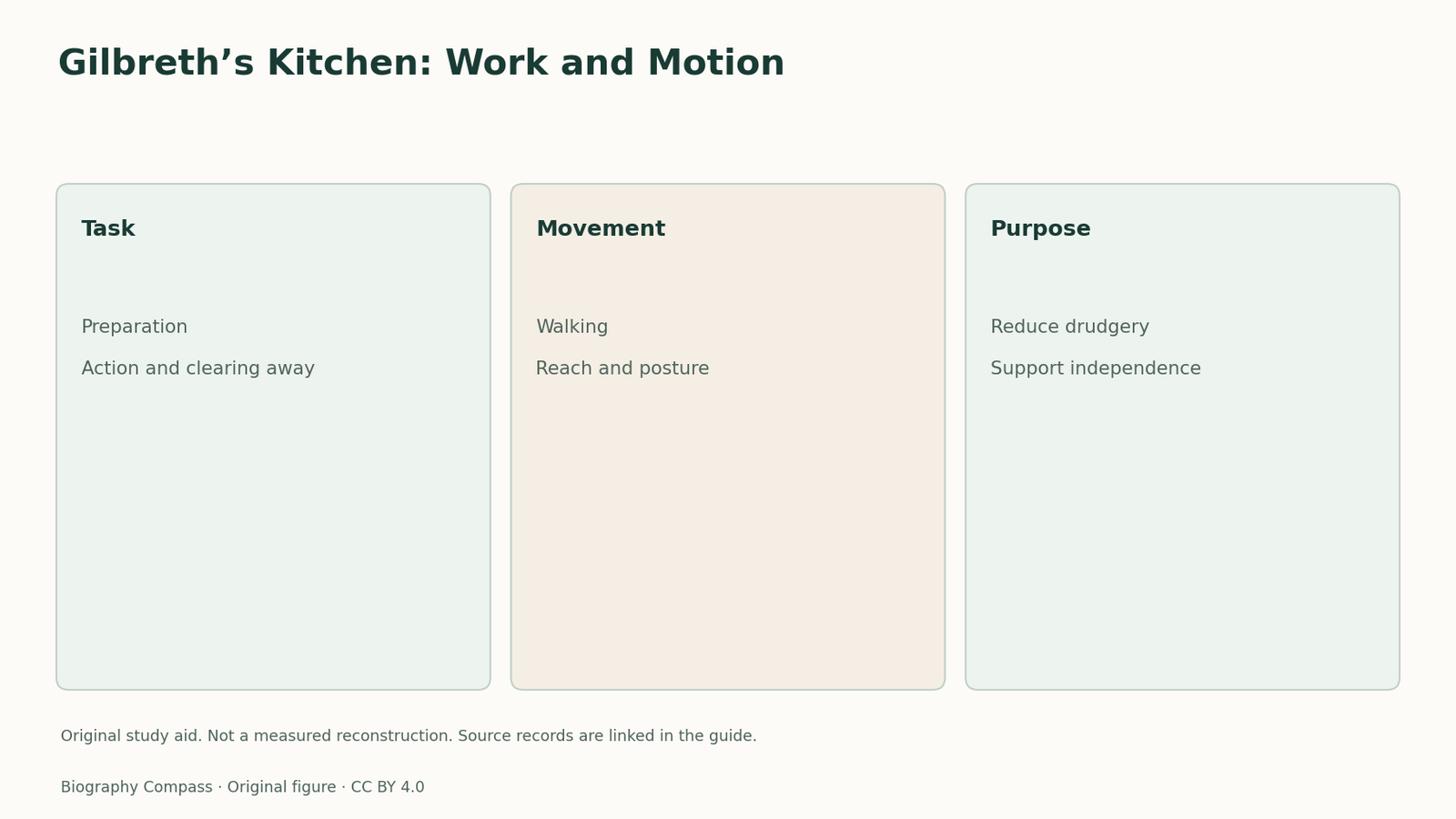
The Smithsonian describes Gilbreth treating the homemaker as both worker and manager. This reframes a kitchen as a setting in which tasks, storage and movement can be studied. A domestic activity often includes preparation and returning tools as well as the visible moment of cooking. Naming those stages makes previously overlooked labour available for analysis. The approach does not depend on calling every household a factory; it transfers a method of questioning to a different environment.
Sources for this section: [2]
Distance is only one possible measure
A shorter reach or walking route may reduce repeated effort, but it is not automatically the best arrangement for every user. Purdue and MIT record Gilbreth’s attention to people with disabilities. That context adds questions about reach, posture, independence and the ability to complete a task. Draw an invented kitchen with a work surface, storage and a water point. Mark one task’s movements before proposing a change. The diagram is a teaching example, not a reconstruction of a particular historical kitchen.
Compare the purpose of the redesign
Make a table with movement, effort and user goal as separate headings. A supported answer identifies which movement is reduced and explains why that matters to the person doing the work. It should not claim that a shorter route proves greater happiness. The Smithsonian’s account places saved time in relation to leisure and creative activity; demonstrating that outcome would need evidence beyond the floor plan. The value of the method is to connect an observable change in work with a clearly stated human purpose, keeping both available for examination.
Continue the chronology
Related history guides
Biography context
Explore United States through connected lives
Connected biographies
People behind the records
1878–1972
Lillian Gilbreth
Industrial psychologist and engineerLillian Gilbreth brought psychology and motion study into factories, household work, disability access and engineering education.Read biography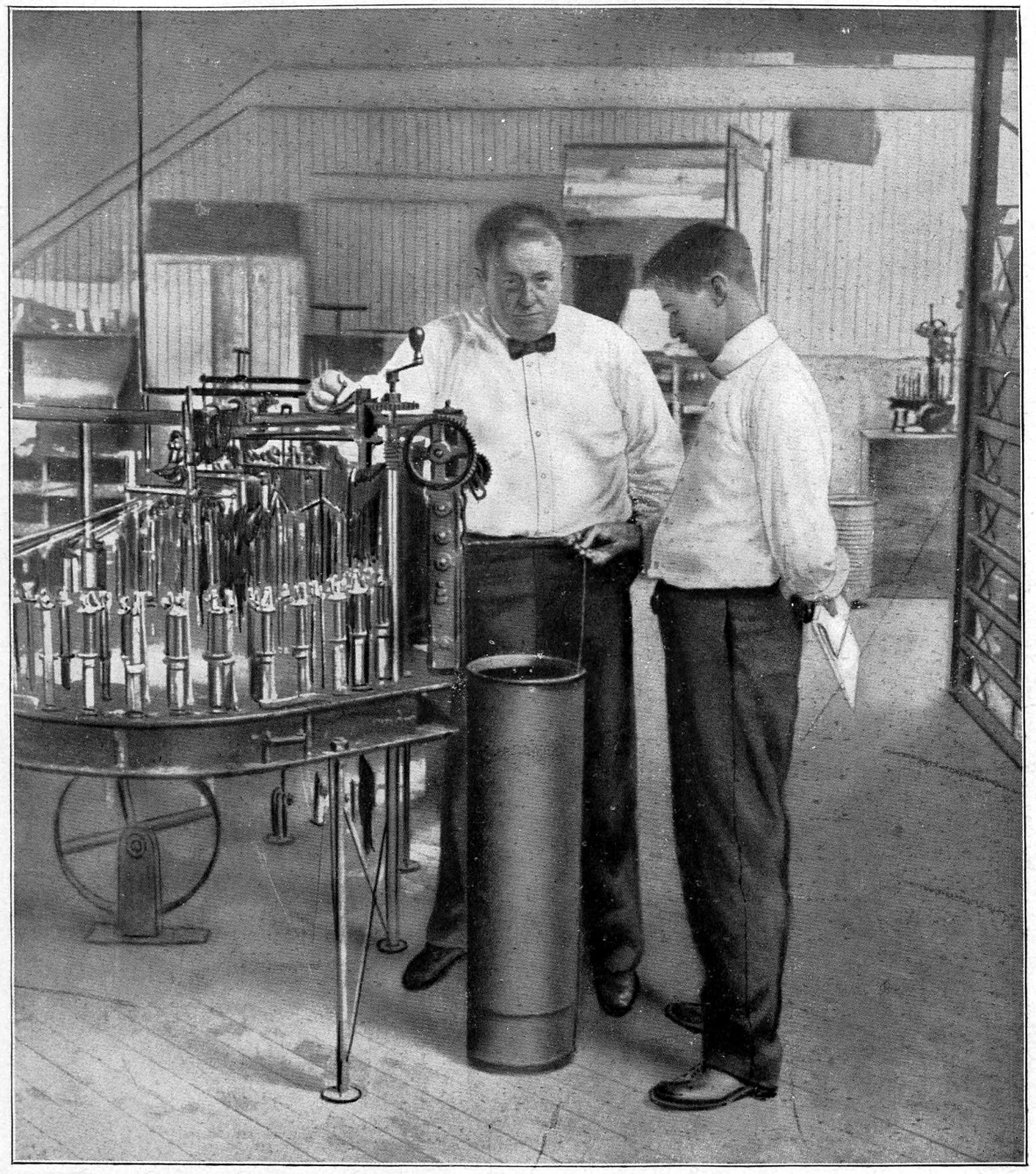
1868–1924
Frank Gilbreth
Builder and management consultantFrank Gilbreth moved from construction into motion-study consulting, using films and light traces to investigate the organisation of physical work.Read biographyQuick answers
Common questions
- How did Lillian Gilbreth apply motion study beyond the factory?
- She applied motion analysis to household tasks and design, asking how arrangements could reduce effort and support users, including people with disabilities.
Primary and institutional sources
How this history was checked
Source notes distinguish documented facts from the explanatory examples and diagrams created for this guide. This article was reviewed on 7 November 2026.