
The short answer
Middlemarch becomes clearer when its households are read as parts of one social world. Money, reputation and institutional decisions carry consequences between plots. The sections below discuss major developments and the ending.
Chronology
A timeline of the turning points
The narrated provincial world
The principal action unfolds around marriage, medical practice and the approach of parliamentary reform.
Publication begins
Eliot’s novel begins reaching readers decades after the period it depicts.
Publication completed
The completed work connects several households and follows their different futures in a finale.
A later development
Daniel Deronda pursues another arrangement of marriage, identity and wider historical claims.
Begin with a town, not a single heroine
The subtitle, A Study of Provincial Life, describes the scale of the project. Dorothea Brooke’s wish to make her life useful is important, but the novel also follows a doctor, a banker, merchants, clergy, landowners and people who manage or work on estates. Their stories overlap through visits, credit, marriage, employment and the circulation of news. A town is made through those connections.
The main action belongs to the years around the 1832 Reform Act, while publication came in 1871–1872. Eliot’s retrospective position lets the narrator compare hopes with consequences. The Prelude’s Saint Theresa introduces the question of what happens to large aspirations when available opportunities are small. That question travels beyond Dorothea to other characters who imagine a more consequential future.
Marriage links private expectation to property
Dorothea marries Edward Casaubon partly because she imagines scholarship as a route to serious intellectual service. Living with him exposes the gap between that imagined vocation and his actual needs. Her capacity to work or know is constrained within a marriage she expected to enlarge it. The problem is an arrangement of education, admiration and authority, not simply a warning against an unattractive husband.
Lydgate and Rosamond also marry through incomplete ideas of one another. He expects domestic sympathy without intellectual demands; she imagines a life of status and comfort. Their spending and disagreements affect his medical freedom. Comparing the two marriages reveals a repeated structure with different consequences: a prospective spouse becomes the vehicle for a future that the other person has never agreed to supply.
Reform happens through compromised institutions
Lydgate hopes to advance medical knowledge and improve practice. The hospital offers an opportunity, but its funding and appointments connect him with Bulstrode. The contest between Tyke and Farebrother for the chaplaincy shows how professional decisions are entangled with patronage, doctrine and personal reputation. Reform requires votes, money and cooperation from people whose purposes do not coincide.
Parliamentary politics provides a parallel. Mr Brooke’s reforming language sits uneasily beside his management of his own tenants. Railway plans likewise require work on particular land and provoke local resistance. These are not decorative references to national history: they ask how a proposed public improvement is negotiated by a provincial community whose members have property, habits and influence to defend.
Spoilers: debt moves harm between households
Fred Vincy expects an inheritance and behaves as though hopeful expectation were already an asset. Caleb Garth’s guarantee of his borrowing exposes the Garth household to the cost of that assumption. Mary Garth’s judgement and Caleb’s eventual offer of useful work give Fred another route. His development depends on learning a practice and accepting responsibility, rather than receiving a reward for being likeable.
Lydgate’s debt creates a more dangerous dependence. Bulstrode’s £1,000 loan later looks like payment for complicity when the history surrounding Raffles becomes public. Raffles’s illness and death bring medical treatment, concealed wrongdoing and the banker’s self-justifications into one plot. The town’s judgement can injure Lydgate even though suspicion and proven responsibility are different things.
Sources for this section: [5]
Spoilers: a dead hand and a living act of trust
Casaubon’s codicil makes Dorothea’s inheritance conditional on not marrying Will Ladislaw. Property gives his jealousy an effect after his death and makes the clause itself an insinuation about her conduct. Her later choice therefore has a financial cost. The question is not only whom she loves, but who claims the power to define her future and reputation.
Dorothea’s willingness to trust Lydgate also links the plots. She offers practical help when public suspicion makes other people withdraw. Her encounter with Rosamond and Will produces a painful misunderstanding before further conversation alters what each knows. Sympathy here requires effort and corrected judgement; it is not the instantaneous certainty of a naturally superior heroine.
The finale gives success several incompatible measures
Fred and Mary build a life around work and domestic affection. Lydgate gains a prosperous practice but regards his abandoned scientific ambition as failure. Dorothea’s life with Will does not become the grand public career imagined at the beginning. The finale records different futures rather than awarding every protagonist the same kind of fulfilment.
Its final attention to people whose acts do not enter public history returns to the Prelude’s problem of unrealised greatness. Readers can value Dorothea’s influence while still asking why her opportunities are limited. The connected plots make the answer larger than character: education, marriage, money, professional institutions and the judgements of neighbours shape what any intention can accomplish.
Continue the chronology
Related history guides
Biography context
Explore United Kingdom through connected lives
George Eliot
Connect the novel with translation, editorial work and a career of moral and formal enquiry.
Explore the biographiesPrimary textMiddlemarch’s connected decisions
Read the chaplaincy, Garth debt, Casaubon codicil, Raffles crisis and finale in the linked transcription.
Explore the biographiesConnected biographies
Novelists of households and public life
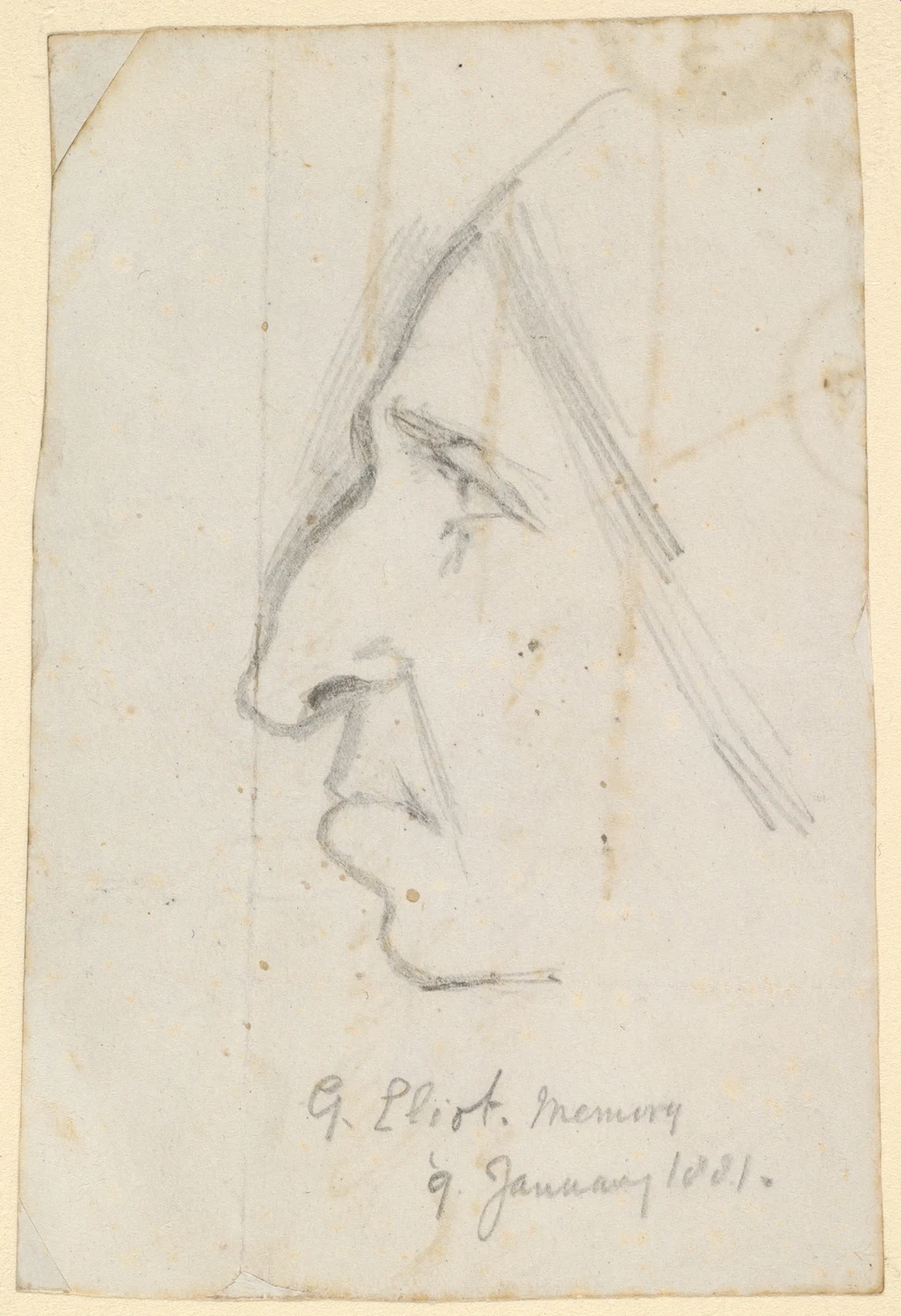
1819–1880
George Eliot
Novelist, translator and editorGeorge Eliot was the pen name of Mary Ann Evans, a British novelist, translator and editor who explored how intimate choices develop within families, institutions and communities.Read biography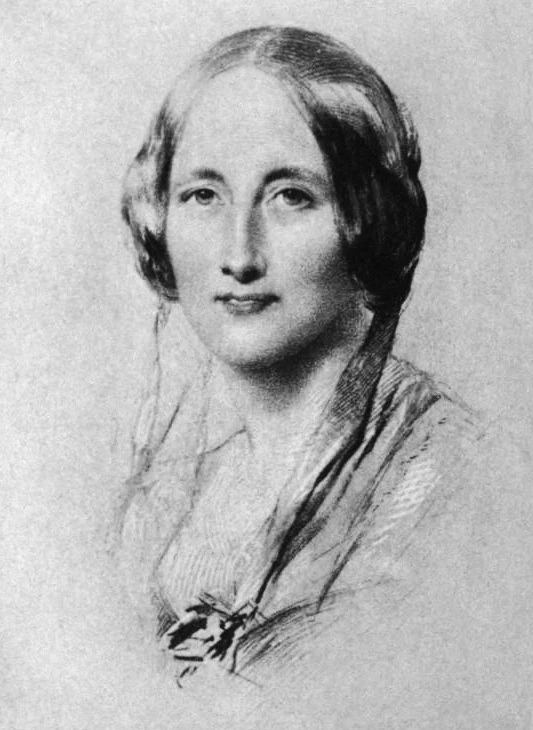
1810–1865
Elizabeth Gaskell
Novelist, short-story writer and biographerElizabeth Gaskell was an English writer whose fiction explored industrial conflict, women’s social vulnerability and the everyday arrangements that sustain a community.Read biography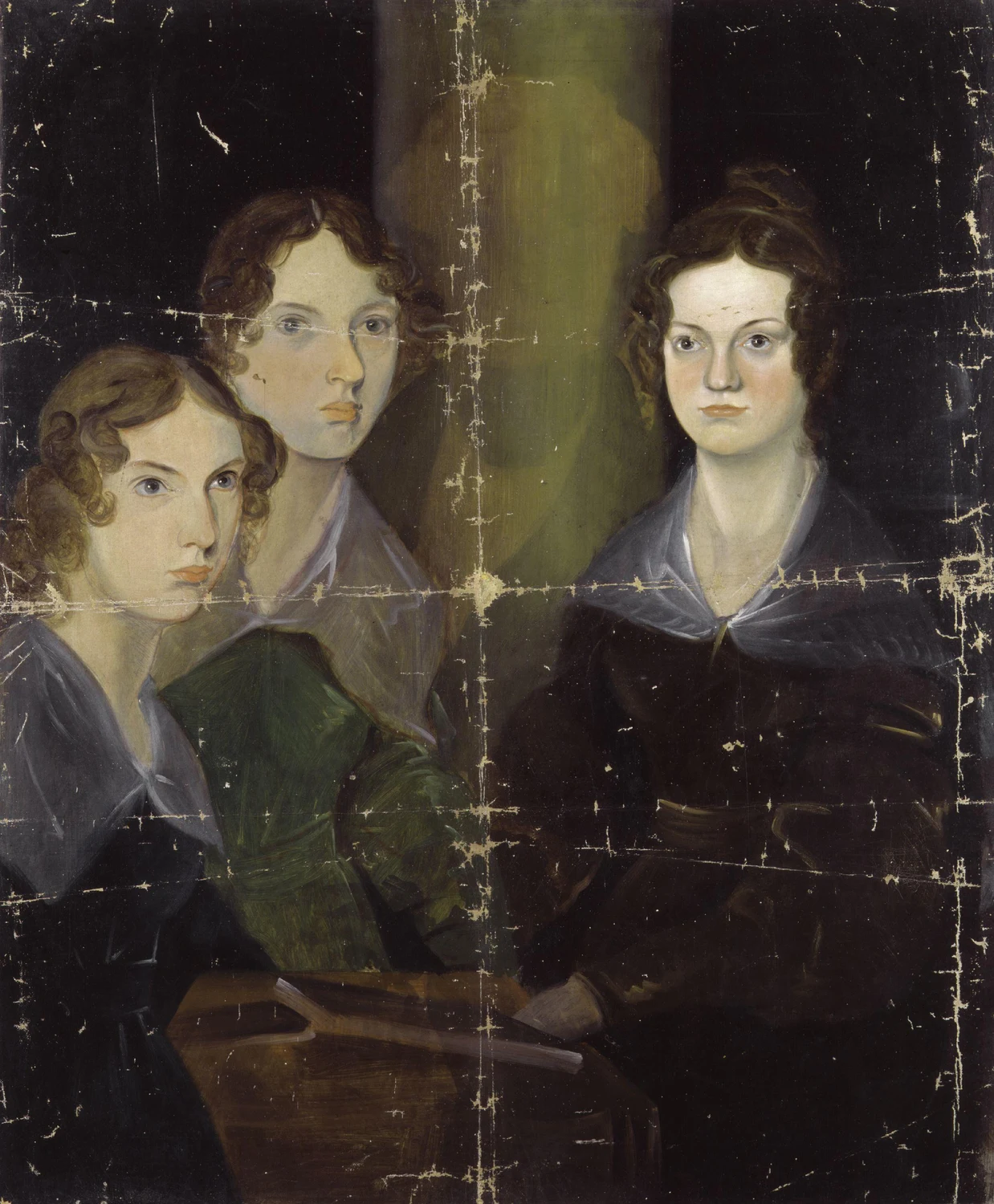
1820–1849
Anne Brontë
Novelist and poetAnne Brontë was an English novelist and poet whose fiction examines paid education, unequal marriage and the resources women need to protect themselves and their children.Read biographyQuick answers
Common questions
- Why does the novel have so many plots?
- The plots show how people’s choices affect others through shared institutions, family connections, employment, debt and reputation. Their interdependence is part of the provincial study.
- Is it set when Eliot wrote it?
- No. Publication was in 1871–1872; the main action looks back to 1829–1832 and the approach of the first Reform Act.
- What connects Lydgate’s marriage with medicine?
- Household spending and debt narrow his professional independence. Bulstrode’s financial help then exposes him to reputational damage during the Raffles scandal.
- Does the ending say ambition is pointless?
- It distinguishes public achievement, economic prosperity, useful work and less visible influence. Its different futures invite judgement about which ambitions can be fulfilled and what limits them.
Primary and institutional sources
How this history was checked
Selected primary-text passages cover the Prelude, chaplaincy, Fred’s borrowing and Caleb’s guarantee, reform references, Casaubon’s codicil, Lydgate’s debt, the Raffles crisis and finale. The linked text is a later Caldwell-edition transcription, not a first-edition facsimile. Carlisle’s Stanford essay supplies interpretive context; no complete manuscript collation or claim that fictional narrators simply state Eliot’s opinions is made. This article was reviewed on 23 October 2026.
- Stanford Encyclopedia of Philosophy / Clare CarlisleGeorge Eliot: life, works, literary form and moral enquiry
- Harry Ransom Center, University of Texas at AustinGeorge Eliot manuscript collection: indexed biographical sketch
- Cambridge University Press / George Levine, editorThe Cambridge Companion to George Eliot: selected chronology entries
- Warwickshire County CouncilGeorge Eliot’s links with Nuneaton and Warwickshire
- George Eliot / Project GutenbergMiddlemarch: selected provincial, marriage, debt, hospital and finale passages
- Metropolitan Museum of ArtGeorge Richmond’s posthumous memory sketch, 2013.83, public-domain object record
- Metropolitan Museum of Art / Wikimedia CommonsExact CC0 sketch, complete paper and sole upload history
- Wikimedia CommonsComplete current Eliot JPEG