
The short answer
Elizabeth II was already queen when she entered Westminster Abbey on 2 June 1953. The coronation publicly marked her inherited office through oath, religion and ceremony, while television gave the event a new audience. Neither the crown nor the broadcast turned her into an elected policymaking ruler.
Chronology
A timeline of the turning points
The reign began
George VI’s death brought immediate succession while Elizabeth was in Kenya.
Preparations for the service
Abbey arrangements, seating, music, regalia and a London procession required extensive planning.
Oath, anointing and crowning
Archbishop Geoffrey Fisher conducted the coronation at Westminster Abbey.
A broadcast public event
Television and radio carried the ceremony to audiences far beyond the Abbey.
Public duty continued overseas
The new reign’s ceremonial visibility extended into Commonwealth visits and parliamentary occasions.
Accession supplied continuity before the coronation took place
On 6 February 1952 George VI died and Elizabeth succeeded immediately. She was in Kenya during a planned overseas tour and returned to Britain as queen. There was therefore no interval in which the monarchy waited for a coronation to acquire its next holder. The distinction explains why the first anniversary of the reign fell in February 1953.
The Abbey ceremony followed on 2 June. Its preparation allowed time for a major religious and public occasion after the death of the previous sovereign. Calling it an inauguration can be convenient, but risks suggesting that this was when Elizabeth first became legally entitled to perform the duties of the Crown.
The service joined an oath to religious consecration and regalia
Archbishop of Canterbury Geoffrey Fisher conducted the coronation at Westminster Abbey. The service involved recognition, an oath, anointing, the presentation of regalia and crowning. Elizabeth wore St Edward’s Crown for the crowning and the Imperial State Crown when leaving. The separate objects and stages carried meanings within a Christian ceremony rather than constituting a single decorative moment.
The anointing was understood by the Abbey as the ceremony’s most sacred act: the sovereign was set apart for service. Philip paid homage but was not crowned as a king alongside a reigning queen. That distinction between a sovereign and the sovereign’s husband helps explain the roles visible in photographs and recordings of the service.
Television widened access while one central act remained concealed
Radio carried the ceremony internationally, while television brought moving pictures of the service inside the Abbey to a mass audience. Many people watched collectively in the homes of friends or in public venues rather than on a set of their own. The BBC later regarded the occasion as a decisive moment in television becoming a mainstream medium.
The broadcast did not make every act visible. A canopy concealed Elizabeth during the anointing, preserving a boundary around the religious rite. Viewing estimates also depend on how audiences and locations are counted; institutional retrospectives give differing totals. The secure conclusion is a very large shared television audience, not a precision unsupported by consistent measurement.
The oath did not confer personal control of government policy
The ceremony’s language of rule and duty operated within a constitutional monarchy. Parliament and ministers governed; Elizabeth carried out formal functions such as appointing a prime minister and giving Royal Assent under conventions that constrained personal discretion. The crown did not give her a popular mandate or permit her to substitute a personal programme for the government’s.
A later Queen’s Speech, for example, announced ministerial policy rather than a manifesto she had written. Private audiences and access to papers gave the sovereign a place in consultation, but they were different from executive responsibility. Understanding those distinctions allows the coronation’s religious and emotional force to be recognised without confusing ceremony with the actual distribution of political power.
Commonwealth symbolism did not make every member a royal possession
Representatives of Commonwealth governments attended the coronation alongside British and foreign guests. The ceremony and procession displayed international connections inherited from empire and changing through decolonisation. Elizabeth’s position as Head of the Commonwealth was symbolic; it did not make her head of state of member republics or other monarchies.
Even the realms that shared her as sovereign had separate constitutional identities. New Zealand’s account describes the divisible Crown, a useful corrective to imagining one British government ruling every country represented in the spectacle. The coronation could project continuity and association, but it could not settle the political choices of independent states or erase the unequal history from which those relationships had developed.
Continue the chronology
Related history guides
British government and decolonisation
Compare royal Commonwealth symbolism with a prime minister’s public statement about African nationalism and its policy limits.
Read the timeline1931The Crown and a disputed government formation
Examine a separate episode in which monarchical form and ministerial responsibility interacted.
Read the timelineBiography context
Explore United Kingdom through connected lives
Connected biographies
The sovereign before and after the ceremony
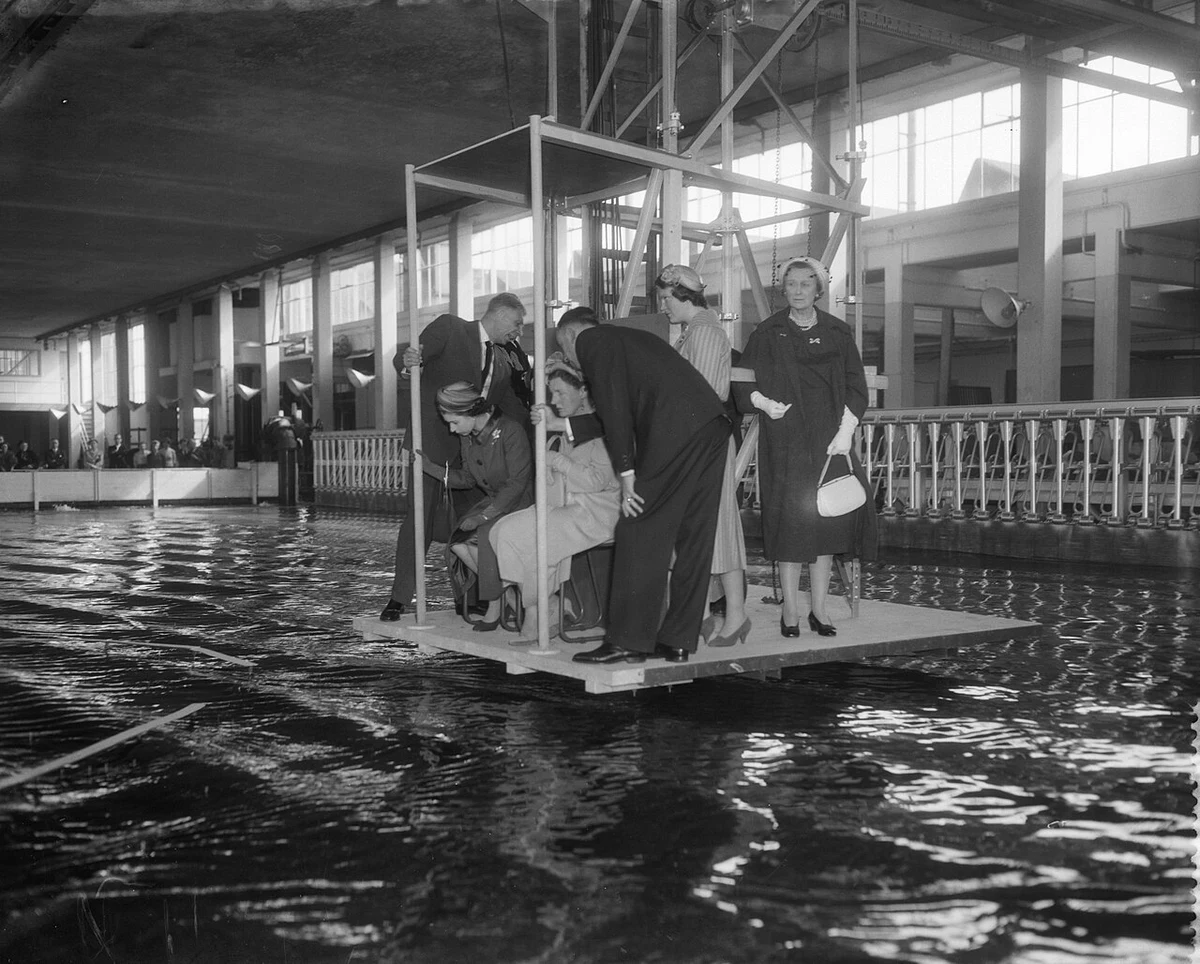
1926–2022
Elizabeth II
Constitutional monarchElizabeth II became queen in 1952 and reigned for seventy years through decolonisation, social change and recurring scrutiny of the monarchy. Her role combined constitutional duties, diplomacy and public symbolism rather than elected executive government.Read biographyQuick answers
Common questions
- Why do the reign and coronation have different dates?
- Elizabeth became queen immediately on George VI’s death on 6 February 1952. The coronation was the later religious and public ceremony on 2 June 1953.
- Was the whole service visible on television?
- No. The anointing was concealed by a canopy. Television greatly widened access but preserved this boundary around the sacred rite.
- Was Prince Philip crowned king?
- No. As the husband of the reigning queen he paid homage but was not crowned or anointed as a sovereign.
Primary and institutional sources
How this history was checked
The Royal Household and Abbey accounts were read for the dates and ceremonial sequence; the Abbey’s published text, not its cookie-gated video, supplies the concealed-anointing detail. The June 2013 BBC retrospective was read for communal viewing and broadcast significance. Audience totals vary across institutional accounts and are not presented as an exact census. The Constitution Unit explains the governmental framework; no claim is made to have reviewed private royal advice or the complete 1953 broadcast. This article was reviewed on 23 October 2026.
- The Royal HouseholdQueen Elizabeth II’s accession and coronation
- Westminster AbbeyElizabeth II: coronation planning, ceremony and regalia
- Westminster AbbeyAmpulla and spoon: the concealed anointing in 1953
- BBC, ProsperoThe Coronation of Queen Elizabeth II: June 2013 retrospective
- UCL Constitution Unit / Lisa James and Robert HazellWhat is constitutional monarchy and what is its role in the UK?
- The Royal HouseholdQueen Elizabeth II’s life and reign: state duties and public work
- The Royal HouseholdQueen Elizabeth II and the Commonwealth
- Manatū Taonga, Ministry for Culture and Heritage, New ZealandQueen Elizabeth II: introduction and the divisible Crown
- Wikimedia Commons / Nationaal ArchiefHarry Pot / Anefo: Delft visit, 909-4432, CC0 and file history
- Creative CommonsCC0 1.0 Universal Public Domain Dedication