In this biography
Quick facts
- Born
- 1926-04-21
- Died
- 2022-09-08
- Birthplace
- Mayfair, London, England
- Country
- United Kingdom
- Nationality
- British
- Known for
- Reigning from 1952 to 2022 as Britain’s longest-serving monarch
- Full name
- Elizabeth Alexandra Mary
- Born
- 21 April 1926, Mayfair, London
- Accession
- 6 February 1952
- Coronation
- 2 June 1953, Westminster Abbey
- UK prime ministers
- Fifteen during her reign
- Died
- 8 September 2022, aged 96
Why this life matters
Her reign made continuity a central public role of monarchy, while debates about empire, inherited privilege and family accountability exposed the limits of personal popularity.
Timeline
Key moments
Born in London
Elizabeth Alexandra Mary was born on 21 April at her maternal grandparents’ Mayfair home.
Became heir presumptive
Edward VIII’s abdication brought her father to the throne as George VI.
Married Philip
The wedding took place on 20 November; their family eventually included four children.
Acceded on 6 February
She was in Kenya when she learned of George VI’s death and her succession.
Crowned on 2 June
The Westminster Abbey ceremony reached a mass television and radio audience.
Broadcast after Diana’s death
She addressed the nation on 5 September as both queen and grandmother.
Platinum Jubilee and death
Her seventy-year reign ended on 8 September; Charles III succeeded her.
An unexpected succession changed a privileged childhood
Elizabeth Alexandra Mary was born on 21 April 1926 at 17 Bruton Street in Mayfair, the London home of her maternal grandparents. Her parents were then the Duke and Duchess of York. She initially stood behind both her uncle and father in the succession, so a future as sovereign was not assumed.
Edward VIII’s abdication in December 1936 made her father George VI and Elizabeth heir presumptive. Her education at home increasingly included constitutional history and law, with Henry Marten of Eton among her tutors. This preparation reflected a hereditary office rather than an electoral career. The role she inherited would be shaped by institutions and conventions as much as by her personal character.
War service and marriage preceded the throne
Elizabeth spent much of the Second World War at Windsor with her sister Margaret. Public duties expanded through broadcasts, inspections and visits. In 1945 she completed a driving course; wartime service became a lasting part of her public identity. Palace archival chronology records these activities, although an official selection of engagements cannot by itself describe ordinary wartime experience.
She married Philip Mountbatten on 20 November 1947. Charles was born in 1948 and Anne in 1950; Andrew and Edward followed after her accession. A naval marriage and young family therefore preceded her transformation into a full-time sovereign. Philip remained an important working companion throughout much of a reign that required both domestic routines and extensive official travel.
Accession in 1952 came before the televised coronation
George VI died on 6 February 1952 while Elizabeth and Philip were in Kenya at the start of an overseas tour. She became queen immediately on his death, aged twenty-five, and returned to Britain. The coronation on 2 June 1953 did not create her legal authority or begin the reign; it publicly marked and consecrated an office she already held.
Westminster Abbey’s ceremony combined an oath, anointing, regalia, crowning and homage. Television brought it into homes and communal viewing spaces on an unprecedented scale. That public visibility became a defining feature of modern monarchy. The religious centre of the ceremony nevertheless retained limits on access, including the concealment of the anointing from spectators and cameras.
Constitutional duties did not make her the policymaking government
Elizabeth received state papers, held regular audiences with prime ministers, formally appointed governments and gave Royal Assent to legislation. Fifteen British prime ministers served during her reign. These were real constitutional functions, but they operated within a system in which elected politicians governed and ministerial advice constrained the sovereign’s formal powers.
A Queen’s Speech announced the government’s programme, not a personal royal manifesto. Private consultation allowed her to question, encourage or warn, while public party neutrality protected the office. The content and effect of confidential conversations cannot be reconstructed from ceremonial appearances. Her influence is therefore a different historical question from the visible exercise of an elected prime minister’s executive responsibility.
Commonwealth diplomacy existed alongside the end of empire
Elizabeth’s overseas tours and meetings made her a familiar international representative. As Head of the Commonwealth she performed a symbolic role within an association of independent states. That title did not make her sovereign of every member. In the realms that retained her as monarch, constitutional arrangements were separate: New Zealand’s historical account describes this as the divisible Crown.
Her reign also coincided with the dismantling of much of Britain’s remaining empire and continuing disputes about its legacies. The Royal Household emphasises cooperation and continuity; that institutional account should not erase colonial domination or the right of independent countries to choose a republic. Diplomatic symbolism helped sustain relationships, but neither personal goodwill nor Commonwealth membership settles questions about imperial responsibility.
Family crises tested the public meaning of continuity
The royal family’s public prominence exposed private relationships to national judgement. After Diana, Princess of Wales, died in 1997, Elizabeth’s broadcast spoke in the roles of queen and grandmother and acknowledged widespread grief. It was an act of public response, not evidence that every criticism of the monarchy had been resolved.
Her Platinum Jubilee in 2022 marked seventy years on the throne; she died on 8 September and Charles III succeeded. Later assessments have paired her widely recognised public constancy with criticism of the monarchy’s handling of scandals around Prince Andrew. Those are questions of institutional accountability and judgement; they do not establish that Elizabeth personally participated in another person’s alleged misconduct. Her legacy remains both constitutional and contested.
Quick answers
Frequently asked questions about Elizabeth II
- Did Elizabeth II become queen at her coronation?
- No. She acceded on George VI’s death on 6 February 1952. The coronation followed at Westminster Abbey on 2 June 1953.
- Did she govern Britain’s policies?
- Elected ministers and Parliament governed. She carried out formal constitutional duties, generally on ministerial advice, and held private audiences while maintaining public party neutrality.
- Was she queen of every Commonwealth country?
- No. Head of the Commonwealth was a symbolic role in an association that included republics and other monarchies. Her status as sovereign applied separately to the UK and the other realms that retained the Crown.
Keep exploring
Lives connected to this story
- Ramsay MacDonald
Examine a contested government formation from the prime minister’s side of the constitutional relationship.
- Ben Enwonwu
Read the Nigerian sculptor whose portrait commission involved royal sittings in 1957.
- Mary McAleese
Read the Irish host’s career and her distinct speech during the 2011 state visit.
Sources and further reading
Explore the evidence
These references support the biography and offer further reading. Official records, first-person accounts and independent reporting provide different perspectives; image records document attribution and licensing.
- 1. The Royal HouseholdQueen Elizabeth II: early life and education
- 2. The Royal HouseholdDiary of events in the early life of the Queen: archive chronology
- 3. The Royal HouseholdQueen Elizabeth II’s life and reign: state duties and public work
The Royal Household is a primary institutional source for duties and engagements, with an explicitly commemorative tone. Its praise is not treated as independent evaluation.
- 4. The Royal HouseholdQueen Elizabeth II’s accession and coronation
- 5. The Royal HouseholdQueen Elizabeth II and the Commonwealth
- 6. UCL Constitution Unit / Lisa James and Robert HazellWhat is constitutional monarchy and what is its role in the UK?
The 2024 explanation supplies the constitutional framework. It is not a transcript of Elizabeth’s private audiences or proof of a particular personal intervention.
- 7. The Royal HouseholdThe Queen’s broadcast following Diana’s death, 5 September 1997
- 8. Manatū Taonga, Ministry for Culture and Heritage, New ZealandQueen Elizabeth II: introduction and the divisible Crown
- 9. Associated PressElizabeth II’s legacy and scrutiny of the monarchy, 21 April 2026
The returned April 2026 report was read for the limited point that public continuity and scrutiny of handling Andrew’s scandals coexist. It is not evidence of personal involvement in alleged offences.
- 10. Westminster AbbeyElizabeth II: coronation planning, ceremony and regalia
- 11. Westminster AbbeyAmpulla and spoon: the concealed anointing in 1953
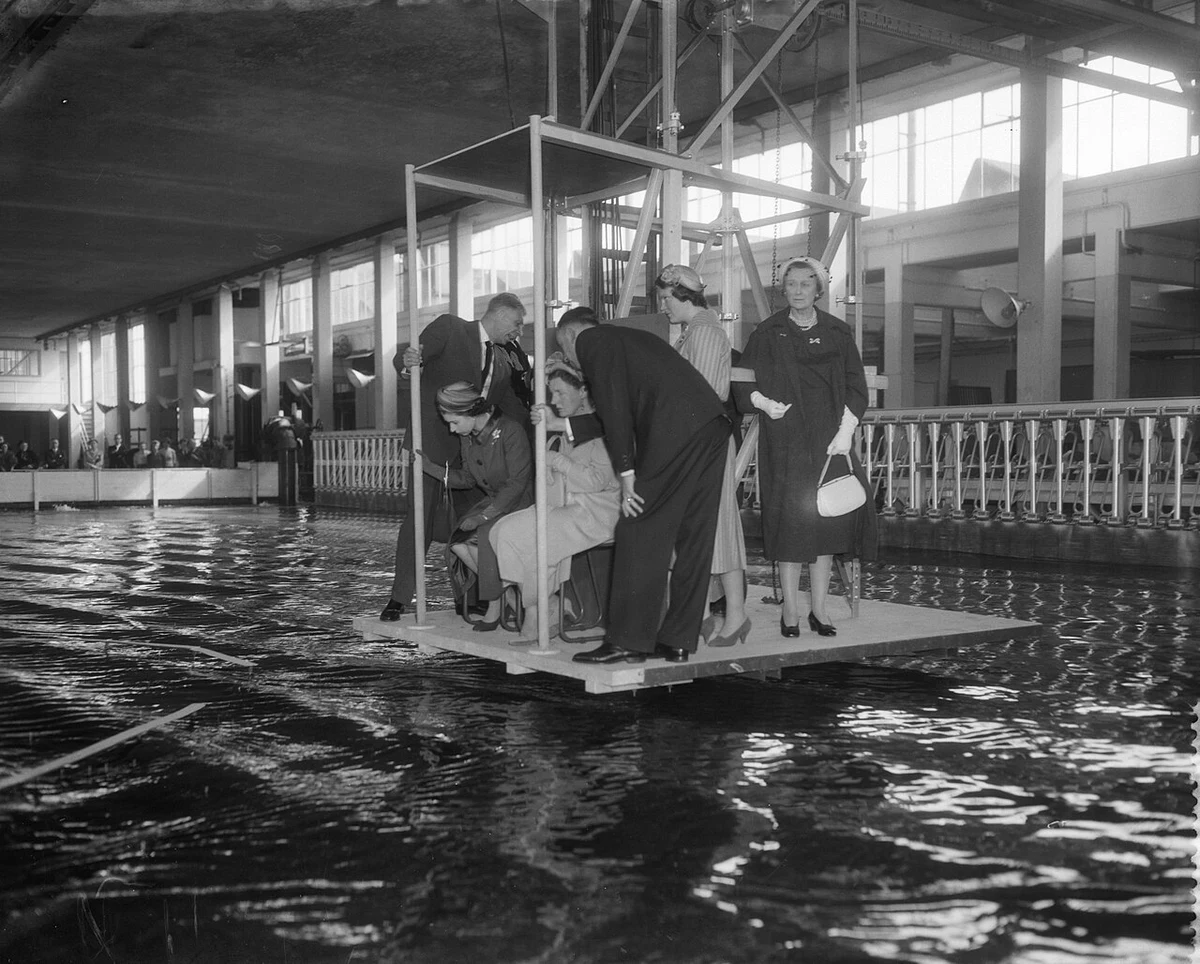
- 12. Wikimedia Commons / Nationaal ArchiefHarry Pot / Anefo: Delft visit, 909-4432, CC0 and file history
- 13. Creative CommonsCC0 1.0 Universal Public Domain Dedication