
The short answer
What began in 1985 when Fairfax traces its founding to that year? Not an insurer created from nothing, and not yet the Fairfax corporate name. Investors led by Prem Watsa gained control of an existing insurance holding company and developed a broader group. Separating control, operating companies and renaming explains the business more clearly than a single founder-and-date formula.
Chronology
A timeline of the turning points
Hamblin Watsa
Watsa and partners establish an investment-counsel business before the insurance transaction.
Association with Markel begins
The later shareholder letter dates the new group’s association with Markel Financial to this month.
Capital and acquisitions
A public share issue and acquisitions expand the group beyond its original trucking-insurance subsidiary.
Holding-company name changes
Fairfax distinguishes the parent organization from the continuing Markel Insurance name.
The starting point was an existing insurance holding company
Fairfax’s corporate history dates the decisive transaction to 1985, when Watsa and other investors acquired control of Markel Financial. An independent company history corroborates the recapitalization and the connection with his earlier investment career. The operating business already insured Canadian trucking risks. Insurance contracts, claims and staff did not begin with a new name.
This matters because a holding company owns interests in businesses, whereas an insurer writes policies and carries obligations to policyholders. A change in control can alter capital and strategy without making every underlying operation a new company. Calling 1985 Fairfax’s origin is reasonable if that distinction is retained; calling it the first year of all the group’s insurance activity is not.
Recapitalization made room for a different strategy
The early group needed a stronger financial base, not just an investment philosophy. Its shareholder reporting links new capital with insurance capacity and subsequent acquisitions. Watsa’s investment partnership provided relevant experience, but the insurance operation also required underwriting managers and credible estimates of future claims.
The change can be understood as moving from a narrowly identified trucking-insurance group toward a diversified financial holding company. That interpretation does not imply that acquisitions were riskless or that every later subsidiary had the same business. It explains why money raised at the parent and operating decisions inside the insurer should be considered separately.
Why the Fairfax name belongs to 1987
The letter for financial 1986 was written in 1987, as shown by its reference to a preliminary prospectus filed on 16 March 1987. It proposed the Fairfax name because Markel Financial now extended beyond Markel Insurance. Reading the accounting-year label as the date of the completed rename would put the change too early.
The next annual letter uses Fairfax and credits Brenda Adams with the name. A dated industry biography explicitly places the reorganization and renaming in 1987. Together these records distinguish the 1985 control transaction from the later corporate identity; the surviving subsidiary’s Markel name was not supposed to disappear merely because its parent changed.
Underwriting and investing are connected but different
An insurer collects premiums and holds assets against future claims. Underwriting concerns the risks accepted, prices charged and claims costs; investment management concerns the assets held while obligations remain outstanding. Gains in one activity do not erase losses or inadequate reserves in the other.
Fairfax’s early letters discuss both insurance operations and securities, including uncertainty in long-tail claims and reinsurance collections. That provides a more useful explanation than reducing the group to Watsa’s stock selections. It also identifies why investment targets in historical shareholder letters are management ambitions, not a guaranteed outcome for a present-day investor.
What the founding story does and does not establish
The sequence establishes a durable organization built through capital, operating businesses and acquisitions. It does not demonstrate that every acquisition succeeded, that all group assets were personally owned by Watsa or that present shareholders can expect a particular return. Corporate history and investment recommendation are different tasks.
Later events make those limits tangible. A 2013 BlackBerry takeover proposal was replaced by a different financing transaction, while Fairfax contested a short seller’s accounting allegations in 2024. Neither event changes the origin date. They do show why a founding narrative should remain open to later evidence about financing, reporting and risk rather than ending with a claim of inevitable success.
Continue the chronology
Related history guides
Biography context
Explore Canada through connected lives
Connected biographies
The executive associated with the transformation
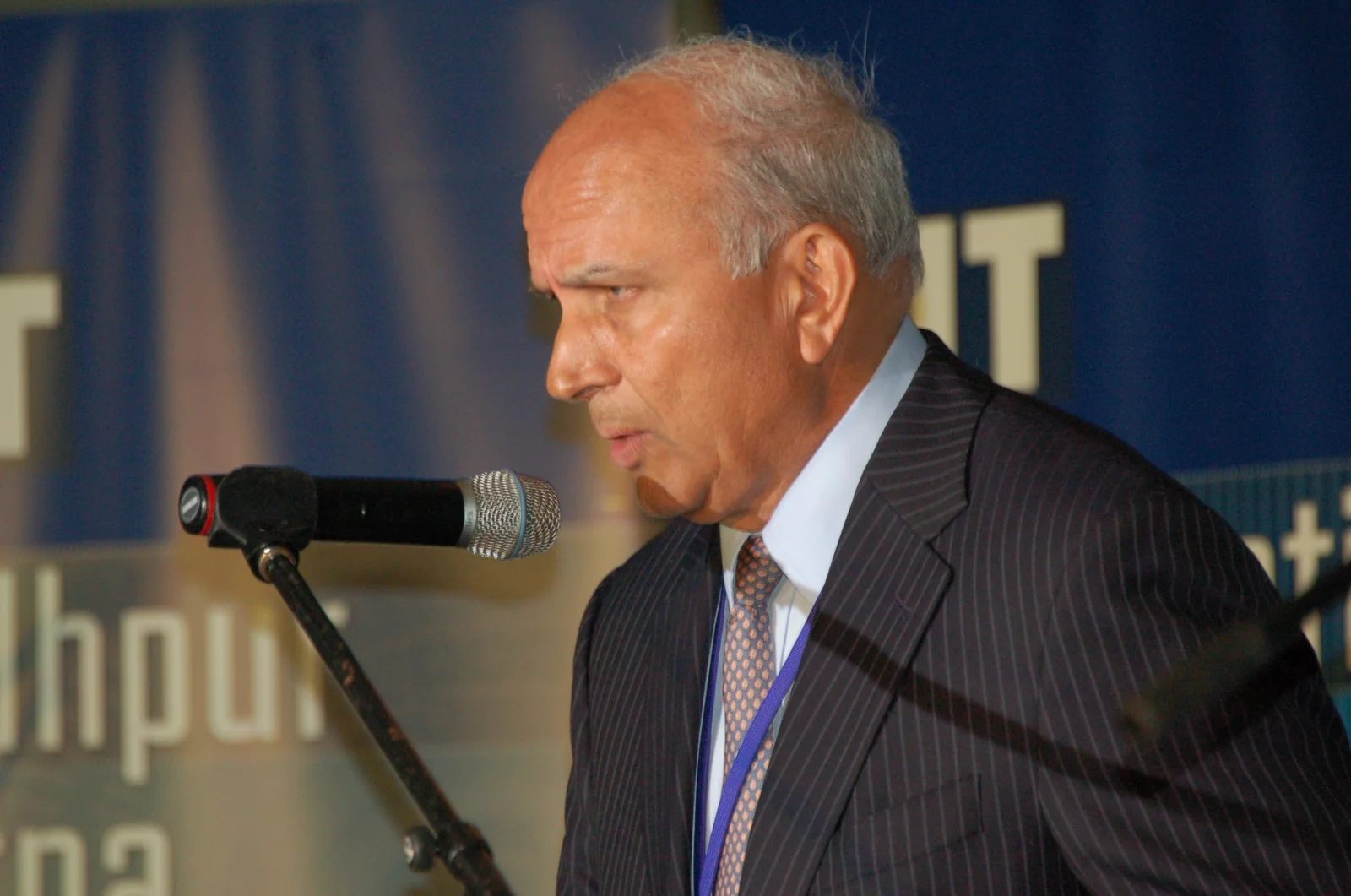
1950–present
Prem Watsa
Fairfax Financial founder, chairman and chief executive officerPrem Watsa is the founder of Fairfax Financial, a Canadian insurance and investment holding company developed from the 1985 acquisition of control of Markel Financial. His career connects an engineering education in India, investment work in Canada and an international network of insurance businesses.Read biographyQuick answers
Common questions
- Was Fairfax founded in 1985 or named in 1987?
- Its founding milestone is the 1985 control transaction involving Markel Financial. The Fairfax name followed in 1987.
- Was Markel Insurance the same as its holding company?
- No. The insurer was an operating subsidiary. The parent expanded into other businesses, prompting the name distinction.
- Does this history recommend investing in Fairfax?
- No. It explains corporate origins and risks, not the suitability or future performance of an investment.
Primary and institutional sources
How this history was checked
Contemporary shareholder letters control the name chronology; company history is checked against an independent company account. Performance targets and promotional claims are not adopted as forecasts. This article was reviewed on 23 October 2026.
- Fairfax FinancialCorporate timeline and 1985 control transaction
- International Directory of Company Histories / FundingUniverseIndependent early history and recapitalization
- Markel Financial / Fairfax1986 shareholder letter written in 1987
- Fairfax Financial1987 shareholder letter: name and operating risks
- TMPAAWatsa biography: 1987 renaming
- Fairfax Financial2013 Annual Report: BlackBerry proposal
- Fairfax FinancialNovember 2013 convertible-debenture transaction
- Fairfax FinancialFebruary 2024 response and risk disclosures
- Reuters / Yahoo FinanceDated short-seller allegation and company denial
- Selva / Wikimedia CommonsLater 2014 photograph and permission record
- Creative CommonsAttribution 3.0 Unported licence