
The short answer
The Kid makes a precarious household the centre of its comedy. Its later musical version adds another historical layer, so the film’s original release and the soundtrack date need separate attention. Plot details follow.
Chronology
A timeline of the turning points
An extended production
The project developed around Chaplin and Jackie Coogan, with repeated takes and a lengthy shooting period.
The original release
The film reached audiences through First National, combining comedy and threatened separation.
A revised version and new music
Chaplin removed three scenes featuring the mother and composed music for the reissue, with Eric James as music associate and Eric Rogers orchestrating.
The story begins before the Tramp becomes a father
The studio’s 1921 synopsis begins with a mother leaving a maternity hospital. She places her infant in a car, hoping he will receive care; after the car is stolen, the thieves abandon the baby. The Tramp finds him and initially tries to avoid the responsibility. This sequence matters because the child’s circumstances are produced by adult decisions and social judgement, not simply by an unexplained arrival on a doorstep.
Five years later, the Tramp and the boy have formed a household. The child breaks windows and the Tramp follows as a conveniently available glazier. Their livelihood is a comic fraud, and their relationship is affectionate without becoming a model of respectable prosperity. A scene can therefore carry two meanings at once: ingenious cooperation makes the audience laugh while revealing how little security this improvised family possesses.
Coogan and Purviance shape the emotional structure
Jackie Coogan plays the boy and Edna Purviance his mother. Chaplin discovered Coogan through a stage performance and valued his ability to learn gestures and expressions. That account documents an exacting approach to directing a child, but it should not erase Coogan’s contribution as the performer whose responses make the relationship convincing. A shared action requires attention to both bodies and their timing.
Purviance’s character has a history that continues outside the household. She becomes a successful performer and helps children in the poor district without at first recognising her own son. Her return gives the story a second experience of loss and recognition. The Tramp’s care and the mother’s search need to be understood together; a synopsis centred only on a famous comedian can make the other characters appear less necessary than they are.
Separation changes the meaning of physical comedy
When the boy falls ill, a doctor learns that the Tramp is not his biological father. Officials attempt to remove the child, and the Tramp’s resistance becomes a chase and struggle to keep him. The physical energy is recognisably comic, but the threatened outcome gives it a different emotional weight. The same agility that helped an outsider evade trouble now serves an established attachment.
The studio synopsis eventually brings the child back to his mother and the Tramp to her home. This is a narrative resolution, not a general solution to poverty or the organisation of care. Reading the ending in that way keeps the film’s emotional satisfaction distinct from its social questions. Institutions appear through their impact on this particular family, and the audience is invited to take the relationship seriously before deciding what official respectability can tell it.
A long production left a film with a later history
The making-of account describes a production extending over much of nine months, with Chaplin repeatedly trying scenes until satisfied. The Cinémathèque’s credits also name Roland Totheroh for photography and Charles D. Hall for art direction. Chaplin’s extensive control as writer, director, editor and star should sit beside that technical work. The finished clarity was made through a process; it was not evidence that the picture simply recorded spontaneous play.
The 1921 film must also be distinguished from its later version. Criterion’s public feature description states that Chaplin removed three scenes featuring Purviance’s Woman when revisiting the film in 1971. This changes the material given to the mother’s story, not simply the soundtrack. The official concert listing separately dates Chaplin’s music to 1971, with Eric James as music associate and Eric Rogers as orchestrator. The archive records 1971 credit documentation. Running times can describe a particular print, edit, speed or concert edition; check the version before calling its score original to 1921 or treating differing minutes as an error.
Continue the chronology
Related history guides
Biography context
Explore United States through connected lives
Connected biographies
The filmmaker behind The Kid
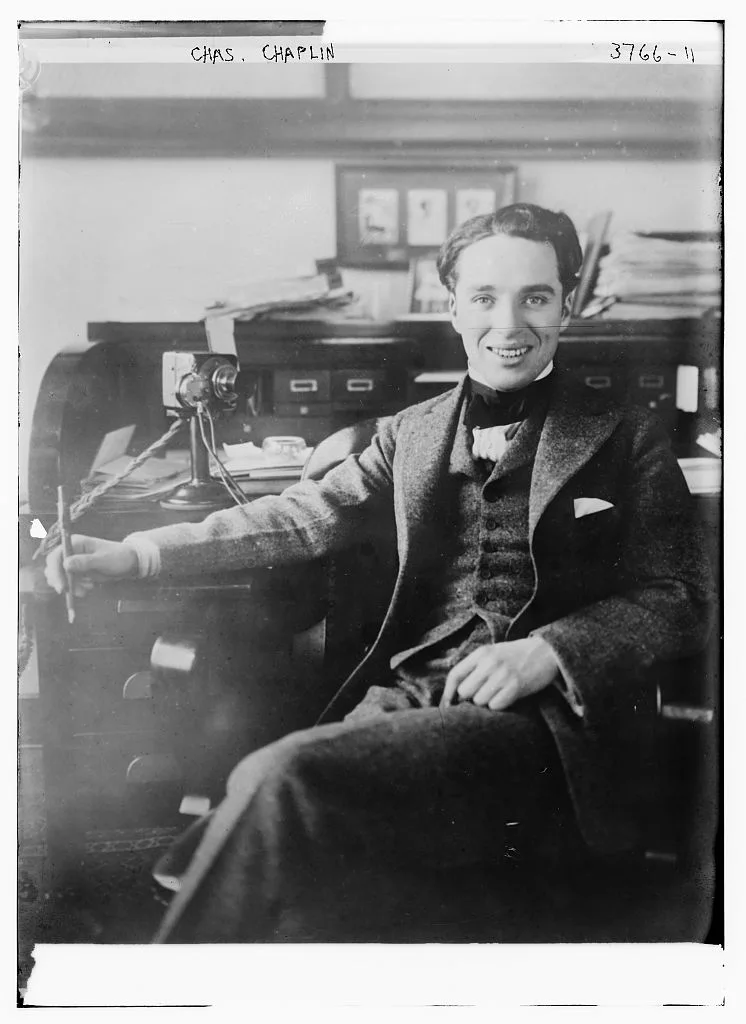
1889–1977
Charlie Chaplin
Actor, comedian, filmmaker and composerCharlie Chaplin was a British actor and filmmaker whose Tramp character made physical comedy, vulnerability and social observation central to international screen culture.Read biographyQuick answers
Common questions
- Who plays the child in The Kid?
- Jackie Coogan plays the boy. Edna Purviance plays his mother and Chaplin the Tramp who raises him.
- Was Chaplin’s score written in 1921?
- No. The official score listing dates his music to 1971, for the later version. The images’ original release date and the score’s composition date are separate.
- Why do running times differ?
- Different edits, projection speeds and release or concert editions can have different durations. The current concert specification does not establish the duration of every 1921 print.
Primary and institutional sources
How this history was checked
Read limits: the estate’s original studio synopsis and making-of text, cast and technical records, current concert specification, archive’s public 1971 record and Criterion’s short feature description were read. The Criterion video was not watched and the archive’s underlying documents were not examined. No complete film screening, print comparison or score reading was undertaken. Plot is paraphrased; no intertitles or script passages are reproduced. This article was reviewed on 23 October 2026.
- Chaplin OfficeOverview of His Life: selected career and late-life sections
- National Portrait GalleryCharlie Chaplin in Close Up: 1985 exhibition handlist
- Chaplin Office / British Film InstituteThe British Film Institute: retained British nationality
- Christian Delage / Chaplin OfficeFilming The Great Dictator: historical circumstances and British citizenship
- Chaplin Office2021 Chaplin Studio Tour notice: 1952 re-entry decision and Switzerland
- Chaplin OfficeThe Kid: 1921 film, cast and production listing
- Chaplin OfficeFilming The Kid: Jackie Coogan and the extended production
- Chaplin Studio / Chaplin OfficeThe Kid: original 1921 synopsis
- Chaplin Film ConcertsThe Kid: 1971 music and present concert specifications
- Charlie Chaplin Archive / Cineteca di BolognaThe Kid: 1971 credit and cast documentation
- La Cinémathèque françaiseLe Kid: production and technical credits
- The Criterion ChannelOuttakes From the 1921 Version of The Kid: public description of the 1971 re-edit
- Chaplin OfficeModern Times: 1936 film, cast and story
- Chaplin OfficeFilming Modern Times: work, sound and the revised ending
- British Film InstituteModern Times: sound effects, voices and intertitles
- Wikimedia Commons / Library of CongressChas. (Charlie) Chaplin, LCCN2014701081: exact identity and public-domain record
- Library of Congressggbain.21143: complete 746 × 1024 supplied service photograph