
The short answer
On 14 August 2019 Commissioner Mario Dion found that Justin Trudeau contravened section 9 of the Conflict of Interest Act in the SNC-Lavalin matter. The report concerned improper attempted influence over Attorney General Jody Wilson-Raybould. It was an ethics-law examination, separate from the criminal proceedings involving the company.
Chronology
A timeline of the turning points
Company charged
Criminal charges against SNC-Lavalin precede Trudeau’s premiership.
Remediation regime
Canada establishes a framework for negotiated remediation agreements.
DPP decision
The director decides not to invite SNC-Lavalin into negotiations.
Attempts to influence
The report examines approaches to the attorney general, directly and through officials.
Ethics finding
The commissioner concludes that Trudeau contravened section 9.
The company’s prosecution and a remediation agreement were different questions
SNC-Lavalin faced criminal charges laid in February 2015. The later dispute did not concern a criminal charge against Trudeau. It concerned whether the company should be invited to negotiate a remediation agreement under a regime introduced in 2018.
Such an agreement could defer or suspend criminal proceedings subject to its terms. The mere existence of the regime did not entitle every company to an invitation. That decision was part of the prosecution process, rather than a commercial benefit a prime minister could simply award.
The director and attorney general had distinct responsibilities
On 4 September 2018 the Director of Public Prosecutions decided not to invite the company into negotiations. The attorney general considered whether to intervene and decided not to overturn that course. Her cabinet position did not make her prosecutorial responsibilities identical to ordinary party or economic strategy.
The institutional framework matters. The 2006 legislation had established the Director of Public Prosecutions structure, separating prosecutorial operations while preserving defined attorney-general responsibilities. The 2019 question was therefore not whether government had any legal role, but whether political pressure improperly compromised the independent exercise of that role.
The report traced sustained attempts rather than one disputed conversation
The commissioner examined Trudeau’s direct meeting with Wilson-Raybould and subsequent contacts involving officials under his direction. Wilson-Raybould had made her refusal to intervene known in September 2018. The approaches continued, including discussions of outside advice and the economic consequences for the company.
Trudeau’s position emphasized jobs and the public interest and disputed elements of the account. The report considered those submissions but concluded that his authority had been used to seek influence improperly. Its account was not confined to whether a single sentence in one meeting sounded like a formal order.
Sources for this section: [1]
Section 9 required improper furtherance of interests, not successful intervention
Section 9 prohibits using public office to seek to influence another person’s decision in the specified ways, including improperly furthering another person’s private interests. The commissioner distinguished an attempt to influence from the additional question of why that attempt was improper.
He found that SNC-Lavalin had significant financial interests in avoiding the ordinary prosecution route, and that the conduct examined conflicted with prosecutorial independence and the rule of law. The attempted influence did not have to succeed for the statutory rule to be breached. That is a narrower and more accurate description than claiming the report proved the prosecution had actually been stopped.
An ethics finding did not decide every criminal or political issue
The conclusion was a section 9 contravention by Trudeau. It was not a criminal conviction of him, an acquittal of the company or a ruling that any discussion of public policy with an attorney general is always unlawful. Those are different questions with different legal processes.
The commissioner also reported restricted access to some cabinet confidences, while stating that he had sufficient facts to determine the matter on its merits. That limitation did not become a finding of innocence or permission to invent what undisclosed evidence would have shown. The report’s significance lies in the actual conduct and legal standard it assessed.
Continue the chronology
Related history guides
Biography context
Explore Canada through connected lives
Justin Trudeau
Place the ethics finding in the wider history of his government.
Explore the biographies2006 legislationStephen Harper
Read about the administration that introduced the accountability legislation; this is not a claim of his involvement in the 2019 events.
Explore the biographiesConnected biographies
The officeholder examined and the earlier statutory framework
1971–
Justin Trudeau
Former prime minister of Canada and Liberal leaderJustin Trudeau served as Canada’s prime minister from November 2015 to March 2025. A former teacher and the son of Pierre Trudeau, he led the Liberals from third-party status to a majority, followed by two minority governments. His record includes the Canada Child Benefit, cannabis legalization and the SNC-Lavalin ethics finding.Read biography
1959–
Stephen Harper
Former prime minister of Canada and Conservative leaderStephen Harper was Canada’s prime minister from 2006 to 2015. An economist associated with the Reform Party and Canadian Alliance, he helped build the modern Conservative Party and led two minority governments before winning a majority in 2011. His record includes accountability legislation, recession-era government and disputes over parliamentary scrutiny.Read biographyQuick answers
Common questions
- What was the Trudeau II Report’s main finding?
- That Trudeau contravened section 9 by improperly seeking to influence the attorney general in the SNC-Lavalin matter.
- Was Trudeau criminally convicted by the report?
- No. It was an examination under the Conflict of Interest Act, not a criminal judgment.
- Did the attempted influence have to succeed?
- No. The statutory question included seeking to influence; successful intervention was not required.
- Was Wilson-Raybould acting as a judge?
- No. She was attorney general, with responsibilities relating to prosecution that were distinct from ordinary cabinet and party considerations.
Primary and institutional sources
How this history was checked
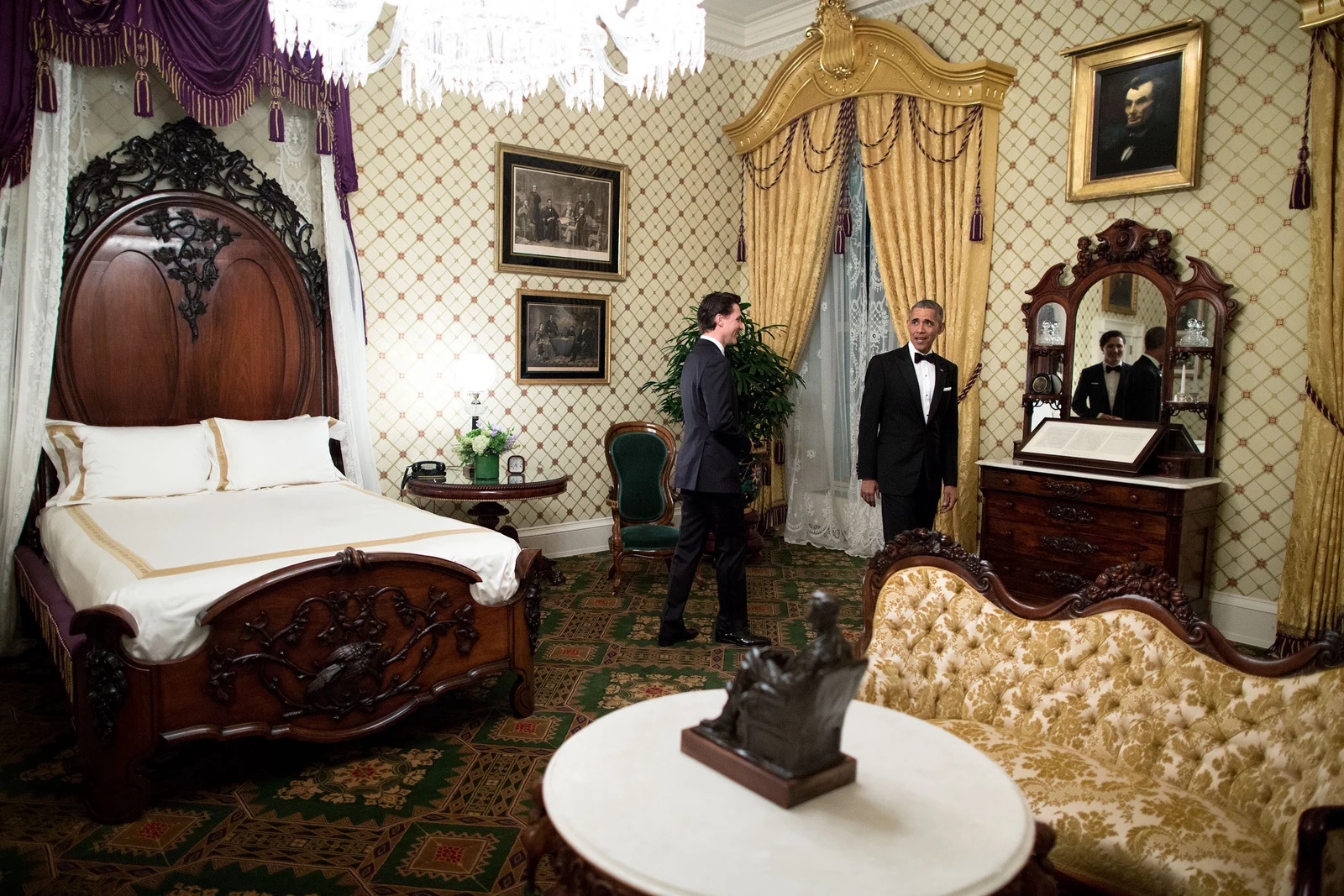
The resolving Ethics Canada report supplies the finding, Trudeau’s submissions and the stated access limitation; the older PDF URL redirects. The 2006 statute and prosecution-service account establish institutional background. The 2016 photograph is not a scene from the investigation. This article was reviewed on 23 October 2026.
- Conflict of Interest and Ethics Commissioner / Ethics CanadaTrudeau II Report, 14 August 2019
- Parliament of CanadaFederal Accountability Act: royal-assent text, 2006 chapter 9
- Public Prosecution Service of CanadaDepartmental Results Report 2016–17: statutory history and mandate
- Ethics CanadaVision, mission and mandate: the office created by the 2006 legislation
- Pete Souza / White House / Wikimedia CommonsState dinner for Justin Trudeau 03: Lincoln Bedroom, 10 March 2016