
The short answer
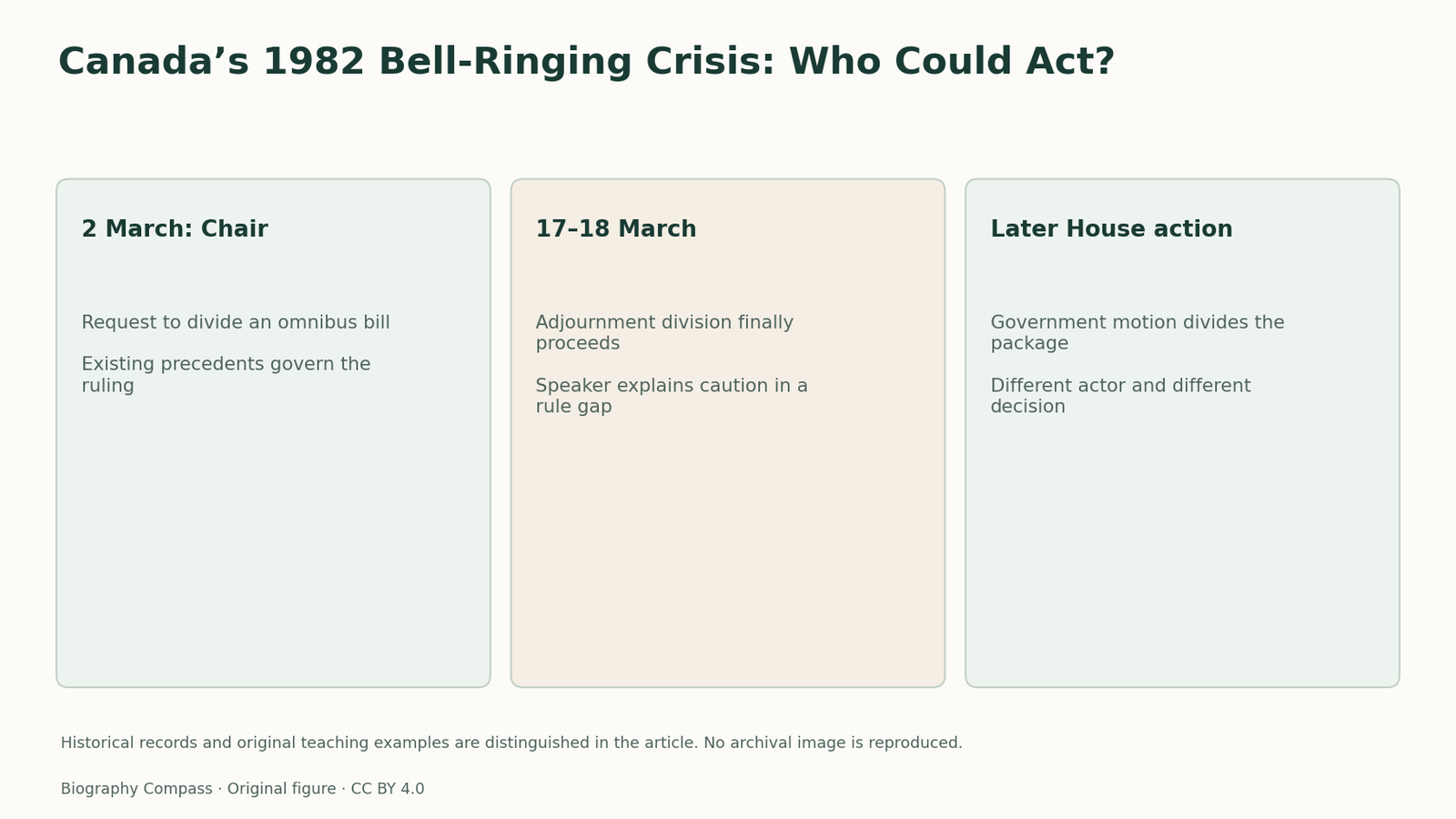
In March 1982, a dispute over an omnibus energy bill became a prolonged wait for a vote. Two edited decisions explain the Speaker’s position at different stages; a later parliamentary history records how the legislative package changed.
Different records, different questions
Separate three kinds of authority
Compare the object of each record before drawing a conclusion.
| Record | What it establishes | What remains open |
|---|---|---|
| 2 March decision | The Chair’s response to an omnibus request. | Endorsement of every policy. |
| 18 March statement | Reasons for caution during the impasse. | An unlimited power to write rules. |
| 2012 history | Later House action dividing the package. | The final fate of each resulting bill. |
Chronology
A timeline of the turning points
Admissibility
The Chair did not divide the bill.
Vote
The delayed division proceeded.
Explanation
Sauvé addressed the rule gap.
The first question concerned the bill’s form
The 2 March decision considered a request to divide Bill C-94, the Energy Security Act. Sauvé accepted the bill in its existing form. The edited reasons explain that new rules about omnibus bills were for the House to make; existing precedents did not authorise the Chair to divide or reject this bill. This was a procedural decision about the request before her. It did not say that every policy in the package was desirable.
Sources for this section: [1]
The second question concerned the bells
An adjournment motion then led to a recorded division. The 18 March record describes the Whips’ failure to appear together to proceed, the prolonged bells, and the vote finally taken on 17 March. Sauvé’s statement distinguished clear rules from circumstances offering no firm guidance. She explained her caution about intervening in the latter. That explanation makes the institutional problem visible without requiring readers to endorse every decision or assume that the Chair possessed unlimited discretion.
Sources for this section: [2]
Political resolution was a different mechanism
The Library of Parliament’s 2012 history records that the bells continued for more than two weeks and that the House later adopted a government motion dividing the package into eight bills. Read beside the decisions, the sequence distinguishes the Speaker’s ruling from what the House could subsequently do. A result reached through political action is not proof that an earlier request lay within the Chair’s power. The retrospective account also should not be mistaken for a complete roll-call or the complete legislative history of each resulting bill.
Sources for this section: [3]
Original exercise: edit three archive cards
A fictional exhibition offers these labels: “The Speaker’s acceptance proves that she endorsed the energy policy”; “bells ringing for days proves the bill lost its final vote”; and “the House’s later division of the package proves the Chair had divided it on 2 March”. Replace each with a statement supported by the selected records.
Reference answer: acceptance concerned the procedural request, not an endorsement of substance. The prolonged bells record a delay associated with an adjournment division, not the result of the bill’s final passage vote. The later division was an action of the House, distinct from the Chair’s earlier decision. To describe a particular resulting bill’s enactment, consult its own later legislative record. These distinctions concern the 1982 events, not a complete statement of present parliamentary powers.
Continue the chronology
Related history guides
Biography context
Explore Canada through connected lives
Connected biographies
The connected career
1922–1993
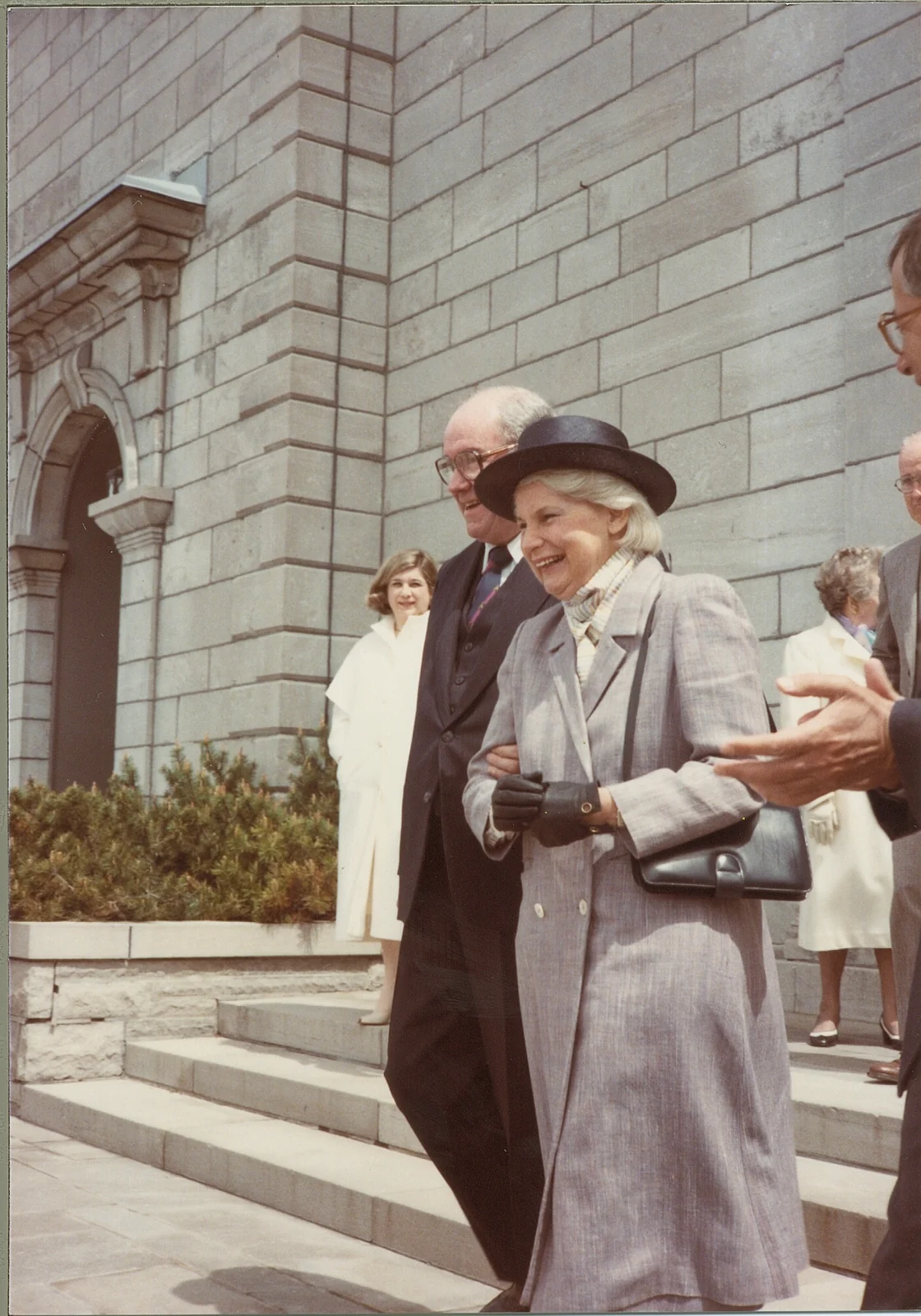
Jeanne Sauvé
Broadcaster and stateswomanSauvé moved from broadcasting to public office.Read biographyQuick answers
Common questions
- Was the delayed division a final vote on passing Bill C-94?
- The selected decision describes a recorded division on an adjournment motion. A bill’s final fate requires its own legislative record.
Primary and institutional sources
How this history was checked
The source descriptions below identify the inspected records and their dates. This article was reviewed on 31 October 2026.
- Selected Decisions of Speaker Jeanne Sauvé,House of CommonsOmnibus—Accepted,2 March 1982
- Selected Decisions of Speaker Jeanne Sauvé,House of CommonsAdjournment; division bells,18 March 1982
- Michel Bédard / Library of Parliament,1 October 2012Omnibus Bills: Frequently Asked Questions,selected 1982 case