
The short answer
Which election problems did the 1874 changes address, and which did they leave open?
Evidence comparison
Read the records together
The records were created for different purposes and support different kinds of claims.
| Record | What it establishes | Question to keep open |
|---|---|---|
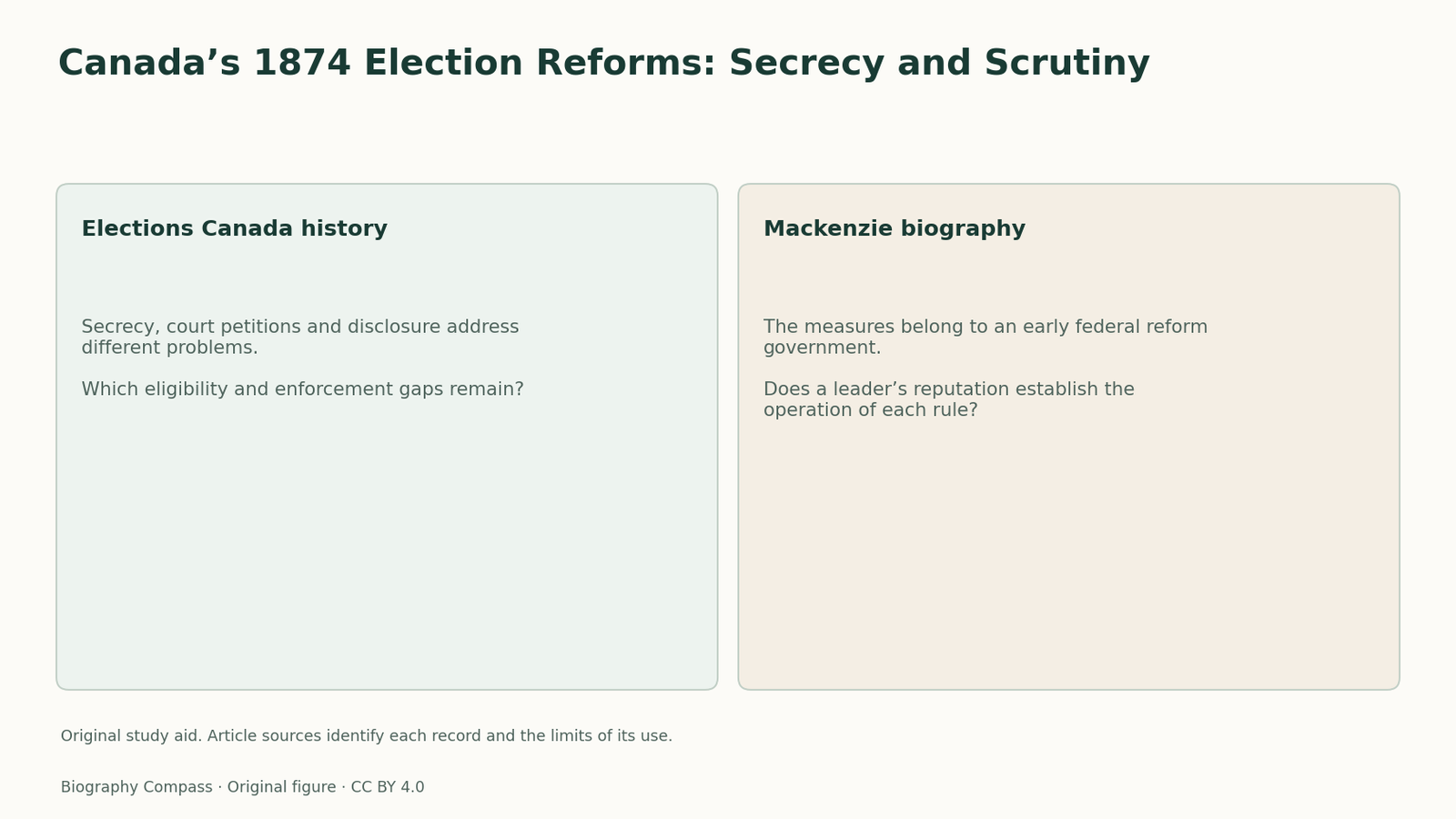
| Elections Canada history | Secrecy, court petitions and disclosure address different problems. | Which eligibility and enforcement gaps remain? |
| Mackenzie biography | The measures belong to an early federal reform government. | Does a leader’s reputation establish the operation of each rule? |
Chronology
A timeline of the turning points
Reforms enacted
The government changes voting and scrutiny procedures.
Government defeated
Mackenzie’s premiership ends after the election.
Separate procedure from eligibility
The 1874 changes included the secret ballot and a common polling day. They altered how an eligible voter could cast a vote and how elections were coordinated. They did not, simply by introducing secrecy, grant a vote to every adult resident. Elections Canada’s history treats the franchise as a separate field, shaped by provincial rules and later federal intervention. A procedural reform and a change in eligibility require different evidence.
Sources for this section: [2]
Follow a disputed return
Contested election petitions moved from parliamentary committees to courts. That change shifted the institution examining allegations after a poll. A rise in elections set aside can therefore reflect changed scrutiny rather than an automatic rise in the underlying incidence of corruption. The official history records many more invalidated returns under the court process. To interpret the figures, readers must consider who examined the cases and which complaints reached that institution.
Sources for this section: [2]
Read disclosure with its missing machinery
Spending disclosure was another reform, but it did not come with all the mechanisms associated with a comprehensive modern finance regime. The official history notes absent spending limits, contribution disclosure and administrative responsibility. Mackenzie’s political biography locates the government responsible for the changes. It cannot fill those legal and enforcement gaps. Describing the measure as an early attempt at scrutiny is more accurate than assuming disclosure guaranteed compliance.
Diagnose three hypothetical complaints
Assign a public vote, an allegedly corrupt return and undisclosed campaign income to the relevant part of the reform. The secret ballot directly addresses the first; the court route concerns the second. The third requires careful reading of what the spending rules actually demanded and omitted. A good answer identifies both a remedy and a remaining question, demonstrating why several reforms could improve elections without eliminating every form of abuse.
Continue the chronology
Related history guides
Biography context
Explore Canada through connected lives
Connected biographies
People behind the records
1822–1892
Alexander Mackenzie
Prime minister and reform politicianMackenzie led Canada’s second federal government and oversaw electoral changes involving the secret ballot, disputed returns and campaign spending.Read biographyQuick answers
Common questions
- Did the secret ballot give every adult a vote?
- No. It concerned how eligible voters voted. The franchise and its exclusions were separate questions.
Primary and institutional sources
How this history was checked
Sources support the chronology and the record comparison. The reading exercise is original. This article was reviewed on 7 November 2026.