
The short answer
Bridge of Clay is not a sequel to The Book Thief. Its five brothers confront a dead mother, an absent father and the work of recovering a family’s past. The physical bridge supplies a task, but the novel’s structure asks another question: who can tell a damaged family’s story, and in what order should that story become intelligible?
Chronology
A timeline of the turning points
A long-held idea
The story develops through years of writing and revision.
The novel appears
Contemporary interviews and reviews describe an ambitious return after The Book Thief.
A later Australian paperback
The publisher’s paperback record is not the first publication date.
Separate the brother telling the story from the brother building
Matthew Dunbar tells a family history centred on Clay, the fourth of five brothers. Their mother has died and their father has left. The family that remains has developed its own rules, habits and rough loyalties; it is not waiting in emotional neutrality for a parent’s return.
When the estranged father proposes building a bridge, Clay participates. The distinction between Matthew’s narration and Clay’s task matters because neither role provides a simple external view of the family. A brother can arrange the story without being the person whose name and central action supply its title.
The bridge is a construction project and a way to organise repair
The publisher presents Clay’s work as an attempt to build something for his family, past and sense of responsibility. It is a real physical undertaking within the story, not merely an abstract symbol detached from labour. Its materials give reconciliation a task that must be attempted rather than only discussed.
At the same time, rebuilding contact does not make earlier abandonment harmless. The premise asks how people might respond to a return they cannot simply undo or forget. Readers can hold the hope of repair beside the injuries that make repair necessary, without assuming that a completed structure settles every moral debt.
The disrupted chronology makes the family’s past an active problem
Kirkus describes a narrative moving through flashbacks, including the parents’ earlier lives and Matthew’s recovery of a buried typewriter. Information about origins and losses does not arrive in a straightforward march from childhood to adulthood. The reader is asked to piece together relationships as their significance changes.
That form can be absorbing or frustrating. In ABC’s 2018 account, Zusak describes accepting the risk of losing some readers in order to write the book he wanted. Difficulty is therefore part of a documented artistic decision, not proof that every confusing moment must be beyond criticism.
A long writing process is not the same as thirteen years of silence
The thirteen-year interval after The Book Thief can make the new novel look like a simple test of whether its author could repeat a success. Zusak’s account instead describes writing, rewriting and changing his understanding of the book. Time spent revising is work even when it produces no new title for readers to buy.
Publication records need the same care as accounts of process. The work appeared in 2018; the Australian paperback page reviewed here lists 23 April 2019. That later format date does not shift the novel’s origin, just as a difficult drafting period does not by itself establish the artistic result’s quality.
Empathy does not remove questions about whose lives receive space
Kirkus criticised the treatment of violent and homophobic masculinity and the limited roles assigned to women. The publisher, by contrast, reproduces praise for the novel’s empathy and portrayal of boys. These are different evaluative positions; promotional selections should not be mistaken for a complete map of reception.
A productive discussion can ask how the brothers’ closeness is represented, where tenderness and violence overlap, and whether other characters receive comparable complexity. Such questions engage the actual form and stakes of the book. They go further than asking whether it is as commercially successful as its predecessor.
Biography context
Explore Australia through connected lives
Markus Zusak
Put the long revision and later memoir in a wider career.
Explore the biographiesAn earlier narrative experimentThe Book Thief
Compare different narrators without treating the two novels as a series.
Explore the biographiesMemory in nonfictionQuestion 7
Contrast a fictional family reconstruction with another writer’s formally unconventional memoir.
Explore the biographiesConnected biographies
The writer and the work of revision
1975–
Markus Zusak
Novelist and memoiristMarkus Zusak developed his writing through rejected manuscripts, early novels about working-class brothers and an unexpected international success narrated by Death. The long making of Bridge of Clay and a later memoir show a career shaped by revision rather than a repeatable bestseller formula.Read biographyQuick answers
Common questions
- Is Bridge of Clay a Book Thief sequel?
- No. It is a separate novel about the Dunbar family in Australia.
- Which brother narrates?
- Matthew narrates the family story; Clay is the fourth brother and participates in building the bridge.
- Why do some records say 2019?
- The reviewed Australian paperback was published in April 2019, after the novel’s 2018 first publication.
- Did all reviewers celebrate its portrayal of boys?
- No. Kirkus raised specific objections about masculinity and women’s roles; that attributed criticism should be distinguished from publisher-selected praise.
Primary and institutional sources
How this history was checked
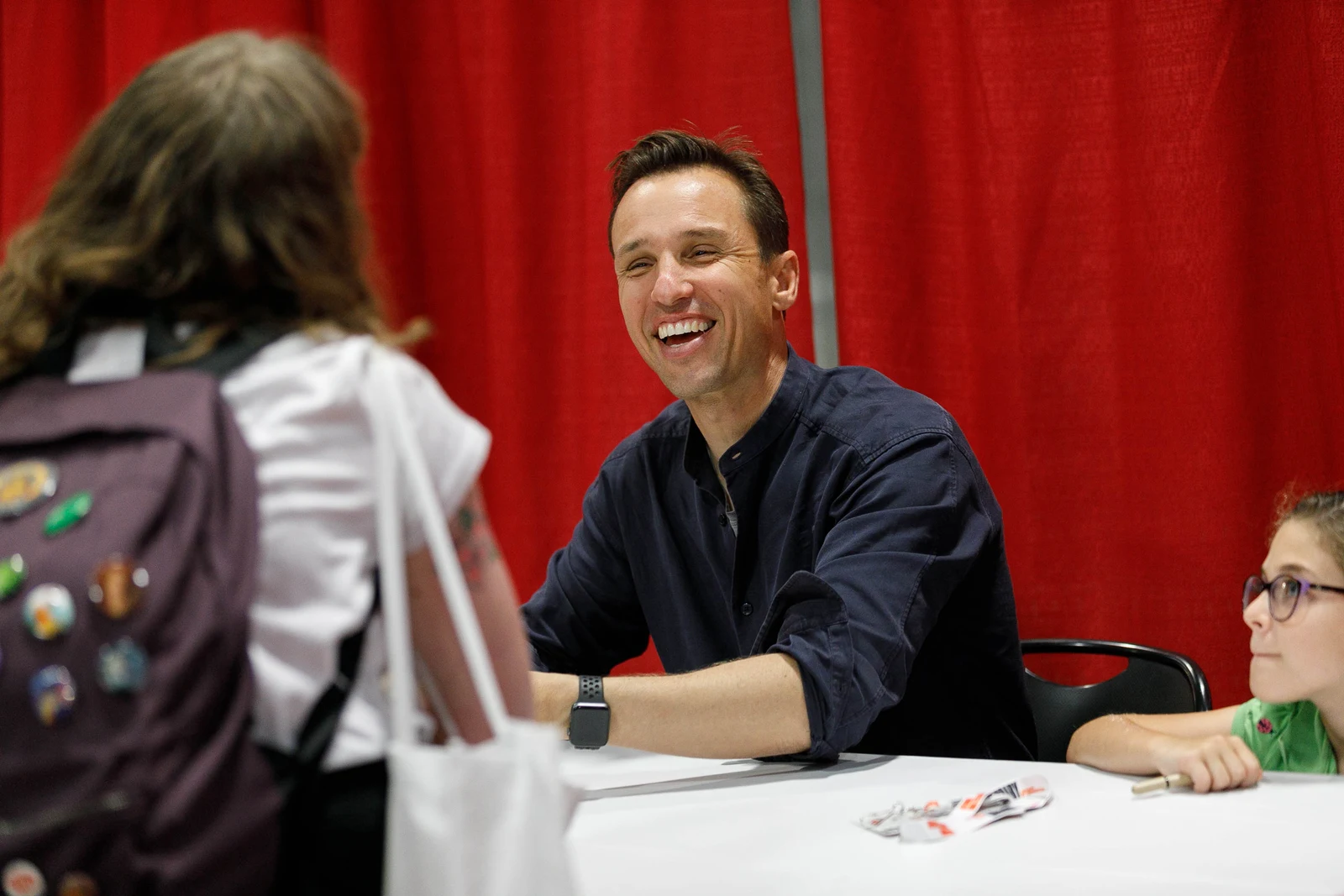
Publisher synopsis and format records, an author interview account and a named contemporary review serve different evidentiary roles. No complete novel, recording or private drafts consumed; story observations follow those written sources, not a claim to a new close reading. The author’s 2019 signing image is contextual, not a depiction of the Dunbar characters. No sales or search ranking inferred. This article was reviewed on 24 October 2026.
- Pan Macmillan AustraliaBridge of Clay:23 April 2019 paperback and synopsis
- Kirkus ReviewsBridge of Clay:15 August 2018 issue
- Claire Nichols / ABC News4 December 2018: thirteen years making Bridge of Clay
- Markus ZusakFiction and nonfiction bibliography
- Edmond Joe / Library of Congress LifeComplete 2019 National Book Festival signing photograph;CC0