
The short answer
Question 7 connects Richard Flanagan’s parents and Tasmanian upbringing with much larger histories of literature, war and science. Its interest lies less in a complete chronological life story than in asking how a life depends on events it cannot fully understand or measure.
Chronology
A timeline of the turning points
The inherited material
The author returns to his parents and his father’s captivity.
Australian publication
The publisher records an October hardback and ebook.
Other editions and the award
The book reaches further markets and receives the nonfiction prize.
A condition on the cash
Flanagan announces that receiving the award money depends on a change in the sponsor’s investment plans.
A chain of connections replaces the conventional chronology
The publisher’s account moves from Japan’s Inland Sea to Tasmania, linking H. G. Wells, Rebecca West, nuclear physics, the author’s father and a dangerous river experience. A reader looking only for an ordered account of school, marriage and career will therefore miss the organising principle.
The connections make contingency visible: a private life emerges within stories and events far beyond one person’s control. They are also literary choices. Following a narrative chain is not the same as proving that each event has one necessary cause, or that all other possible explanations have disappeared.
Sources for this section: [1]
The father’s survival creates an unresolved ethical problem
Kirkus describes Flanagan’s reflection that his father might not have survived captivity without the war’s abrupt end, and his conflict over the mass death associated with the atomic bombs. The personal question is how to understand an existence bound, in his own retrospective account, to catastrophe elsewhere.
That is a memoir’s counterfactual problem, not a settled demonstration that a particular military decision was the only possible way to end the war. Holding gratitude, horror and uncertainty together is more faithful to the book’s form than extracting a simple slogan for or against a historical policy.
Sources for this section: [3]
Dream, repetition and science are part of the method
Asked by his publisher how he chose personal material, Flanagan described dreaming the book rather than assembling a conventional life record. The written Q&A also discusses its short sections, repetition and his refusal to treat science and literature as entirely opposed activities.
His reference to physicist Leo Szilard’s view of creativity helps explain that connection. The book is concerned with how people imagine and act, not merely with collecting dates. An author’s account of his method offers a useful entry into the form without obliging every reader to experience it in the same way.
Sources for this section: [2]
The Tasmanian strand is more than a picturesque setting
Sarah L’Estrange’s ABC review connects the book’s family memories with the Tasmanian landscape, colonial violence and the author’s near-death experience on the Franklin River. The island is not simply scenery behind the international history; it is where those histories acquire personal consequence.
Her enthusiastic response values the imaginative links between intimate life and distant events. Kirkus likewise responds to a deliberately unresolved narrative. These are attributed readings, not evidence of unanimous critical approval. They suggest approaching the book through its returns and interruptions rather than expecting every strand to close neatly.
The nonfiction award and the cash decision are separate events
The Australian hardback appeared in October 2023; the publisher also lists a November 2024 paperback. The 2024 Baillie Gifford award made Flanagan the first writer to receive both that nonfiction prize and the Booker, which he had won for a different book.
At the time of the award, he said he would delay accepting the £50,000 until sponsor Baillie Gifford offered a plan on fossil-fuel and renewable-energy investment. That statement brought his environmental concerns into the ceremony. It did not undo the jury’s result or turn Question 7 into another edition of his Booker-winning novel.
Biography context
Explore Australia through connected lives
Richard Flanagan
Place this experimental personal work beside earlier histories, novels and journalism.
Explore the biographiesAn earlier fictional responseThe Narrow Road to the Deep North
Compare the transformation of family experience into an invented protagonist.
Explore the biographiesAnother personal writing practiceHelen Garner
Read a different Australian career spanning fiction, diaries and nonfiction.
Explore the biographiesConnected biographies
The writer and the different forms of family memory
1961–
Richard Flanagan
Novelist, nonfiction writer, journalist and filmmakerRichard Flanagan moved from Tasmanian history writing into novels, film and journalism. His work connects colonial violence, migration, wartime memory and environmental questions, without confining those subjects to one literary form.Read biographyQuick answers
Common questions
- Is Question 7 a sequel to The Narrow Road?
- No. It is a separate work of personal and historical writing, although family wartime memory connects their concerns.
- Why do catalogues show both 2023 and 2024?
- The Australian hardback and ebook appeared in October 2023; other formats and markets followed in 2024.
- Is it an ordinary chronological autobiography?
- No. It interweaves memory, history, literary connections and reflection in a nonlinear form.
- Did the award mean Flanagan accepted the money immediately?
- No. In November 2024 he announced a condition on receiving the cash. That dated statement does not establish the payment’s later status.
Primary and institutional sources
How this history was checked
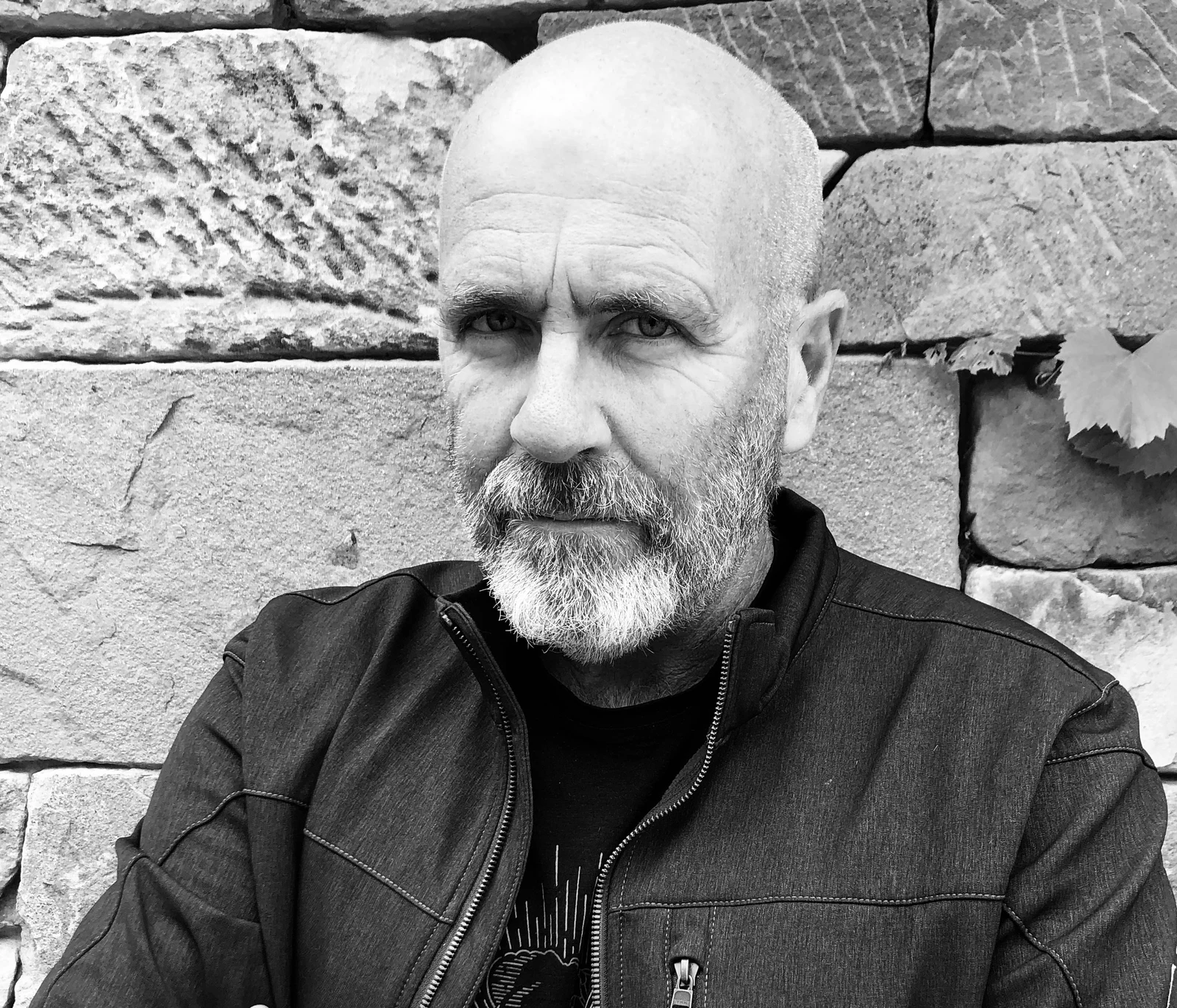
Edition records establish publication, author Q&A explains method, and actual written reviews supply attributed responses. The award body establishes the literary result; ABC reports the dated money condition, not its current resolution. References to the atomic bomb describe the memoir’s ethical and counterfactual structure, not a complete military-history assessment. No book extracts, radio playback or complete novel/memoir reading is claimed. The full author photograph is an identity image, not a staged reconstruction of the river episode. Counted once with Australia. This article was reviewed on 24 October 2026.
- Penguin Random House AustraliaQuestion 7: premise and Australian 2023/2024 editions
- Richard Flanagan / Penguin Random House Australia18 October 2023: written Q&A on Question 7, form and creativity
- Kirkus ReviewsQuestion 7: 2024 review of nonlinear memoir and counterfactual survival
- Sarah L’Estrange / ABC Arts26 November 2023: selected Question 7 review in the monthly books column
- The Baillie Gifford Prize for Non-Fiction19 November 2024: Question 7 winner announcement and judging context
- Hannah Story / ABC Arts20 November 2024: award and Flanagan’s stated condition on receiving prize money
- Zamotmum12 / Wikimedia CommonsRichard Flanagan, 16 January 2021: original own-work CC BY-SA 4.0 record