
The short answer
How can metamorphosis carry the agency of a woman’s journey without a literal realist setting?
Read the evidence
Sources, interpretation and production roles
The records answer different questions about this work. The final exercise is an original teaching model.
| Record or question | Supported reading | Boundary or contrast |
|---|---|---|
| Annecy catalogue | Identifies year, cel technique, premise and production roles. | A catalogue synopsis is not a complete interpretation. |
| BFI curatorial entry | Reads a wordless journey through independence and self-discovery. | A curator’s reading does not make every symbol universal. |
| Original journey model | Separates environmental change from a traveller’s response. | The shapes are invented and do not reproduce the film. |
A journey organised through changing spaces
The Black Dog is a 1987 British animated short directed by Alison de Vere. Annecy’s record describes a woman accompanied by a black dog moving through fantastic places and times. The BFI’s curatorial account reads the film through self-discovery and the possibilities and dangers of an independent life. Those descriptions support an inquiry into agency: how does a figure continue a journey when the surrounding world does not remain stable? They do not supply a literal itinerary or establish that every image is a factual episode in the artist’s biography. The fantasy setting is a formal resource through which a personal question becomes visible.
Metamorphosis does not require a fixed code
A symbolic film can invite interpretation without behaving like a dictionary. If one shape leads to another, the change may matter as much as the separate objects. A reader of the programme records can therefore prepare two kinds of viewing question: what does a figure suggest, and what happens to its power when the surrounding form changes? This is an original interpretive framework based on the documented journey, not an assertion that a particular unseen transformation has been decoded. It avoids reducing the woman’s experience either to a universal statement about all women or to an unsupported diagnosis of the filmmaker’s private life.
Authorship includes several kinds of craft
Annecy creditsde Vere with direction, script, graphics, sets and animation. It also identifies Lee Stork’s production, Ted Gerald’s camera work, Peter Shade’s music and Sean Lenihan’s sound and editing. The concentration of visual and writing roles helps explain the work’s authorial identity, but the remaining credits are not incidental. An animated image still needs to be photographed, assembled and heard. The BFI’s account ofher earlier Two Faces similarly joins words and images under one artist’s responsibility. Together these records permit a precise description of independence: the film has a strongly identified creative author while relying on contributions that make the completed experience possible.
An original agency exercise
Create an invented three-stage journey using only plain shapes: a traveller approaches a barrier, the barrier becomes a passage, and the traveller must choose whether to continue. Make one version in which the environment changes without any response and another in which the traveller’s action changes the next stage. A reference answer distinguishes passive succession from an exchange between action and setting. Either can be an artistic choice, but they give different accounts of agency. This is not a reconstruction of The Black Dog’s frames. It provides a way to examine a legally available screening without assigning one meaning to each symbol or pretending that a production credit alone proves the meaning of a scene.
Continue the chronology
Related history guides
Biography context
Explore United Kingdom through connected lives
Connected biographies
People and related creative practices
1927–2001
Alison de Vere
Animation director, designer and writerAlison de Vere moved from painting and studio design into a distinctive independent animation career, with The Black Dog joining personal imagery to extensive craft.Read biography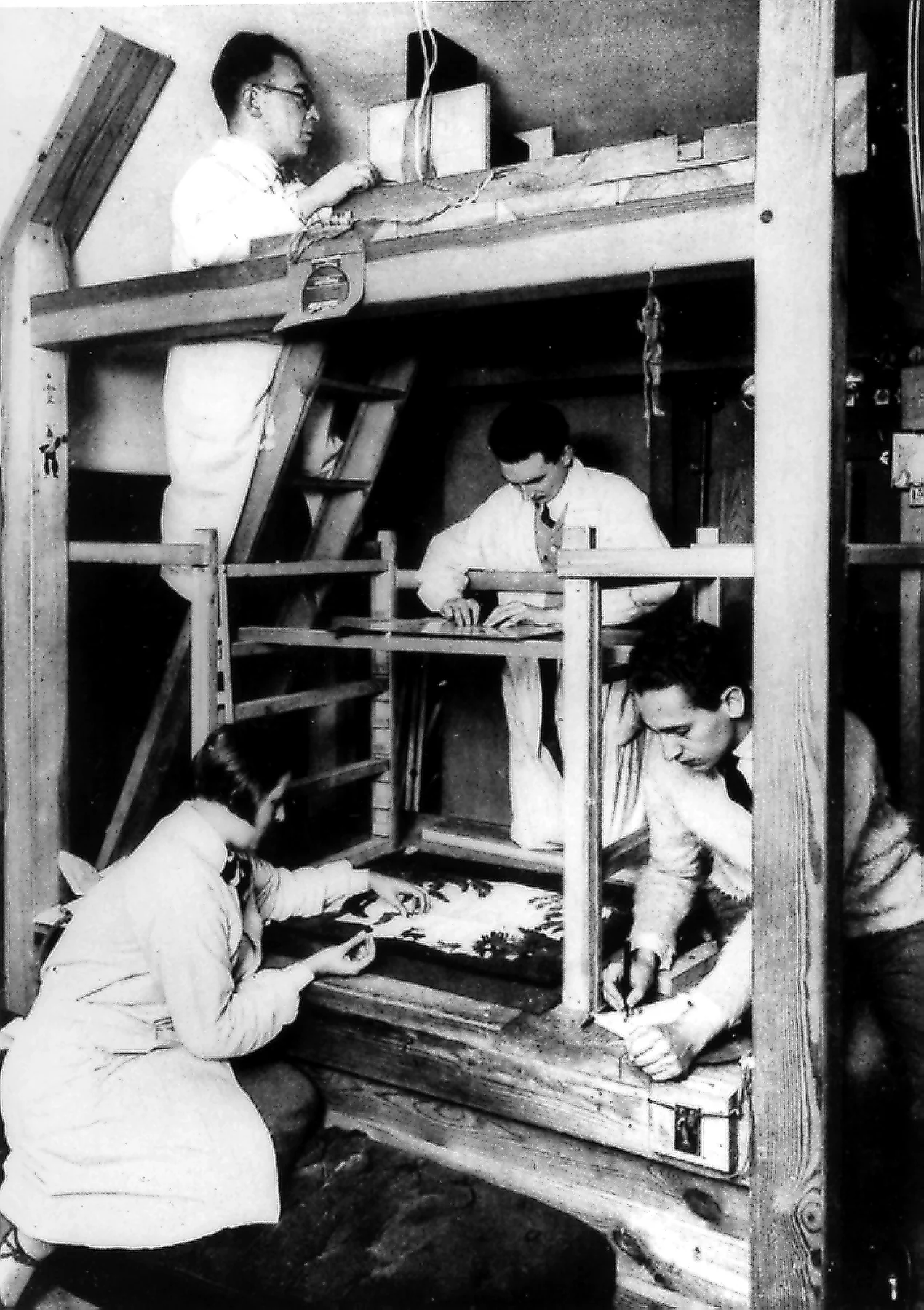
1899–1981
Lotte Reiniger
Silhouette animator and directorSilhouettes made fairy tales move.Read biography1914–1991
Joy Batchelor
Animation writer, designer, director and producerJoy Batchelor brought illustration, writing and design into a long British animation partnership, from sponsored shorts to Animal Farm and Ruddigore.Read biographyQuick answers
Common questions
- Is The Black Dog a spoken explanation of symbols?
- The BFI describes a wordless fantasy journey; the records do not provide one fixed meaning for every image.
- What technique does Annecy record?
- Drawing on cels, in colour.
Primary and institutional sources
How this history was checked
Sources include production records, institutional collections and the specifically identified passages discussed here. Interpretations and teaching models are distinguished from credits and publication facts. This article was reviewed on 7 November 2026.