
The short answer
Barbara Jordan's televised statement during the House Judiciary Committee's impeachment inquiry made constitutional reasoning accessible to a national audience. Its place in Watergate becomes clearer when her argument is distinguished from the committee's recommendations, the full House's authority and Richard Nixon's later resignation.
Keep the constitutional stages distinct
Recommendation, impeachment and trial
Jordan spoke during the committee inquiry. The Constitution assigned the possible later decisions to the full House and Senate.
| Stage | Institution's task | What happened in 1974 |
|---|---|---|
| Inquiry and recommendation | Judiciary Committee examines evidence and recommends articles | Three articles approved on 27, 29 and 30 July |
| Impeachment | Full House decides whether to bring constitutional accusations | No impeachment vote before Nixon's resignation |
| Trial | Senate tries an impeachment; conviction requires two-thirds of members present | No Senate trial of Nixon occurred |
Chronology
A timeline of the turning points
Arrests at the Watergate
Five men are arrested at Democratic National Committee headquarters, beginning the chain of investigations associated with Watergate.
House authorizes an inquiry
The House empowers its Judiciary Committee to investigate whether sufficient grounds exist to impeach Nixon.
Supreme Court rules on the tapes
The Court upholds the special prosecutor's subpoena for recordings needed in the criminal proceedings.
Jordan sets out constitutional standards
The Texas representative delivers her televised statement during the Judiciary Committee's debate.
Committee approves three articles
The committee approves obstruction of justice on 27 July, abuse of power on 29 July and refusal to comply with House subpoenas on 30 July.
Resignation before a House vote
Nixon leaves office before the full House votes on impeachment and before any Senate trial.
An inquiry already in motion
Watergate began with the June 1972 arrests at Democratic National Committee headquarters and expanded into investigations of the break-in, its financing and efforts to conceal responsibility. Criminal proceedings, the Senate's 1973 investigation and the House's later impeachment inquiry had different responsibilities. Barbara Jordan was a member of the House Judiciary Committee, not the Senate committee conducting the earlier televised hearings.
On 6 February 1974 the House authorized its Judiciary Committee to investigate whether grounds existed to impeach President Richard Nixon. By July, members had examined evidence and were debating possible articles. Jordan's statement of 25 July belonged to that collective process. It did not launch the investigation, establish every fact or substitute for the votes that would follow.
Beginning with belonging in the constitutional community
Jordan opened by considering the Constitution's claim to speak for the people. As a Black woman, she recognized that the founding political order had excluded people like her. She then identified amendment, interpretation and court decisions as means through which inclusion had expanded. This opening made her constitutional commitment inseparable from the history of struggles to belong within the republic.
The argument also established her authority as a representative exercising an assigned responsibility. She was neither treating the founding document as flawless nor abandoning its protections. Her position was that constitutional government possessed mechanisms for correcting exclusion and restraining officials. The opening moved from personal history to a public obligation: members of Congress had to examine presidential conduct through those mechanisms.
Accusation by the House, judgment by the Senate
A central part of Jordan's explanation separated impeachment from removal. Article I gives the House the power of impeachment and the Senate the power to try impeachments. She argued that voting for an article did not require a representative to decide the question assigned to the Senate. Accusers and judges were deliberately placed in different institutions, preserving a distinction essential to the process.
The Judiciary Committee occupied an earlier stage still: it could recommend articles for the House to consider. Its members were not conducting a Senate trial. Jordan treated impeachment as a serious constitutional check on abuses of public trust, while rejecting the idea that ordinary dissatisfaction with administration should be enough. This was an argument about standards and institutional duties, rather than an announcement that removal had already occurred.
Bringing the standards to the evidence
Jordan's statement then connected constitutional reasoning with the allegations before the committee. She discussed protection of people implicated in wrongdoing, interference with investigation and the misuse of executive agencies. These were arguments made by an inquiring legislator about evidence and presidential responsibility. They should be read in that procedural setting, rather than presented as findings from a completed Senate trial.
The timing also mattered. On 24 July the Supreme Court had upheld the special prosecutor's demand for White House recordings in criminal proceedings. Jordan referred to the uncertainty over compliance and separately noted the committee's outstanding subpoena. Court demands in a criminal case and congressional demands in an impeachment inquiry were related parts of the crisis, but they were not the same proceeding.
What the committee recommended and what never reached a vote
The Judiciary Committee approved three articles on separate days: obstruction of justice on 27 July, abuse of presidential power on 29 July, and failure to comply with House subpoenas on 30 July. These were committee recommendations for action by the full House. They must not be compressed into a claim that the House had already impeached Nixon.
Nixon's resignation took effect on 9 August 1974, before a full House impeachment vote and before a Senate trial. The result followed investigations, documentary evidence, judicial decisions and changing political support. Jordan helped explain why constitutional accountability mattered, but neither her speech nor any single member's intervention can account for the whole outcome. Keeping the stages separate preserves both her contribution and the wider institutional history.
Reading the speech as a historical source
The House preserves a partial transcript containing Jordan's edited remarks. Its description explains that stenographers recorded the televised proceedings and members corrected their statements before official printing. That object is evidence of both the speech and the process of preparing a public record. An edited official transcript, an audio recording and a later excerpt should therefore be identified accurately when compared.
Jordan's reputation grew because she joined forceful delivery with an explanation of government that listeners could follow. Her intervention remains useful for studying how constitutional language becomes public argument. Reading it alongside the committee chronology avoids reducing Watergate to an inspirational quotation. It also reveals a legislator performing a specific task within a process whose authority and limits she took care to explain.
Biography context
Explore United States through connected lives
Jordan's career beyond Watergate
Follow her Houston legal practice, Texas legislative work, voting rights proposals and later teaching.
Explore the biographiesCompare constitutional responsibilitiesEisenhower and federal court enforcement
Examine a different constitutional problem: presidential responsibility for enforcing court orders during the 1957 Little Rock crisis.
Explore the biographiesConnected biographies
Explore public lives shaped by constitutional responsibility
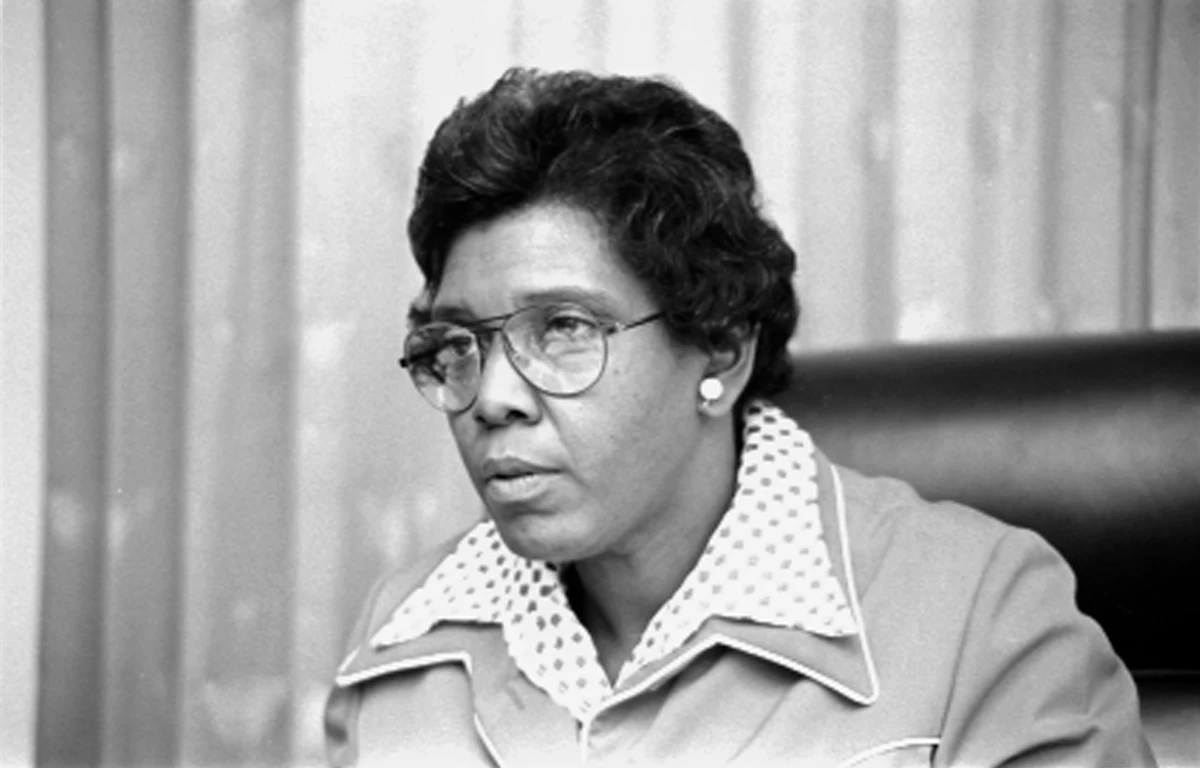
1936–1996
Barbara Jordan
Texas legislator, U.S. representative and public policy educatorA Houston lawyer who became the first Black woman elected to Congress from the South and brought legal reasoning, coalition building and public teaching to national politics.Read biography
1890–1969
Dwight D. Eisenhower
Allied commander and 34th president of the United StatesAn Army officer whose experience managing wartime alliances preceded a presidency shaped by the Cold War, interstate highways and the enforcement crisis at Little Rock.Read biographyQuick answers
Common questions
- When did Barbara Jordan deliver her Watergate statement?
- She delivered it on 25 July 1974 during the House Judiciary Committee's televised debate in the inquiry into whether to recommend articles of impeachment against Richard Nixon.
- Was Jordan speaking in the House or Senate?
- She was a U.S. representative from Texas serving on the House Judiciary Committee. Her statement was part of the House inquiry, distinct from the Senate's earlier Watergate investigation.
- Did the House impeach Nixon in 1974?
- No. The Judiciary Committee recommended three articles of impeachment, but Nixon resigned on 9 August before the full House held an impeachment vote. There was no Senate impeachment trial of Nixon.
- What is distinctive about the House's surviving transcript?
- The House describes it as a partial transcript edited by Jordan for official printing after stenographers recorded the hearing. It should be identified as an edited official text when compared with audio or other transcripts.
Primary and institutional sources
How this history was checked
The House record establishes the date, setting and edited nature of Jordan's statement. Article I supplies the institutional distinctions, and the Archives chronology identifies the votes and resignation. The 1976 portrait is later contextual material. This article was reviewed on 21 October 2026.
- U.S. House of Representatives, History, Art & ArchivesBarbara Jordan on Nixon's Articles of Impeachment — 25 July 1974 edited record
- American Public Media, American RadioWorksBarbara Jordan — statement at the House Judiciary impeachment hearings, 25 July 1974; audio and transcript
- National ArchivesThe Constitution of the United States: A Transcription — Article I
- National ArchivesWatergate: A Chronology
- National ArchivesNixon and Watergate — resignation and constitutional context
- Library of Congress, Prints and Photographs DivisionCongresswoman Barbara Jordan — Thomas J. O'Halloran, 7 April 1976, LC-DIG-ppmsc-01268
- Wikimedia Commons / Library of CongressBarbara Jordan 1976-04-07 — original file and staff-photograph rights dedication