
The short answer
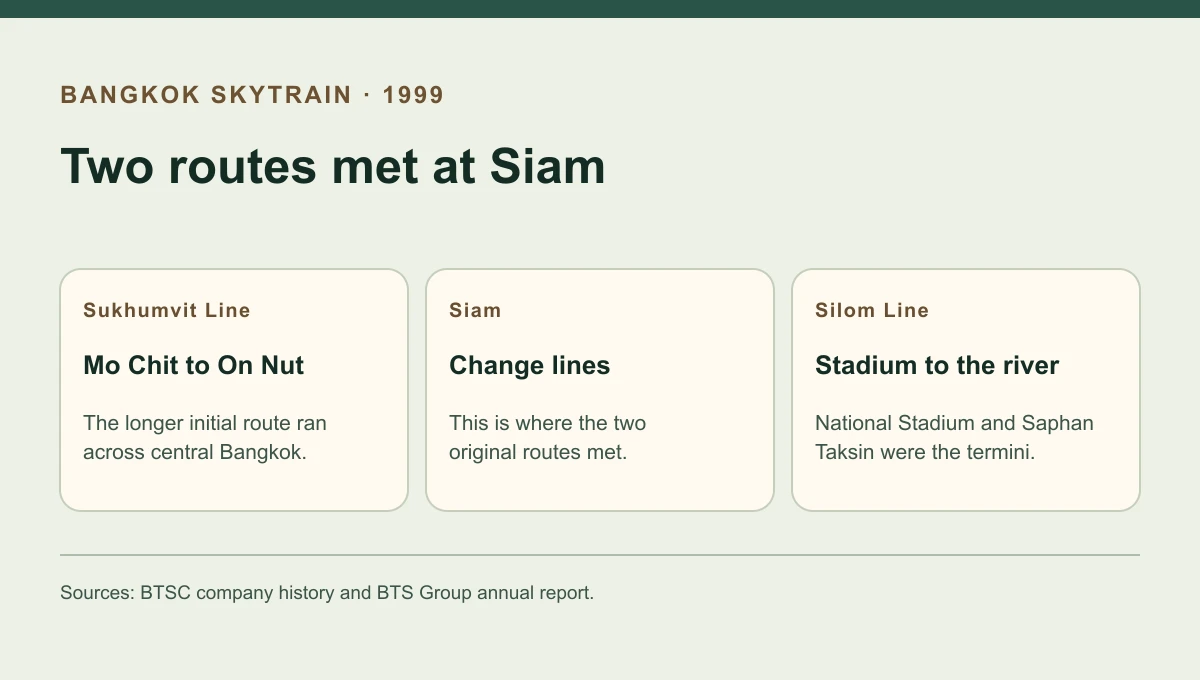
Bangkok’s Skytrain opened on 5 December 1999 with two elevated routes and a network the operator describes as serving 23 stations. The Sukhumvit Line ran from Mo Chit to On Nut, while the shorter Silom Line linked National Stadium and Saphan Taksin. Passengers could transfer between them at Siam from the beginning.
The 1999 route map
Two routes and one transfer
Start with the original endpoints to understand which trips were possible at launch.
| Part | 1999 extent | Practical role |
|---|---|---|
| Sukhumvit Line | Mo Chit to On Nut | Connects northern and eastern parts of Bangkok through the central area. |
| Siam station | Interchange | A rider can move between the two routes without taking a road journey. |
| Silom Line | National Stadium to Saphan Taksin | Provides a shorter link from the stadium area to the river. |
Chronology
A timeline of the turning points
The original concession is signed
Bangkok’s municipal authority and the operator set the arrangement for developing and running the first Skytrain.
Two routes open together
Sukhumvit and Silom services begin with Siam as their shared interchange.
Extensions change the endpoints
Later additions go beyond the original termini listed in the concession record.
How the two-route design worked
The operator describes the first Sukhumvit route as about 17 kilometres and the Silom route as about 6.5 kilometres. One carried riders between Mo Chit and On Nut, while the other reached the Chao Phraya at Saphan Taksin. With a shared station at Siam, the two lines provided journeys between each other’s corridors even on opening day.
The routes ran above the street. A passenger reached a station above road level, boarded an electric train and stayed in the rail network at an interchange. Those were practical changes to a trip through central Bangkok even for riders who still walked or used another mode at one end.
Who operated the Skytrain
The BTS Group annual report records a concession signed with the Bangkok Metropolitan Administration in April 1992. The opening-day regulations name the operating company and describe the passenger rules under that arrangement. Together the sources document a municipal role and a separate company role for the original system.
Why the original termini matter
A later map shows a longer network. The 1999 route description lets a reader locate the first stations in a definite period and see which trips required an additional connection beyond Mo Chit, On Nut or Saphan Taksin. Bangkok’s subsequent underground Blue Line served another alignment and began under a different authority.
Continue the chronology
Related history guides
How the Airport Rail Link Connected Bangkok in 2010
Follow the airport railway and its transfer at the BTS Phaya Thai station.
Read the timeline1888–1920How Bangkok’s Horse Trams Gave Way to Electric Trams
Compare the early street tram network with Bangkok’s later elevated rail.
Read the timeline1980–1985How Manila’s First LRT Line Opened in Stages
Compare the timing with Manila’s first elevated LRT line.
Read the timeline2016–2017How the Klang Valley’s First MRT Opened to Kajang
Read how the Klang Valley opened an elevated first phase before the central tunnel.
Read the timeline2000–2004How Bangkok’s First Underground MRT Line Opened
Follow the separate underground Blue Line from Hua Lamphong to Bang Sue.
Read the timelineConnected biographies
People connected to this history
Quick answers
Common questions
- Which two BTS lines opened in 1999?
- The Sukhumvit Line opened from Mo Chit to On Nut and the Silom Line from National Stadium to Saphan Taksin.
- Where did the original lines meet?
- Passengers transferred at Siam.
Primary and institutional sources
How this history was checked
Dates, legal milestones and historical claims are checked against the official and institutional records below. This article was reviewed on 19 November 2026.