
The short answer
In November 2016 the Senate broadened an existing exception to its visitor rules so senators could briefly care for infants in the chamber. Larissa Waters’s first breastfeeding of her daughter there in May 2017 became the better-known image. The procedural history was older, more qualified and different from the House of Representatives’ arrangements.
Chronology
A timeline of the turning points
An earlier exception
The Senate permits breastfeeding infants within its visitor rules.
Waters proposes expansion
The President refers her suggested infant-care change to the Procedure Committee.
Qualified recommendation presented
Sue Lines explains the balance between flexibility and orderly proceedings.
Standing order amended
The Senate adopts a qualified exception for brief care, not unrestricted admission.
A visible milestone
Waters breastfeeds her daughter in the Senate chamber under an already established exception.
The starting point was a visitor rule, not a general workplace ban
Standing order 175 normally restricts access to the part of the chamber reserved for senators while the Senate sits. The rule distinguishes senators and attending parliamentary officers from visitors. An exception for a senator breastfeeding an infant had been adopted in May 2003.
The 2016 question was therefore not whether breastfeeding could ever occur in the Senate. It was whether the exception should cover other care of infants. Placing the amendment inside the visitor rules helps explain both its practical importance and its limited scope: it concerned access during proceedings, not a complete parental-leave or childcare policy for everyone working in Parliament House.
Waters’s proposal was refined through committee consideration
In February 2016 the President referred Waters’s proposed expansion to the Procedure Committee. The committee examined how to accommodate care without making the exception open-ended.
Presenting its report in October, chair Sue Lines explained that the committee considered the initial wording too broad. It returned to a qualified formulation considered in 2009. Her account placed practical flexibility alongside the chamber’s deliberative function. The resulting text was thus a committee-mediated response to a senator’s proposal, not a rule Waters could change alone or a government bill awaiting Royal Assent.
The adopted exception retained presidential discretion and a non-disruption condition
The Senate amended its standing orders on 8 November 2016. Besides the existing breastfeeding exception, the text allowed a senator to care briefly for an infant at the President’s discretion, provided Senate business was not disrupted.
Those qualifications mattered. The measure did not confer an unrestricted right to bring any child into the chamber for any duration. It supplied flexibility for infant care while retaining procedural control. Adoption by the chamber was the operative parliamentary step; describing it as a new Commonwealth statute would confuse internal parliamentary rules with legislation applying outside the chamber.
The House’s proxy arrangements could not simply be copied into the Senate
Waters also raised proxy voting for senators nursing infants. The Procedure Committee recorded its view that section 23 of the Constitution, which gives each senator a vote, prevented Senate proxy voting. Its infant-care recommendation did not introduce that separate proposal.
The House of Representatives had different arrangements. Its procedural review describes a 2008 proxy provision for nursing members and a 2016 change allowing cared-for infants into the chamber. Comparing the Houses is useful precisely because their rules were not identical. A headline about family-friendly changes in “Parliament” can hide which chamber, form of attendance or voting procedure actually changed.
The 2017 first showed practice, not the beginning of permission
On 9 May 2017 Waters breastfed her daughter in the Senate chamber, recorded in Parliament’s chronology as a first. It made a procedural accommodation publicly visible. It should not be backdated to 2016 or treated as evidence that breastfeeding had been prohibited until that day.
Acceptance was not universal. Later that year Liberal MP Craig Kelly criticised breastfeeding in Parliament even while discussing its difficult working conditions. That reaction illustrates the difference between changing formal rules and changing political attitudes. The amendment made one form of participation possible; it did not by itself resolve travel pressures, caring responsibilities or every barrier to women’s representation.
Biography context
Explore Australia through connected lives
Larissa Waters
Read her environmental-law work, citizenship disqualification, return and party leadership.
Explore the biographiesRepresentation contextJulia Gillard
Compare wider debates about women’s participation with a specific change to chamber procedure.
Explore the biographiesAnother Senate careerSarah Hanson-Young
Read a different Greens senator’s institutional work without treating all Senate campaigns as one story.
Explore the biographiesConnected biographies
An advocate within a longer procedural history
1977–
Larissa Waters
Australian Greens senator for Queensland; former federal party leaderLarissa Waters moved from community environmental law to Queensland’s Senate representation. Her career includes infant-care procedural reform, disqualification over Canadian citizenship, a return to Parliament and a federal Greens leadership that ended through illness in 2026.Read biographyQuick answers
Common questions
- Did the Senate first permit breastfeeding in 2016?
- No. The breastfeeding exception dated from May 2003; 2016 broadened it to qualified brief infant care.
- Did the change require Royal Assent?
- No. It was an amendment to the Senate’s standing orders, adopted by the chamber.
- Did it create Senate proxy voting?
- No. The committee treated proxy voting as a separate constitutional difficulty.
- When was Waters’s breastfeeding first?
- 9 May 2017. That visible first was separate from both the 2003 permission and the 2016 rule change.
Primary and institutional sources
How this history was checked
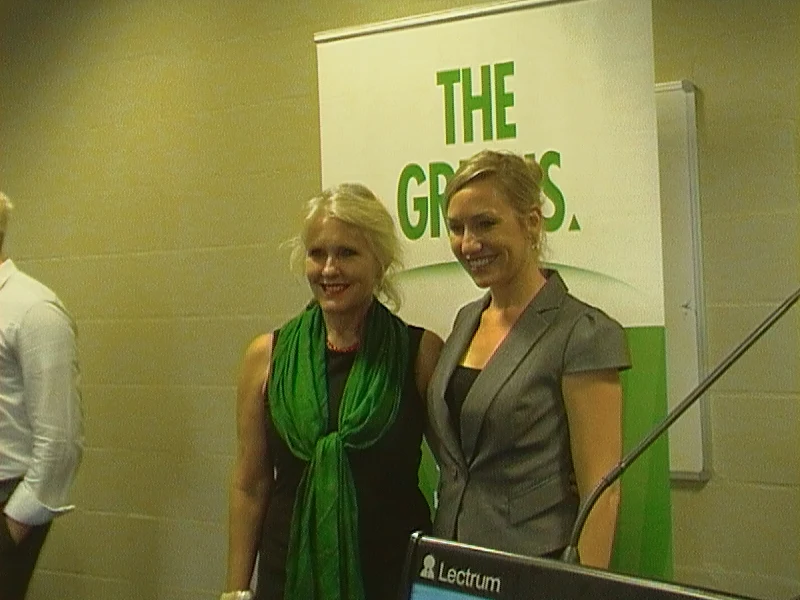
Selected committee recommendation, Lines’s explanation, standing order and chronology entries were read, including indexed passages where direct APH retrieval failed. The report and its PDF are one work, not separate source budgets. House material supplies a comparison, not Senate authority. Patrick Gillett’s 2012 event photograph identifies Waters at right; it depicts neither the rule change nor the 2017 breastfeeding first. This article was reviewed on 24 October 2026.
- Senate Procedure CommitteeFirst report of 2016: selected infants-in-the-chamber discussion and recommendation
- Senate HansardSue Lines presents the procedure report, 12 October 2016: selected infant-care explanation
- Department of the SenateStanding order 175: visitors and the qualified infant-care exception
- Parliamentary LibraryParliament House chronology: selected 2003, 2016, 2017 and 2018 entries
- House of Representatives Procedure Committee2023 report, chapter 4: selected paragraphs 4.17–4.20 on family-friendly arrangements
- ABC NewsCraig Kelly criticises breastfeeding in Parliament, 22 September 2017
- Patrick Gillett / Wikimedia CommonsRainee Skinner + Larissa Waters: photographer’s original own-work release, 27 January 2012