
The short answer
The Australian Border Force began on 1 July 2015 as a frontline operational organisation within the Department of Immigration and Border Protection. Its creation joined customs and immigration operations; it did not invent every border power or begin every asylum policy. Following the enabling law, departmental merger and transparency dispute explains what changed and what the new institution did not itself prove.
Chronology
A timeline of the turning points
Integration announced
The government announces a combined department and frontline border force.
Legislative package
Immigration Minister Peter Dutton introduces the enabling bills in the Abbott government.
Parliamentary passage
Parliament completes the enabling legislation.
Assent
The original ABF Act records royal assent.
Launch and integration
The ABF begins and the former Customs and Border Protection Service integrates with the department.
Secrecy challenge
Doctors challenge the original disclosure restrictions, continuing the transparency dispute.
Integration joined existing operations rather than creating a border from scratch
The government announced the integration in May 2014. The enabling package brought the former Customs and Border Protection Service into the immigration department, with the ABF as its frontline operational arm. A contemporary notice also explained the combined border.gov.au website.
This was a reorganisation of established public functions. Customs work, immigration administration and maritime enforcement already had histories and legal foundations. The launch of a new name and uniform should not be mistaken for the origin of every policy it subsequently administered, or for an entirely separate department replacing the existing machinery.
Paired legislation connected the new structure to existing laws
The package introduced on 25 February 2015 included the ABF bill and a consequential customs-and-other-legislation bill. Parliament completed passage on 14 May; the ABF Act received assent on 20 May and commenced on 1 July.
The original Act created the Commissioner’s office and addressed departmental workers, directions and integrity requirements. It also explicitly connected officials to powers under the Customs Act, Migration Act and Maritime Powers Act. The institutional change depended on this wider legal network, not a single unlimited power contained in the organisation’s title.
Command and political responsibility occupied different levels
The Act placed control of ABF operations with the Commissioner under the minister. The Governor-General appointed the Commissioner, who also held the Comptroller-General of Customs role. Departmental administration and operational command were related but distinct responsibilities.
Prime Minister Tony Abbott supported the launch; Immigration Minister Peter Dutton held portfolio responsibility. Neither role should be confused with personally performing every operational decision. Parliamentary estimates also recorded practical work on back-office systems and registries, noting that full integration was unlikely to be completed by launch day. A commencement date did not certify that all organisational work was finished.
Customs and legitimate movement remained central functions
Public argument often concentrated on asylum seekers and security, but the institution’s remit extended to ordinary trade and travel. The ABF’s industry strategy described cargo and traveller clearance, customs compliance, enforcement and cooperation with industry.
These functions connect border administration to revenue, supply chains and the movement of people and goods. The agency’s objectives explain why it was created; they do not independently demonstrate lower costs, greater safety or improved treatment of every traveller. Assessing performance requires evidence about particular functions and periods beyond the fact of the merger.
Secrecy generated an immediate dispute about public accountability
The original law restricted disclosure of protected information and contained exceptions. Health professionals and lawyers feared that it would deter reporting of abuse in detention. The Commissioner and minister maintained that existing whistleblower protections were not displaced.
Labor supported creation of the agency while raising transparency concerns. Doctors later brought a challenge to the secrecy provisions in 2016. These objections were not a judicial finding that every disclosure was prohibited, and official reassurance did not erase the critics’ concerns. The episode makes accountability part of the ABF’s founding history, rather than a question resolved merely by its establishment.
Biography context
Explore Australia through connected lives
Tony Abbott
Read the political career and policy disputes surrounding the government that created the ABF.
Explore the biographiesCompare another federal institutionThe NACC Act, 2022
Compare independence, oversight and transparency in a different statutory framework.
Explore the biographiesEarlier asylum policy contextKevin Rudd
Distinguish the 2013 regional resettlement policy from the later administrative merger.
Explore the biographiesConnected biographies
The prime minister and the wider machinery of government
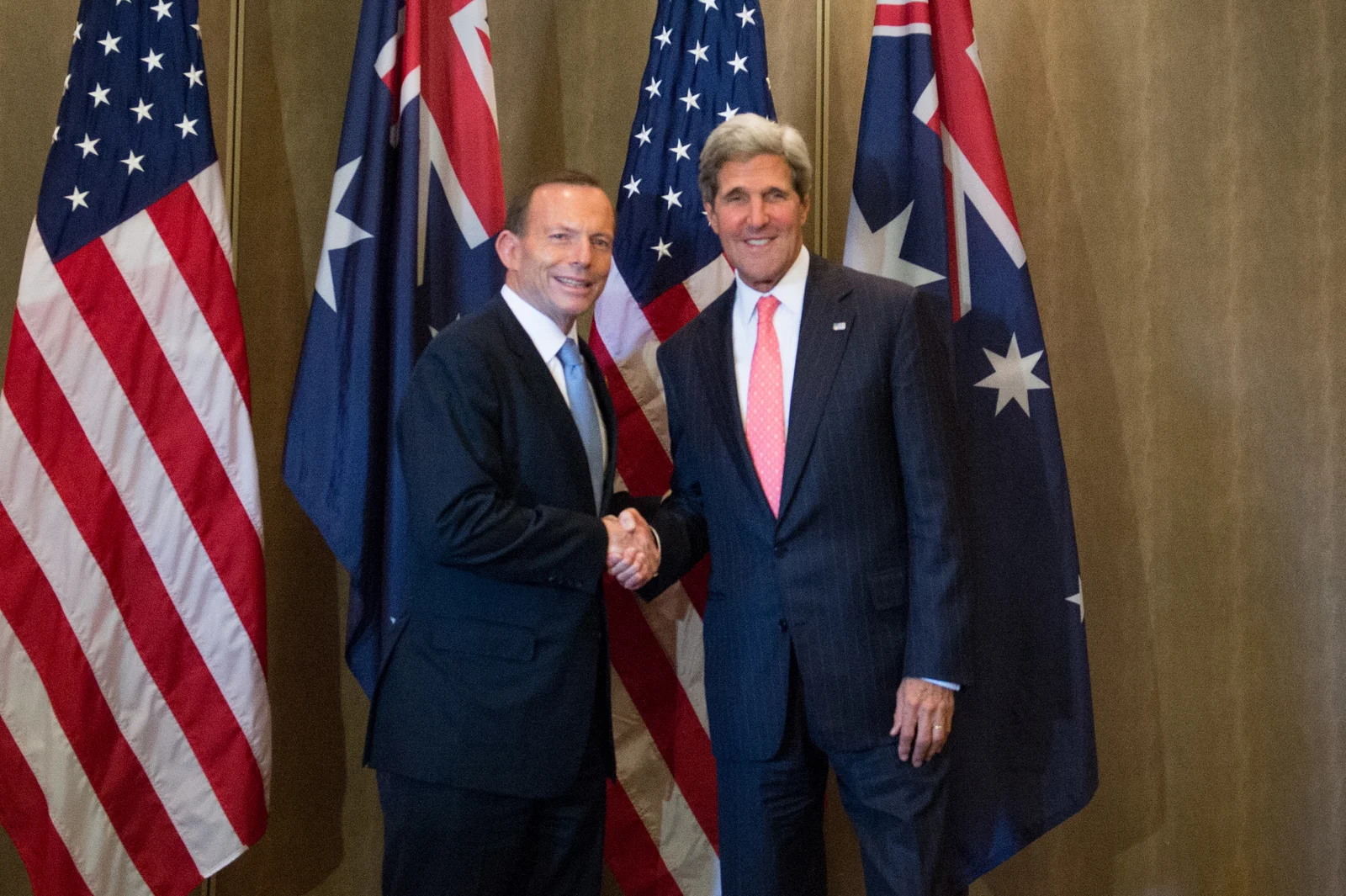
1957–
Tony Abbott
Former Australian prime minister and Liberal leaderTony Abbott led the Liberal–National Coalition into government in 2013 after years in John Howard’s ministry and opposition. His premiership pursued border and economic-policy changes before Malcolm Turnbull defeated him in a 2015 leadership ballot.Read biographyQuick answers
Common questions
- When was the Australian Border Force established?
- On 1 July 2015, after assent to its enabling Act in May.
- Was it a separate department at its creation?
- No. It was an operational organisation within the Department of Immigration and Border Protection.
- Did it begin Operation Sovereign Borders?
- No. That operation began in September 2013; the ABF was created in 2015.
- Was its work limited to asylum seekers?
- No. Customs, trade compliance, cargo and traveller clearance were also central functions.
Primary and institutional sources
How this history was checked
Selected original Act provisions establish commencement and structure; the contemporary gazette and notice describe integration. Reporting records competing positions on the original secrecy rules. This historical account does not state current disclosure law or advise on an individual case. The photograph shows Abbott with Kerry in 2013, not the ABF launch. This article was reviewed on 24 October 2026.
- Federal Register of LegislationAustralian Border Force Act 2015 as made: selected structure and secrecy provisions
- Australian Customs and Border Protection ServiceGazette TC15/20, page 18: ABF enabling legislation, 27 May 2015
- Australian Customs and Border Protection ServiceNotice 2015/22: integration and new website
- Parliament of AustraliaBudget estimates 2015–16, chapter 1, paragraphs 1.5–1.6: integration work
- Australian Border ForceIndustry Engagement Strategy 2020, introduction: customs and traveller functions
- ABC NewsBorder Force launch, ministerial responses and secrecy criticism, 1 July 2015
- ABC NewsDoctors challenge original Border Force secrecy provisions, 27 July 2016
- Museum of Australian DemocracyTony Abbott: premiership and policy milestones
- U.S. Department of State, East Asia and Pacific Media HubWilliam Ng: Kerry greets Abbott in Bali, 8 October 2013; item explicitly released as Public Domain