
The short answer
How do recommendations for future schooling differ from an annual report’s record of the existing system?
Evidence comparison
Read the records together
The records were created for different purposes and support different kinds of claims.
| Record | What it establishes | Question to keep open |
|---|---|---|
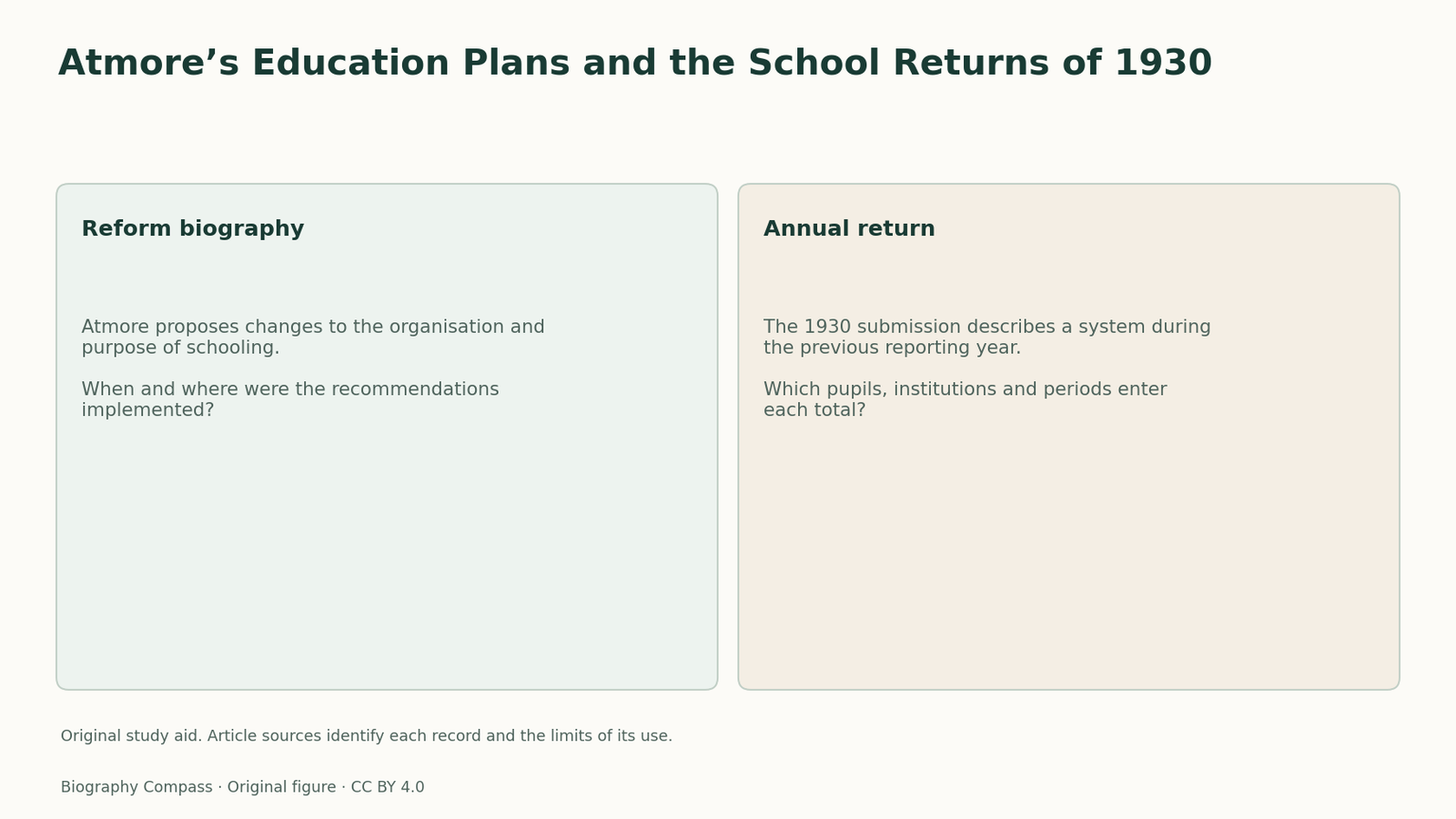
| Reform biography | Atmore proposes changes to the organisation and purpose of schooling. | When and where were the recommendations implemented? |
| Annual return | The 1930 submission describes a system during the previous reporting year. | Which pupils, institutions and periods enter each total? |
Chronology
A timeline of the turning points
Education minister
Atmore takes the portfolio.
Reports and proposals
Annual returns and reform recommendations serve different purposes.
Portfolio lost
Coalition government ends his ministerial term.
Date the report correctly
Atmore submitted the annual departmental report on 7 July 1930, but its main reporting period ended on 31 December 1929. The presentation date and the year described are different. This distinction matters when comparing its figures with reform proposals associated with 1930. A table does not automatically describe the situation on the day it was placed before Parliament, especially when the system was changing between collection and publication.
Sources for this section: [2]
Keep the committee programme separate
The biography describes recommendations for intermediate schools, curriculum reform and a higher leaving age. Those proposals belong to a reform programme, whereas the annual report records institutions and pupils within an existing administrative framework. A recommended school stage should not be counted as already established merely because both documents appeared during Atmore’s ministry. The two records have complementary purposes: one indicates intended change, the other helps establish the conditions being administered.
Check the categories before comparing totals
The annual report separates primary, secondary, technical and other educational institutions, and its technical-class returns distinguish different administrative bodies. These categories are essential when comparing participation. A student in a part-time class and a pupil in a full-time school should not silently become identical units. Read the table heading, reporting period and definition before using a total to support a claim about the reach of the proposed reforms.
Sources for this section: [2]
Build a recommendation-and-evidence sheet
Choose one proposal, such as intermediate schooling, and create columns for recommendation, existing provision and evidence of later implementation. Use the biography for the first and the appropriate annual return for the second. Leave the third open until a subsequent record is found. A good answer can identify a gap without treating it as failure: the records were made at different stages and were never intended to answer the same question.
Continue the chronology
Related history guides
Biography context
Explore New Zealand through connected lives
Connected biographies
People behind the records
1870–1946
Harry Atmore
Independent politician and education ministerAtmore moved from signwriting and Nelson politics to education reform, proposing broader schooling before the Depression ended his ministerial term.Read biographyQuick answers
Common questions
- Is the 1930 annual report the Atmore Committee Report?
- They are different records. The annual report describes administration and returns, while the committee programme set out recommendations.
Primary and institutional sources
How this history was checked
Sources support the chronology and the record comparison. The reading exercise is original. This article was reviewed on 7 November 2026.