
The short answer
A high-frequency alternator turns fast. Its designer also wants a narrow gap between moving and stationary pieces. The two requirements make a problem that appears electrical into a question about bearings, vibration and clearance.
Reading the evidence
Three scales of evidence
Use a different question for the mechanism, its running condition and the station.
| Stage | What to record | What the record cannot establish |
|---|---|---|
| Gap | Clearance between inductor and rings. | Actual movement during acceleration. |
| Bearing | Limits excursion in the specified arrangement. | That all later machines used the same details. |
| Site | Aerial and equipment support a radio service. | Every implementation detail from a patent. |
Look at what has to stay apart
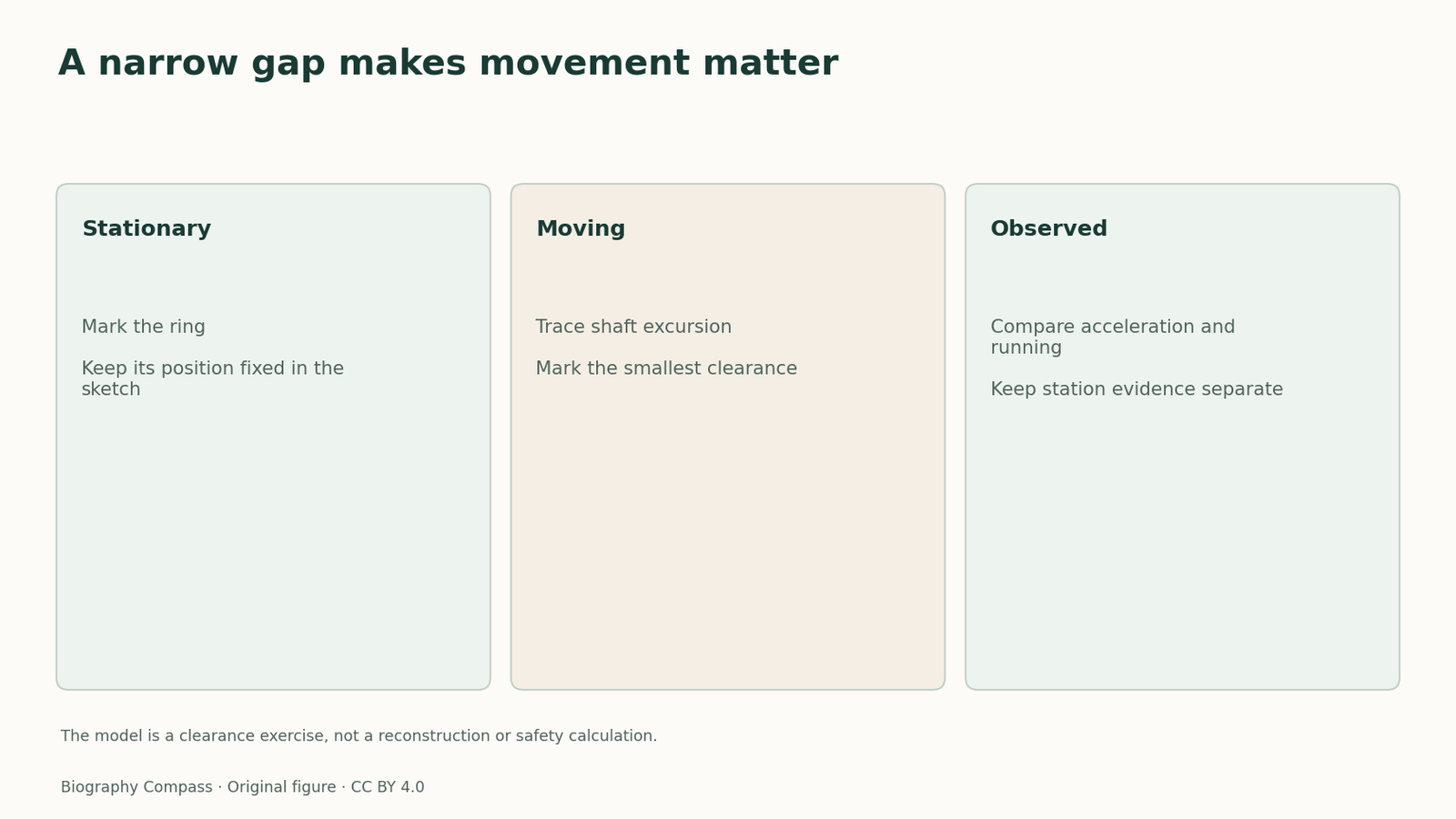
In the 1911 patent, a solid rotating inductor passes between stationary rings. The rings can be adjusted so that the gap is small. Reducing the gap changes the electrical conditions, yet it leaves less room for vibration or displacement. The shaft is deliberately flexible in the described arrangement.
The specification describes additional bearings near the inductor. They normally clear the shaft and can limit its excursion as it passes through a range of pronounced vibration while speeding up. A good reading tracks which part moves and when contact is expected, instead of treating every bearing as doing the same work throughout a run.
Sources for this section: [1]
Keep the object and the station apart
At Grimeton the alternator formed part of a larger site with an aerial and associated control and auxiliary systems. The survival of that installation makes visible requirements absent from a schematic of one machine. A functioning transmitter needs connections, operating routines and a place for its aerial.
The UNESCO description and the earlier patent therefore belong in different columns. One helps identify the proposed solution to a mechanical problem. The other establishes the wider setting of a preserved installation. It takes further component records to claim that every patented feature is present in the surviving machine.
Run a clearance exercise
Use invented values. A 2-unit gap and a 1.5-unit shaft excursion leave 0.5 units before contact on one side. A reduction to a 1-unit gap would allow contact if the excursion stayed unchanged. On a sketch mark which measurement you would take during acceleration. The arithmetic models geometric clearance alone. It cannot give the historical generator’s safe running speed.
Continue the chronology
Related history guides
Biography context
Explore United States through connected lives
Connected biographies
People in the records
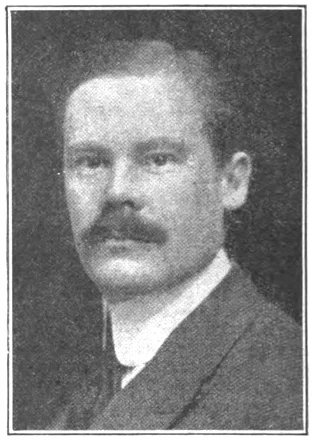
1878–1975
Ernst Alexanderson
Electrical engineer at General ElectricAlexanderson built rotating machines for radio before experimenting with picture transmission.Read biographyQuick answers
Common questions
- Why do the bearings matter in a radio alternator?
- They help control shaft motion near stationary parts where the design has only a small clearance.
Primary and institutional sources
How this history was checked
Dates, legal milestones and historical claims are checked against the official and institutional records below. This article was reviewed on 5 November 2026.