
The short answer
One fossil can carry more than one date without any contradiction. A field recovery and a published name answer different questions.
Evidence at a glance
Which date belongs to each event in a specimen’s history?
Match each piece of evidence to a specific inference.
| Evidence | What it supplies | How to read it |
|---|---|---|
| Field record | Documents recovery at a place and time. | Preserve finder and locality. |
| Naming paper | Publishes a taxonomic comparison. | Match the text to specific material. |
| Museum record | Shows later custody or presentation. | Keep the institutional date separate. |
Chronology
A timeline of the turning points
Field discovery
Tyrrell recovers dinosaur material in Alberta.
Naming publication
Osborn introduces Albertosaurus sarcophagus.
Read what the survey found
The Royal Tyrrell Museum dates Tyrrell’s skull discovery to 1884 near present-day Drumheller. His field project was geological survey work. A field entry can record a location and the recovery of material before a researcher knows the best scientific name for it. For a reader reconstructing the history, the name of the survey and the find date are therefore distinct from the taxon applied later.
Open the 1905 paper at the correct entry
Osborn’s 1905 article discusses several carnivorous dinosaurs. Its Albertosaurus entry compares material from Alberta while other sections introduce names that refer to other specimens. A title-page date describes when that publication appeared. It cannot date every individual find discussed inside it. Check the material and the locality stated in the relevant entry before connecting a fossil to a field account.
Build a four-line teaching ledger
In an invented exercise, put a field note for fragment F on line one and a collection record identifying its storage on line two. Put a paper describing F with other material on line three. Put an exhibition label created decades later on line four. Ask whether a different exhibition date contradicts the recovery date. It does not. Now remove the link between the paper and F. The dates still exist, but the chain connecting them needs evidence.
Place later discoveries in their own context
A later excavation may yield more material assigned to the same species. Those specimens need their own field and collection records. The publication that established a name and the later site that allows researchers to investigate a population do different work. Recording which question each item answers makes it possible to compare those histories without merging their dates.
Continue the chronology
Related history guides
Biography context
Explore Canada through connected lives
Connected biographies
The researcher behind the records
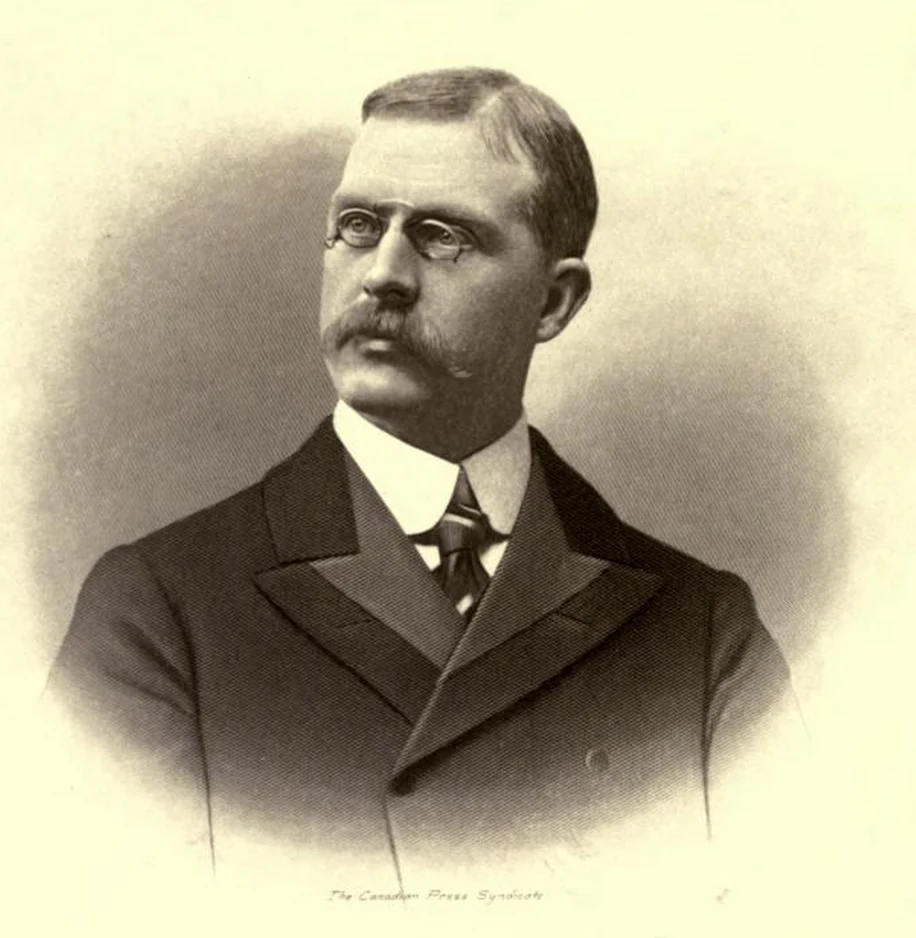
1858–1957
Joseph Tyrrell
Geologist, surveyor and mining consultantTyrrell found an important dinosaur skull during survey work and later continued in mining, mapping and historical editing.Read biographyQuick answers
Common questions
- Why are 1884 and 1905 both relevant to Albertosaurus?
- They refer to the survey discovery and the published naming respectively.
Primary and institutional sources
How this history was checked
Publication dates and specimen records describe different events. Invented exercises are labelled. This article was reviewed on 5 November 2026.
- Royal Tyrrell Museum of PalaeontologyMuseum history
- University College, University of TorontoJoseph Burr Tyrrell
- Henry Fairfield Osborn, Bulletin of the American Museum of Natural History, 1905Tyrannosaurus and other Cretaceous carnivorous dinosaurs
- Henry Fairfield Osborn, 1905, scanned original pagesTyrannosaurus and other Cretaceous carnivorous dinosaurs: scanned article