In this biography
Quick facts
- Born
- 18 July 1950
- Birthplace
- England, United Kingdom; sources disagree on the precise locality
- Country
- United Kingdom
- Nationality
- British
- Known for
- Building the Virgin brand from record retailing into music, aviation and other businesses, and participating in record-setting journeys
- Birth name
- Richard Charles Nicholas Branson
- Virgin origins
- Mail-order records, 1970; first record shop, 1971; label launch, 1973
- Music business sale
- Virgin Music Group sold to Thorn EMI in 1992
- Important distinction
- Virgin-branded businesses are not one uniformly owned operating company
Why this life matters
Branson’s career connects countercultural retailing with the expansion of a shared consumer brand. Understanding it requires separating his personal reputation from the artists, managers, investors and legally distinct businesses that made Virgin recognizable.
Timeline
Key moments
Born in England
Born on 18 July; reference sources disagree between London and Surrey for his precise birthplace.
Publishing becomes record retailing
Develops Student magazine, then launches Virgin mail order in 1970 and a London shop in 1971.
A record label grows
Virgin releases Mike Oldfield’s Tubular Bells in 1973 and signs the Sex Pistols in 1977.
Airline expansion and a sale
Backs Virgin Atlantic in 1984; sells the music business to Thorn EMI in 1992.
Foundation and space venture
Establishes Virgin Unite and Virgin Galactic in 2004; participates in the Unity 22 suborbital flight in July 2021.
Virgin Orbit bankruptcy
The separate satellite-launch company files for Chapter 11 protection following funding difficulties and a failed launch.
A publishing start rather than a conventional business apprenticeship
Richard Charles Nicholas Branson was born on 18 July 1950. His father, Edward, was a barrister, and his mother, Eve, had worked as a flight attendant. He struggled with dyslexia at school and developed an interest in enterprise while young. His later celebrity should not conceal this more specific starting point: he learned by attempting to sell a publication and attract contributors and advertisers, rather than by completing a conventional corporate apprenticeship.
Student magazine developed during his teenage years. Sources date its planning and launch differently, but the first issue appeared in January 1968. It addressed a youth audience interested in music, politics and changing social attitudes. Branson’s move into records was therefore connected to an existing readership. In 1970 Virgin began selling records by mail, followed by a London shop in 1971. These were retail operations before Virgin became a record label.
Virgin Records depended on a team and on musicians
Nik Powell was an early business partner, while Simon Draper brought musical judgment and artist-and-repertoire work. Tom Newman helped develop the recording operation. The Manor studio in Oxfordshire provided a place where musicians could work, and Mike Oldfield’s Tubular Bells became the label’s breakthrough release in 1973. Branson helped organize and promote this venture; he neither composed Oldfield’s music nor singlehandedly discovered and produced every artist.
Virgin’s early roster included progressive and experimental music. Signing the Sex Pistols in 1977 widened its association with punk; later performers such as the Human League and Culture Club helped take it further into mainstream markets. Growth did not mean a single unchanging musical identity. In 1992 Branson sold the music business to Thorn EMI, raising capital as his airline venture required financial support. The label continued under different ownership.
Adventures, philanthropy and the limits of a promotional image
Branson’s public adventures became part of the brand story. He participated in Atlantic powerboat and hot-air-balloon journeys and in a Pacific balloon crossing. Virgin Unite, established in 2004, gave his philanthropic activity an institutional base. Its work and his public advocacy should be assessed separately from commercial performance: an ambitious mission statement is not evidence that every associated venture achieved its aims.
Virgin Galactic also began in 2004. In July 2021 Branson joined the Unity 22 flight, a suborbital journey rather than an orbital mission. The satellite-launch business Virgin Orbit was distinct. It filed for Chapter 11 protection in April 2023 after a failed launch and problems obtaining funding. That was a corporate bankruptcy, not a finding that Branson personally had become bankrupt, and not the same event as a Virgin Galactic flight.
Reputation includes scrutiny as well as achievement
The image of an approachable, risk-taking founder is an important part of Branson’s commercial history, but it is not an adequate verdict on every decision. The financial structure of the Virgin businesses, the costs of expansion and failed ventures all require attention alongside successful launches. His books and company histories offer useful first-person evidence, while also serving a promotional purpose.
In February 2026, reporting on newly released Jeffrey Epstein documents described Branson’s 2013 correspondence and a meeting. Virgin’s representative said contacts had been limited to group or business settings and that Branson condemned Epstein’s actions. These attributed accounts belong in a record of public scrutiny; correspondence alone is not a finding of criminal wrongdoing by Branson. His biography is best read through documented decisions and their consequences, rather than either a heroic brand narrative or guilt by association.
Quick answers
Frequently asked questions about Richard Branson
- Did Richard Branson start Virgin as an airline?
- No. Virgin began with mail-order records in 1970, followed by a shop in 1971 and a record-label launch in 1973. Virgin Atlantic began operating in 1984.
- Does Branson still own the original Virgin Records business?
- He sold the music business to Thorn EMI in 1992. The Virgin name’s later use in music should not be mistaken for uninterrupted personal ownership of the original label.
- Was Virgin Orbit’s bankruptcy Branson’s personal bankruptcy?
- No. Virgin Orbit Holdings filed for corporate Chapter 11 protection in April 2023. It was a separate satellite-launch business, also distinct from Virgin Galactic.
- Was Branson’s 2021 flight orbital?
- No. Unity 22 was a suborbital flight. It did not place him in orbit around Earth.
Keep exploring
Lives connected to this story
- James Dyson
Compare an engineering-led manufacturing business with Branson’s expansion through a shared consumer brand.
- Tony Fernandes
Explore another entrepreneur’s aviation career without confusing AirAsia’s history with Virgin Atlantic’s.
Sources and further reading
Explore the evidence
These references support the biography and offer further reading. Official records, first-person accounts and independent reporting provide different perspectives; image records document attribution and licensing.
- 1. CNN Editorial Research / KESQRichard Branson Fast Facts, 29 June 2026
CNN Editorial Research, updated June 2026, supports the name, date and family background. Locality conflicts with sources identifying Blackheath; precise birthplace is deliberately withheld from structured data. Corporate counts, estimated wealth and time-sensitive marriage status are not reused.
- 2. VirginRichard Branson’s story: founder profile
- 3. VirginOur timeline: mail order, music and later ventures
- 4. Robert M. Grant / Blackwell PublishingRichard Branson and the Virgin Group of Companies in 2007
Read the development and music/airline passages plus the structural discussion. A historical 2007 case, not a current ownership chart; its first-issue date avoids treating magazine planning as publication.
- 5. Science Museum GroupVirgin Records Ltd: institutional history
- 6. Red Bull Music Academy / Simon ReynoldsShaping the ’70s: Simon Draper and the Story of Virgin Records
- 7. Virgin GalacticRichard Branson: Unity 22 participant biography
- 8. Reuters / Investing.comVirgin Orbit files for bankruptcy, 4 April 2023
- 9. The Irish Times / Guardian, New York Times and PAEpstein files: Richard Branson subsection and Virgin response, 1 February 2026
Read the Richard Branson subsection and the attributed Virgin response, dated 1 February 2026. No claim to have authenticated the entire document release; no allegation of criminal participation inferred.
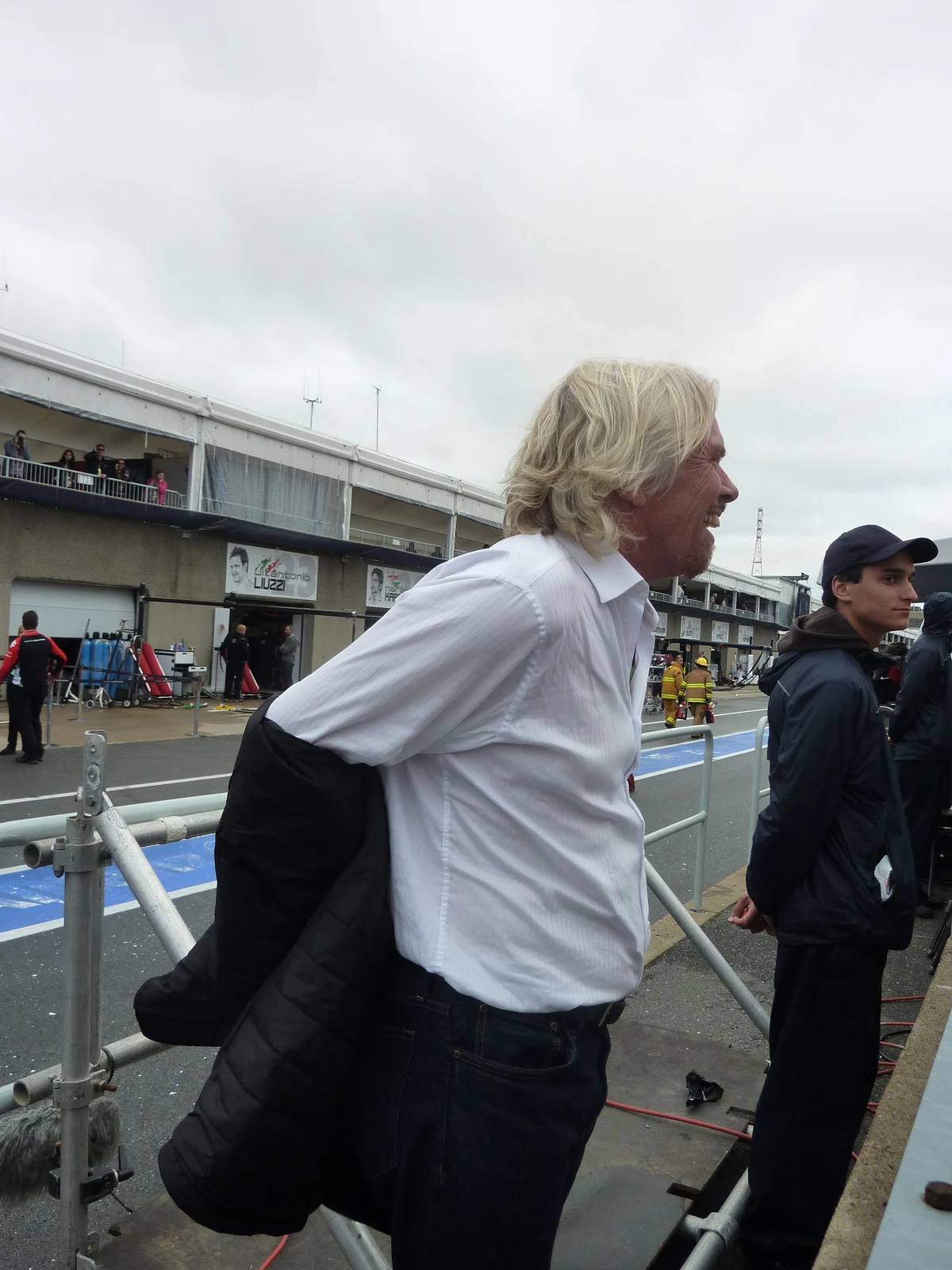
- 10. Mat Hampson / Wikimedia CommonsRichard Branson, 12 June 2011: original photograph and licence review
Read photographer, date, file history and the Flickr licence-review record. The sole supplied full-frame version is used. Copyright permission does not imply subject endorsement.
- 11. Creative CommonsAttribution-ShareAlike 2.0 Generic licence