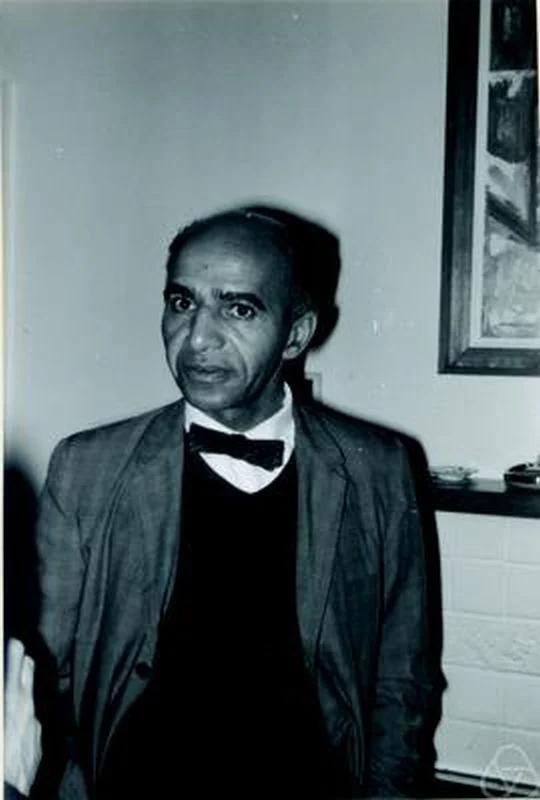
In this biography
Quick facts
- Born
- 19 June 1901
- Died
- 1987
- Birthplace
- Hoshangabad, British India
- Country
- India
- Nationality
- Not independently established
- Known for
- Experimental design and combinatorial mathematics
- Research field
- Experimental design and combinatorial mathematics
Why this life matters
His career connects mathematical structures with practical design problems; collaborative results should retain the names and publication dates of their actual contributors.
Timeline
Key moments
Joins ISI part-time
Later takes a full-time appointment.
Moves to Chapel Hill
Accepts a North Carolina professorship.
Joint counterexample paper
Publishes with S. S. Shrikhande.
Geometry before statistics
Bose grew up in Rohtak and studied in Delhi and Calcutta. Despite financial responsibilities, he pursued geometry under Shyamadas Mukherjee. Teaching and tutoring supported the period before his statistical research appointment.
In December 1932 he joined the Indian Statistical Institute part-time, becoming a full-time worker in 1935. Mahalanobis’s invitation brought a geometer into a developing statistical community. Bose’s subsequent work included statistical distributions and the construction of experimental designs.
Calcutta and the move to North Carolina
Bose moved into university teaching at Calcutta in 1940 and became head of its Statistics Department in 1945. He received a doctorate in 1947, after establishing a record of research.
His research brought invitations to teach in the United States. He accepted a permanent professorship at the University of North Carolina at Chapel Hill in 1949.
Sources for this section: [1]
Collaborators and a counterexample
A 1959 PNAS paper by Bose and S. S. Shrikhande presents a counterexample to Euler’s conjecture concerning orthogonal Latin squares. Its page 735 identifies a construction of order 22. The paper is a specific joint publication, not a reason to describe every related result as Bose’s alone.
His work also reached error-correcting codes: BCH denotes Bose–Chaudhuri–Hocquenghem. Parker contributed to the broader resolution of Euler’s conjecture; the 1959 PNAS paper remains a specific Bose–Shrikhande publication.
A later mathematical career
After retiring from North Carolina in 1971, Bose joined Colorado State University. He became emeritus there in 1980 and died in 1987. His first retirement had begun another academic chapter.
His later appointments were in the United States, and his work continued to cross multivariate methods and combinatorial structures.
Quick answers
Frequently asked questions about Raj Chandra Bose
- When did Bose move to North Carolina?
- He accepted a professorship at Chapel Hill in 1949.
Keep exploring
Lives connected to this story
- Prasanta Chandra Mahalanobis
Explore the recruitment of Bose.
- C. R. Rao
Follow a different career in statistical theory and training.
Sources and further reading
Explore the evidence
These references support the biography and offer further reading. Official records, first-person accounts and independent reporting provide different perspectives; image records document attribution and licensing.
- 1. Indian Statistical InstituteRaj Chandra Bose: career account
The original 1947 degree register was not consulted; the qualification is described generically here.
- 2. J.J.O’Connor and E.F.Robertson; University of St Andrews, MacTutorRaj Chandra Bose: biography
- 3. R.C.Bose and S.S.Shrikhande; PNAS 45,734–737On the falsity of Euler’s conjecture: selected 1959 paper scans
- 4. National Academy of SciencesRaj C.Bose: membership and date record
The Academy gives 30 October 1987; ISI and MacTutor give 31 October. Only the death year is retained.