In this biography
Quick facts
- Born
- 27 May 1907
- Died
- 14 April 1964
- Birthplace
- Springdale, Pennsylvania, United States
- Country
- United States
- Nationality
- American
- Known for
- The Sea Around Us, Silent Spring and ecological science writing
- Graduate education
- Master's degree in zoology, Johns Hopkins University, 1932
- Federal career
- Bureau of Fisheries and U.S. Fish and Wildlife Service, 1935–1952
- Book award
- The Sea Around Us, National Book Award for nonfiction, 1952
- Major work
- Silent Spring, published as a book in 1962
Why this life matters
Her career joined scientific training and federal public service with literary craft, helping readers examine how human decisions affect interconnected living systems.
Timeline
Key moments
Born in Pennsylvania
Rachel Louise Carson was born in Springdale on 27 May.
Graduate training
She earned her master's degree at Johns Hopkins after studying biology as an undergraduate.
Federal science communication
Carson began part-time work writing marine-life radio programs for the Bureau of Fisheries.
The Sea Around Us
Her second book reached a large readership and won the National Book Award the following year.
Silent Spring
Magazine installments and the book brought pesticide use and ecological consequences into public debate.
Death in Maryland
Carson died in Silver Spring on 14 April, before the later EPA DDT decision.
Scientific training and a writer's ambitions
Rachel Louise Carson was born in Springdale, Pennsylvania, in 1907. She grew up interested in the natural world and in writing, interests that became complementary rather than competing careers. At Pennsylvania College for Women, now Chatham University, she began in English before changing to biology and graduating in 1929. Summer study at Woods Hole introduced her to the ocean that would dominate much of her writing.
At Johns Hopkins University she studied zoology and earned a master's degree in 1932. Graduate work demanded careful observation, laboratory technique and sustained description. Financial and family pressures complicated further study, and she did not complete a doctorate. Her later public authority rested on this scientific education and professional work, not on a doctoral title she never held.
A public servant explaining living systems
Carson began part-time work for the U.S. Bureau of Fisheries in 1935, writing short radio programs about marine life. In 1936 she became a junior aquatic biologist. The agency's work and its successor, the U.S. Fish and Wildlife Service, gave her opportunities to combine research, field knowledge and public explanation. She learned about coastal environments through professional contacts as well as through books.
Her responsibilities expanded to editing publications, reviewing manuscripts and preparing material for officials and the public. These were substantive forms of science communication: information had to be accurate, useful and understandable to people outside a specialist field. The federal career also placed her within a community of biologists whose observations later informed her environmental concerns. Public service was an important part of her working life, not merely a preface to celebrity.
Sources for this section: [3]
The ocean books before Silent Spring
Under the Sea-Wind appeared in 1941, establishing the combination of natural history and narrative that characterized Carson's writing. The Sea Around Us followed in 1951 and brought her a much larger audience. Its National Book Award for nonfiction was presented in 1952, a distinction between publication and recognition that is easily lost when the dates are compressed.
The book's success helped her leave federal employment in 1952 to devote more time to writing. The Edge of the Sea extended her attention to coastal life. Together, these works show that she was already an accomplished interpreter of science before the pesticide controversy. Her ability to explain environments through processes, relationships and close attention to organisms supplied an intellectual foundation for the later argument, rather than a sudden departure from an unrelated literary career.
An ecological argument enters public debate
Silent Spring appeared in 1962, following magazine installments in The New Yorker. Carson assembled scientific reports, expert knowledge and examples of pesticide use into an argument about ecological consequences. A chemical applied against one organism could affect other species and move beyond the intended site. The central question concerned relationships and responsibility, not simply whether a product killed the targeted insect.
She challenged indiscriminate use and inadequate investigation, rather than demanding that every pesticide disappear. Research, better controls and alternatives were part of her position. The book provoked strong criticism, including efforts to discredit its author, but also brought scientific and political scrutiny. Its influence depended on the work of other researchers and institutions as well as on Carson's capacity to make a complicated issue intelligible to a broad public.
Influence without a single-cause legend
A report by the President's Science Advisory Committee in May 1963 supported limits on pesticide use and further investigation. That review was a separate institutional event, not an order written by Carson. She died in Silver Spring, Maryland, on 14 April 1964. Her later reputation should not place her personally inside decisions made years after her death.
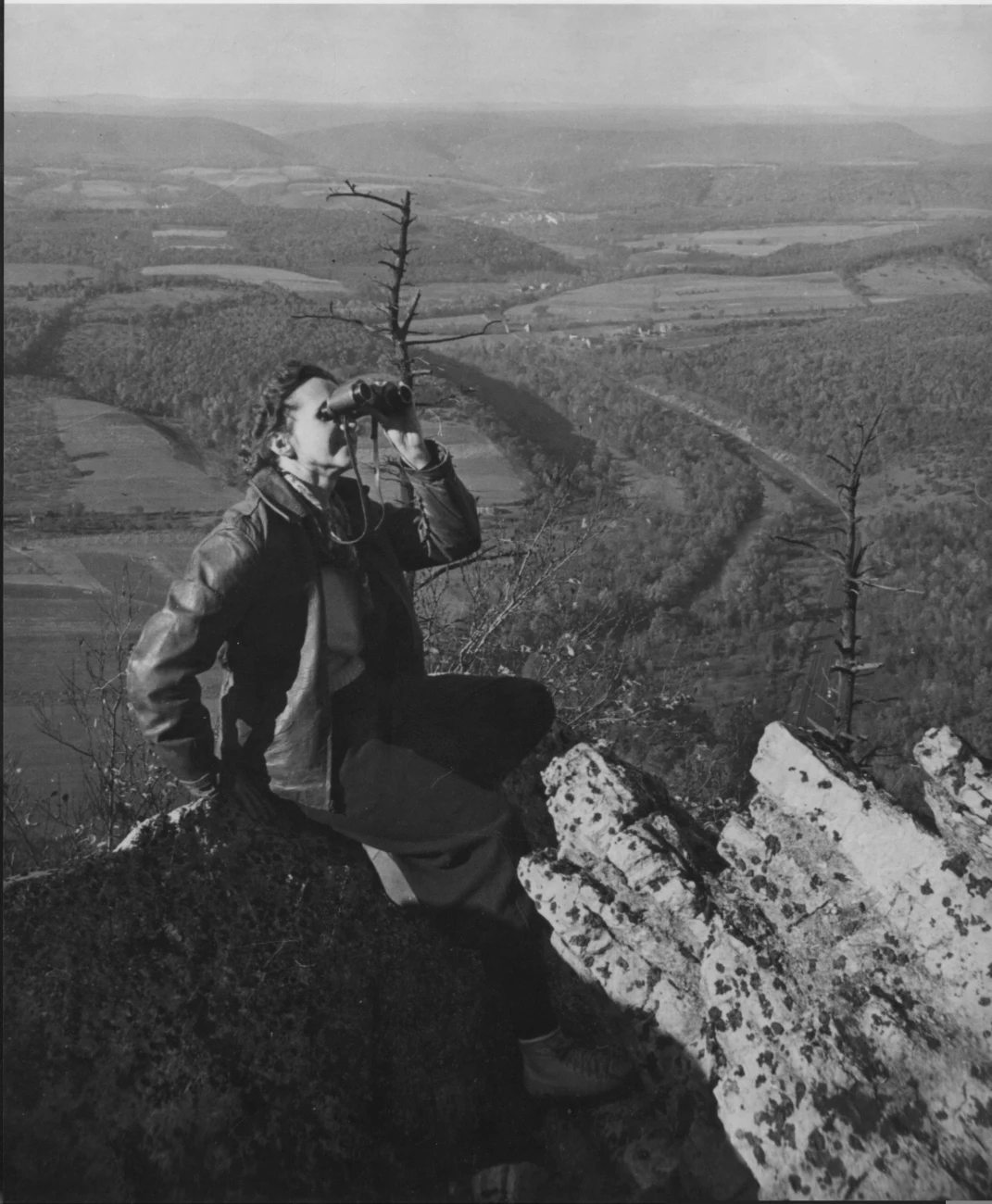
In 1972 EPA canceled remaining crop uses of DDT in the United States, with important exceptions and a delayed effective date. Research, hearings, litigation and earlier restrictions contributed to that decision. Silent Spring helped enlarge the public debate, but did not single-handedly ban all pesticides. Carson's enduring contribution joins her scientific preparation, literary skill and public insistence that environmental decisions be judged by their wider consequences. The photograph here is an undated historical image, not documentation of a particular book-writing episode.
Quick answers
Frequently asked questions about Rachel Carson
- Was Rachel Carson a scientist?
- Yes. She studied biology, earned a master's degree in zoology at Johns Hopkins in 1932 and worked as a federal biologist, writer and editor. She did not complete a doctorate.
- Did Carson write books before Silent Spring?
- Yes. Her earlier works included Under the Sea-Wind, The Sea Around Us and The Edge of the Sea. The Sea Around Us appeared in 1951 and won the 1952 National Book Award for nonfiction.
- Did Silent Spring call for banning every pesticide?
- No. Carson challenged indiscriminate use and called for further research, safeguards and alternatives. That position is different from prohibiting all chemical pest control.
- Did Carson personally issue the 1972 DDT order?
- No. She died in 1964. EPA's later decision followed a regulatory process and canceled remaining crop uses, with exceptions, rather than every possible use worldwide.
Keep exploring
Lives connected to this story
- Walt Whitman
Compare another American writer's attention to the natural world, while distinguishing poetry from Carson's scientific prose.
Sources and further reading
Explore the evidence
These references support the biography and offer further reading. Official records, first-person accounts and independent reporting provide different perspectives; image records document attribution and licensing.
- 1. National Park ServiceRachel Carson
- 2. Johns Hopkins UniversityRight Fish, Wrong Pond: Rachel Carson at Hopkins
Institutional account supplies the 1932 master's degree and graduate-study context. Its compressed description of Silent Spring as the next book after The Sea Around Us is not repeated; The Edge of the Sea intervened.
- 3. U.S. Fish and Wildlife ServiceRachel Carson, 1907–1964
Used for federal duties, the 1952 departure and colleagues' contributions. Its 1956 Edge of the Sea date and death-age figure conflict with other records and are not repeated. Its broad DDT-causation summary is qualified using EPA's regulatory history.
- 4. National Book FoundationThe Sea Around Us: 1952 Nonfiction Winner
- 5. RachelCarson.org / Linda LearBooks by Rachel Carson
Biographer Linda Lear's book bibliography distinguishes original works from later editions. No complete Carson book or complete archival collection was read for this biography.
- 6. American Chemical SocietyThe Legacy of Rachel Carson's Silent Spring
- 7. U.S. Environmental Protection AgencyDDT Regulatory History: A Brief Survey to 1975
Historical agency account distinguishes the 1963 scientific review, the June 1972 announcement, the December effective date and exceptions. It is not presented as current pesticide-use advice.
- 8. U.S. Fish and Wildlife ServicePhotograph: identity, creator and item-specific rights