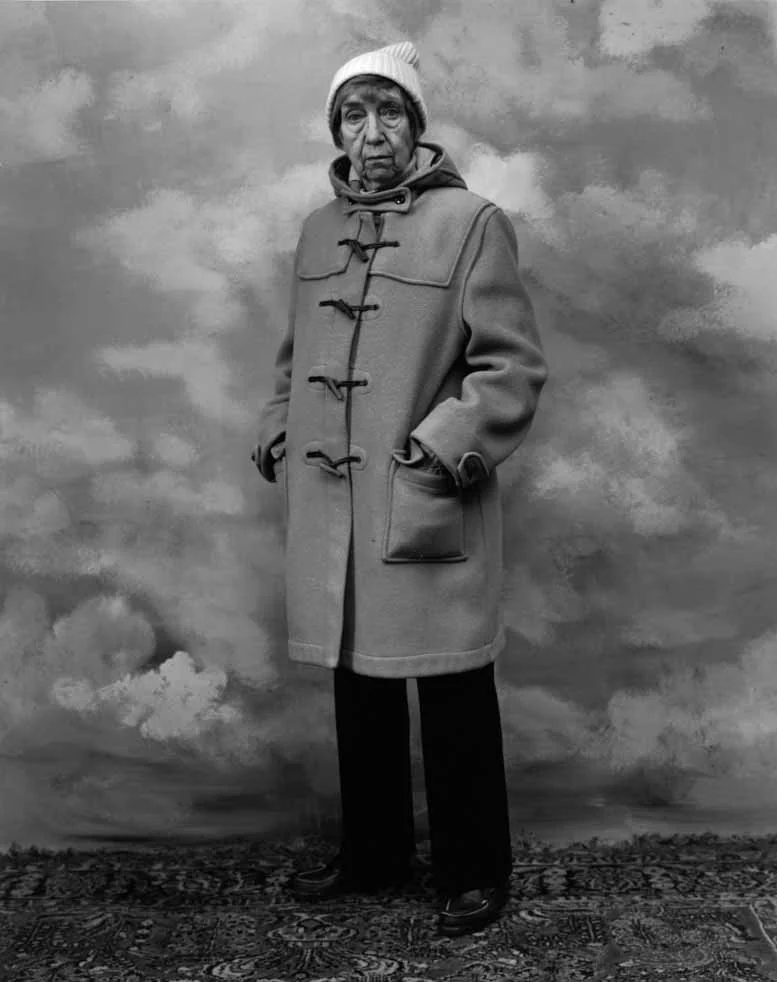
In this biography
Quick facts
- Born
- 1890
- Died
- 1976
- Birthplace
- New York City, United States
- Country
- United States
- Nationality
- Not independently established
- Known for
- Modern photography and collaborative books
Why this life matters
His later books join images with other writers’ texts, making authorship a relationship rather than an automatic single credit.
Timeline
Key moments
A formative visit
Encountered Stieglitz’s gallery with Hine’s class.
France
Relocated as his book projects developed.
Un Paese
A collaboration with Cesare Zavattini was published.
Finding a medium
Paul Strand studied photography with Lewis Hine at New York’s Ethical Culture School. A class visit to Alfred Stieglitz’s gallery in 1907 helped decide his direction. Commercial work supported the independent photographs that followed.
Around 1915 he moved away from soft-focus pictorialism towards sharply organised urban views, abstraction and street portraits. A photograph could explore relationships among shapes while still attending to a specific social world.
Formal experiment and social attention need not be treated as opposite choices. His early development shows them working through the same medium, although not always with the same balance.
Film and a return to still images
With Charles Sheeler he made Manhatta, first screened in 1921. He later worked in Mexico and on films including Redes and Native Land. Returning to still photography in the 1940s, he developed Time in New England with historical texts selected by Nancy Newhall.
After relocating to France in 1950, Strand continued working with landscape, architecture and portraiture as subjects for photographic books.
The book lets pictures operate beside a sustained body of language. Its production calls for decisions about sequence and text that cannot be credited to the exposure alone.
Collaborative portraits of place
Hazel Kingsbury became his wife and partner in later photographic ventures. Claude Roy supplied text for La France de profil; Cesare Zavattini collaborated on Un Paese; later books involved Basil Davidson and James Aldridge. Strand settled in Orgeval and continued making photographs there.
The Italian archival institution’s account dates Un Paese’s Einaudi publication to 1955 and places the book within the friendship and collaboration between Strand and Zavattini.
Strand died in 1976.
Such projects invite a reader to keep several kinds of authorship visible: making a picture, gathering local knowledge, selecting language and arranging a book. Respecting those differences makes collaboration more concrete than adding a second name to a cover.
Quick answers
Frequently asked questions about Paul Strand
- Who was Paul Strand?
- Paul Strand was a photographer and filmmaker. His later books join images with other writers’ texts, making authorship a relationship rather than an automatic single credit.
- What is Paul Strand best known for?
- Paul Strand is best known for modern photography and collaborative books.
- When and where was Paul Strand born?
- Paul Strand was born in 1890 in New York City, United States.
- When did Paul Strand die?
- Paul Strand died in 1976.
Keep exploring
Lives connected to this story
- Ansel Adams
Compare another photographer’s working choices and collaborations.
- Dorothea Lange
Read a separate documentary career and the named people within its pictures.
Sources and further reading
Explore the evidence
These references support the biography and offer further reading. Official records, first-person accounts and independent reporting provide different perspectives; image records document attribution and licensing.