In this biography
Quick facts
- Born
- 15 May 1921
- Died
- 10 April 1998
- Birthplace
- Liên Minh, Vụ Bản, Nam Định, Vietnam
- Country
- Vietnam
- Nationality
- Vietnamese
- Known for
- Foreign ministry leadership, international negotiations and economic diplomacy
- Original name
- Phạm Văn Cương
- Born
- 15 May 1921, Liên Minh, Vụ Bản, Nam Định
- Foreign minister
- February 1980–July 1991
- Deputy Council of Ministers chairman
- February 1987–August 1991
- Meeting with James Baker
- 29 September 1990, New York
- Died
- 10 April 1998, Hanoi
Why this life matters
His career links revolutionary service, Cold War diplomacy and arguments for making international engagement serve Vietnam’s economic development.
Timeline
Key moments
Birth
Born Phạm Văn Cương in Liên Minh, Nam Định.
Revolutionary activity and imprisonment
Entered activism in 1937; imprisoned by French colonial authorities during 1940–1945.
Foreign-ministry and consular work
Worked in ministry administration and served as consul-general in India.
Deputy foreign minister
Began the appointment in August.
Foreign minister
Began leading the ministry in February.
Deputy council chairman
Served from February 1987 to August 1991; foreign-ministry tenure ended separately in July.
US diplomatic meeting
Met Secretary of State James Baker in New York on 29 September.
Death
Died in Hanoi on 10 April.
Early life and revolutionary service
Nguyễn Cơ Thạch was born Phạm Văn Cương on 15 May 1921 in Liên Minh commune, Vụ Bản district, Nam Định province. These are the historical place names recorded by Vietnam’s foreign ministry. His political activity began in 1937, during French colonial rule, before he had entered a professional diplomatic career.
The ministry records imprisonment at Nam Định, Hòa Bình and Sơn La between 1940 and 1945. He joined the Indochinese Communist Party in Sơn La prison in 1943. After the revolution he worked in defence and regional administration, including service associated with Võ Nguyên Giáp, before moving into the foreign ministry in the 1950s.
Sources for this section: [1]
From consular work to international negotiations
Between 1954 and 1960, Thạch worked in foreign-ministry administration and as consul-general in India. He became deputy foreign minister in August 1960. His assignments included the 1961–1962 international conference on Laos, where the ministry’s biography records him as acting head of North Vietnam’s government delegation.
He subsequently assisted Lê Đức Thọ in negotiations with the United States leading to the Paris agreement. This was part of a wider negotiating effort, not evidence that Thạch alone negotiated the settlement. The ministry also records his leadership of Vietnamese delegations to the UN General Assembly from 1979 through 1991, placing multilateral work alongside bilateral diplomacy.
Foreign minister during a difficult international period
Thạch served as foreign minister from February 1980 to July 1991. His concurrent deputy chairmanship of the Council of Ministers began in February 1987 and lasted until August 1991. The government archive distinguishes the two end months; a general reference to leaving government in 1991 should not erase that difference.
His ministry faced Vietnam’s international isolation and the conflict over Cambodia. In a 1990 General Assembly address, he set out the Vietnamese government’s position on withdrawal and a negotiated settlement. That speech is evidence of the policy he presented, rather than independent confirmation of every contested interpretation. On 29 September 1990, he met US Secretary of State James Baker in New York, an important dialogue before normalization in 1995.
Economic diplomacy and legacy
Thạch also argued for diplomatic work that supported development. A government-hosted account drawing on former secretary Trần Trọng Toàn’s recollections describes efforts to engage overseas Vietnamese specialists and commission a Vietnamese translation of Samuelson and Nordhaus’s Economics. Those practical initiatives helped bring international economic ideas into policy discussions.
Such activities explain his association with economic diplomacy without making him the sole creator of Đổi Mới or treating commemorative praise as a measurable policy outcome. He died in Hanoi on 10 April 1998. His career remains useful for understanding how Vietnam’s foreign relations and domestic reform debates intersected before the later expansion of international ties.
Quick answers
Frequently asked questions about Nguyễn Cơ Thạch
- What was Nguyễn Cơ Thạch’s original name?
- He was born Phạm Văn Cương.
- When was he Vietnam’s foreign minister?
- From February 1980 to July 1991. His separate deputy Council of Ministers chairmanship continued until August 1991.
- Did he meet US Secretary of State James Baker?
- Yes. The Vietnamese embassy’s chronology records their New York meeting on 29 September 1990, before normalization in 1995.
- When and where did he die?
- He died in Hanoi on 10 April 1998.
Keep exploring
Lives connected to this story
- Phạm Bình Minh
Explore his son’s separate diplomatic training, foreign-minister tenure and later government roles.
- Lê Đức Thọ
Understand the negotiations in which Thạch assisted the senior Vietnamese negotiator.
- Võ Văn Kiệt
Explore another career connected with Vietnam’s reform period and economic development.
Sources and further reading
Explore the evidence
These references support the biography and offer further reading. Official records, first-person accounts and independent reporting provide different perspectives; image records document attribution and licensing.
- 1. Vietnam Ministry of Foreign AffairsOfficial biography, names, dates and diplomatic assignments
The official biography supplies an exact birthday and historical birthplace. No university degree is invented. Foreign-ministry service ended in July 1991, not August.
- 2. Vietnam Government · Cabinet archiveSeparate foreign-minister and deputy council chair tenures
The deputy chairmanship of the Council of Ministers had a separate August 1991 endpoint.
- 3. Vietnam Embassy in the United StatesChronology of bilateral diplomatic contacts
- 4. United Nations · 1990 verbatim recordThạch’s statement of Vietnam’s international position
A ministerial speech establishes the government’s stated position, not an independent resolution of contested Cambodia claims.
- 5. State Committee for Overseas VietnameseEconomic-diplomacy recollections and translation initiative
Specific activities are attributed to a published recollection. Commemorative evaluations do not establish sole responsibility for national economic reform.
- 6. Wikimedia Commons · Nationaal ArchiefBert Verhoeff/Anefo archival portrait, CC0
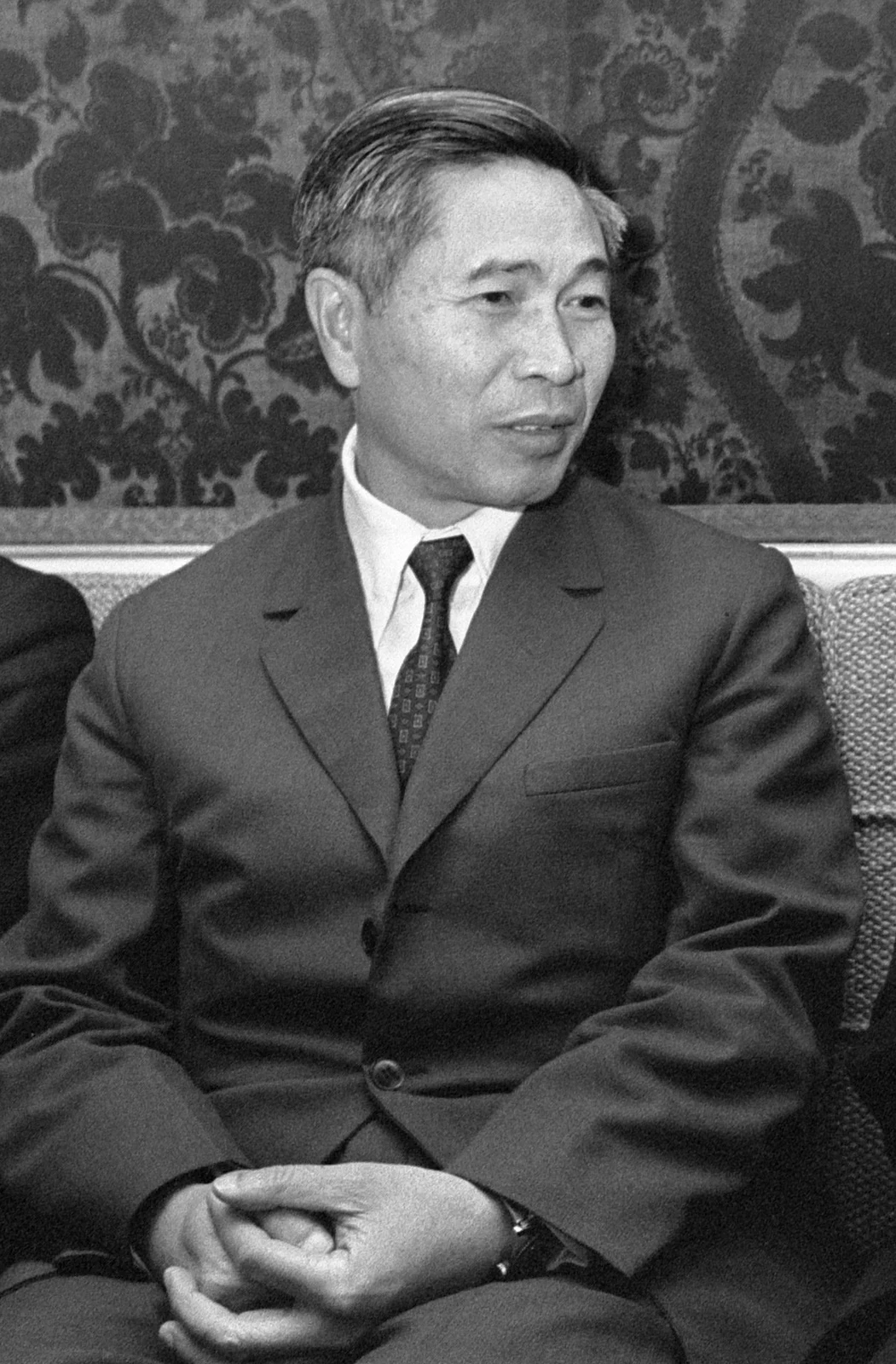
The 1976 source caption calls him a foreign minister, but the official service record places his full ministerial appointment in 1980. The photograph is not used to backdate that appointment.