In this biography
Quick facts
- Born
- 1957
- Birthplace
- Rourkela, Orissa (now Odisha), India
- Country
- India
- Nationality
- Not independently established
- Known for
- Salaam Bombay!, Mississippi Masala, Monsoon Wedding, The Namesake and Maisha Film Lab
- Education
- Delhi University and Harvard University
- Narrative feature debut
- Salaam Bombay!, 1988
- Festival recognition
- Caméra d’Or, Cannes, 1988; Golden Lion, Venice, 2001
- Training initiative
- Maisha Film Lab, established in Kampala in 2005
Why this life matters
Her films connect intimate viewpoints with social structures, while her workshops and filmmaking institutions address who gets the resources to tell a story.
Timeline
Key moments
Born in Rourkela
Her childhood was in eastern India.
Study and documentary filmmaking
Delhi and Harvard studies preceded a nonfiction film practice.
Early documentaries
Jama Masjid Street Journal, So Far from India and India Cabaret examined specific social worlds.
Salaam Bombay!
Her first narrative feature won the Caméra d’Or at Cannes.
Migration and a Delhi wedding
Mississippi Masala preceded the Golden Lion-winning Monsoon Wedding.
Maisha and adaptations
East African training grew alongside screen adaptations and international work.
Returning to the craft
A published interview and a restored Salaam Bombay! edition revisited her working methods.
From eastern India to a documentary education
Mira Nair was born in Rourkela in 1957, in the state then called Orissa and now Odisha. She studied at Delhi University and Harvard. Harvard’s archive of her papers traces a career developed through correspondence, production material and working documents, making the process behind the finished films available as a historical subject.
Her early documentaries included Jama Masjid Street Journal, So Far from India and India Cabaret. They explored particular streets, migrant relationships and women’s work. This foundation matters because her later fiction often preserves a curiosity about the routines, gestures and social exchanges surrounding a central story.
A narrative debut made through collaboration
Salaam Bombay! appeared in 1988 and won the Caméra d’Or at Cannes. Nair directed and produced; Sooni Taraporevala wrote the screenplay, Sandi Sissel photographed it, and L. Subramaniam composed the music. Its young lead, Shafiq Syed, plays Krishna, known as Chaipau, among children and adults surviving on Bombay’s streets.
A cast including children with experience of street life contributed to the film’s naturalism. Workshops and rehearsal were still acts of filmmaking, rather than a camera simply discovering an unmediated reality. The finished narrative turns research and performance into a constructed viewpoint.
Migration, households and stories across borders
Mississippi Masala placed an Indian Ugandan family and a Black American romance within one story of displacement and belonging. Monsoon Wedding, which won Venice’s Golden Lion in 2001, brought an extended Delhi household’s conflicting desires into the compressed time of a wedding. These are different social worlds, joined by Nair’s interest in what happens when private attachments meet public expectations.
Her subsequent work has included adaptations such as Vanity Fair and The Namesake as well as The Reluctant Fundamentalist. Adaptation requires choices of emphasis, voice and screen duration; it should not be treated as a promise that every detail in a novel will appear unchanged in a film.
Institutions beyond a finished film
Nair helped establish the Salaam Baalak Trust after Salaam Bombay!, connecting the project’s public success with support for street children. In a 1988 interview with David Sterritt, she acknowledged the responsibility involved in drawing children into a temporary artistic project. That testimony records an intention and a working approach, not proof that a film alone could settle their futures.
Maisha Film Lab, founded in Kampala in 2005, extended her interest in practical opportunities for other storytellers. Its workshops and mentorship address access to production skills. The institution’s own older biography is useful for its beginnings, although its description of a then-latest film is not a current filmography.
Realism has an ethical and aesthetic argument
Roger Ebert admired Salaam Bombay!’s attention to children surviving on their own terms but questioned whether photographing their world could also romanticise it. Devika Girish’s later essay emphasises the craft of its naturalism and the characters’ irreducible complexity. Their different readings show why location shooting and nonprofessional performance do not end the debate about representation.
Nair has also taken public political positions. In 2013 she declined an invitation to the Haifa festival in support of a cultural boycott. That decision belongs to her public life and should be distinguished from treating a fictional character as a direct statement of all her political views.
An international career anchored in particular viewpoints
A later interview published by Scroll returns to collaboration, music and the practical work of sustaining a film career. The restored 2025 Criterion edition of Salaam Bombay! likewise returns attention to the director, cinematographer, writer, performers and composer. Its availability does not make their contributions interchangeable.
Nair’s career is best followed through the specific viewpoint each project builds: a child earning money, a migrant household, a wedding guest or someone attempting to cross a social boundary. This India-associated profile records an international working life without inferring present citizenship from her birthplace, residence or the countries financing a production.
Quick answers
Frequently asked questions about Mira Nair
- Was Salaam Bombay! her first film?
- It was her first narrative feature. She had already made documentaries, including So Far from India and India Cabaret.
- Who wrote Salaam Bombay!?
- Sooni Taraporevala wrote the screenplay; Nair directed and produced it. Sandi Sissel’s cinematography and L. Subramaniam’s music are separate creative contributions.
- What is Maisha Film Lab?
- A filmmaking training initiative established by Nair in Kampala in 2005, supporting emerging East African storytellers through workshops and mentorship.
Keep exploring
Lives connected to this story
- Satyajit Ray
Compare another director’s attention to children and social worlds without treating their approaches to realism as identical.
- Nandita Das
Explore a different filmmaker’s work on violence, representation and the consequences of social division.
Sources and further reading
Explore the evidence
These references support the biography and offer further reading. Official records, first-person accounts and independent reporting provide different perspectives; image records document attribution and licensing.
- 1. Harvard Schlesinger LibraryMira Nair papers: institutional biography and production archive
Institutional archive supplies Rourkela, 1957 and career records; no unsupported exact birth day or citizenship is inferred.
- 2. Indiana University CinemaVisiting filmmaker profile: education and career
- 3. Maisha Film LabFounder profile and the training initiative’s origins
Historical institutional biography contains stale latest-film wording and an incorrect ranking for Padma Bhushan; neither is adopted.
- 4. Festival de CannesSalaam Bombay!: 1988 Caméra d’Or record
- 5. The Criterion CollectionSalaam Bombay!: director-approved edition and creative credits
- 6. Devika Girish / CriterionA View from the Streets: naturalism and representation
- 7. Roger Ebert1988 review: agency, institutions and romanticisation
- 8. David Sterritt / Christian Science Monitor1988 Nair interview: workshops and responsibility
Indexed contemporaneous interview passages consulted; direct page access returned 403. Responsibility is presented as Nair’s statement, not an independently audited outcome.
- 9. Harriet Sherwood / The GuardianNair’s 2013 Haifa boycott decision
A dated report of the 2013 decision, not a current-position check.
- 10. Scroll2024 interview on filmmaking, collaboration and music
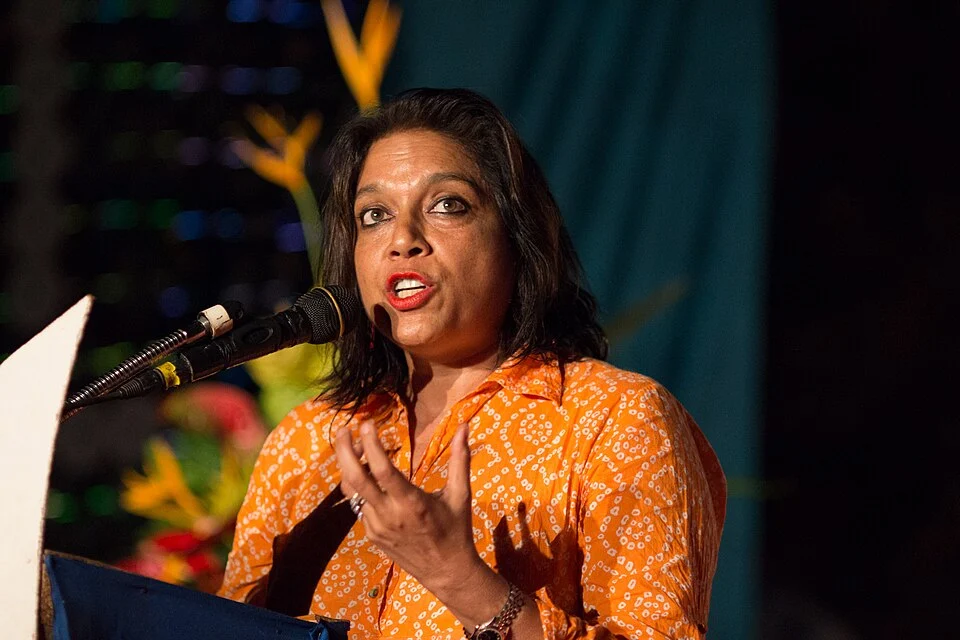
- 11. Wikimedia Commons / ZIFFphoto2013 festival photograph: reviewed Flickr CC BY grant
ZIFFphoto Flickr source and Commons licence review support CC BY 2.0; complete same-record preview used after two original 429s.