In this biography
Quick facts
- Born
- 4 September 1937
- Birthplace
- Gombong, Central Java
- Country
- Indonesia
- Nationality
- Indonesian
- Known for
- Building Indonesian beauty brands around local botanical knowledge and cultural identity
- Founded
- Martha Tilaar salon, 1970
- Flagship brand
- Sariayu, established 1977
- Manufacturing company
- PT Martina Berto
- Cultural honour
- Bintang Budaya Parama Dharma, 2016
Why this life matters
Tilaar built a consumer business around Indonesian beauty traditions, then linked its supply chain to skills training and botanical conservation.
Timeline
Key moments
Opened a salon in a family garage
Started the business in Menteng, Jakarta, after studying beauty practice abroad.
Established Martina Berto and Sariayu
Created a manufacturing company and a cosmetics brand drawing on Indonesian ingredients and traditions.
Opened the first modern factory
Moved production into the Pulogadung industrial estate as demand grew.
Expanded a botanical collection
The group began seeking a larger Cikarang site for a medicinal and cosmetic plant collection; its public garden opened later.
Opened Kampoeng Djamoe Organik publicly
The Cikarang herbal garden was formally launched after years of land preparation and planting.
Received a national cultural honour
Was awarded the Bintang Budaya Parama Dharma for cultural contribution.
Named a UN Global Compact SDG Pioneer
Recognised for community engagement connected to women’s training and the botanical supply chain.
From a Menteng salon to Sariayu
Martha Tilaar began her beauty business in 1970 in a garage at her parents’ house in Menteng, Jakarta. The company’s own history dates a second salon to 1972 and says that traditional herbal-based treatments became part of its services there. This was a service business before it was a nationwide cosmetics manufacturer. Her later reputation as a champion of Indonesian ingredients grew from the transition between those two stages, not from a single product launch.
In 1977, Tilaar established PT Martina Berto with Bernard Pranata and Theresia Harsini Setiady. The company also dates the Sariayu brand to that year, associating its early products with cosmetics and modern herbal medicine. Naming the partners matters: Tilaar led and gave her name to the group, but the manufacturing company was not a solo legal venture. A first factory followed in Jakarta’s Pulo Gadung industrial estate in 1981, and a distribution company was formed in 1983. These steps explain how a salon-based idea became a larger production and retail operation.
An Indonesian beauty brand, not just a product line
Sariayu became the best-known public face of the group, but Tilaar’s business came to include manufacturing, distribution, beauty education and spas. The company describes four operating pillars: Beauty Culture, Beauty Education, Beauty Green and Empowering Women. Its annual Sariayu colour trend, which the group says began in 1987, is an example of the cultural-branding strategy. These are the group’s own descriptions of its mission, not independent evidence that every programme achieved the impact claimed in its marketing.
The corporate timeline also records changes in ownership. The group says it bought the remaining shares of Martina Berto previously held in part by the Kalbe Group in 1999, and that Martina Berto became a listed company in 2011. Those developments are separate from Tilaar’s personal founding story. They show how the business structure changed after its original 1970 salon and 1977 manufacturing partnership.
Why dates for the herbal garden differ
The chronology of Kampoeng Djamoe Organik is easy to oversimplify. The group’s garden history describes an initial plant collection at Sawangan in 1995 and efforts from 1997 to obtain a larger Cikarang site. Martina Berto’s 2014 annual report instead dates physical work on marginal land to 1998 and the public launch to June 2006. A UN Global Compact profile refers to the garden as created in 2004. These accounts appear to refer to different stages—collecting plants, developing land, organising a garden and opening it to visitors—rather than proving one unambiguous founding date.
The underlying project connected medicinal, cosmetic and aromatic plants to research and to the company’s supply chain. A 2026 group account describes Kampoeng Djamoe Organik activity in Sukabumi, so the older Cikarang address should not be presented as its timeless current location. These details make the garden a substantial part of Tilaar’s business story while keeping the site’s history and location appropriately dated.
Training, farmers and public recognition
The UN Global Compact named Tilaar a 2018 SDG Pioneer for community engagement. Its profile highlights vocational training for women and supplier relationships with farmers, while reporting programme totals supplied through that initiative. The recognition confirms that an external institution selected her for its programme; it does not independently audit every employment or environmental outcome. The group’s own four-pillar account describes beauty schools, spa-worker training and farmer education as part of its model.
Tilaar received Indonesia’s Bintang Budaya Parama Dharma in 2016, according to the company’s dated history. The award and UN recognition mark different kinds of public acknowledgement: one for cultural contribution, the other for a sustainability and community-engagement programme. Together with the salon-to-manufacturing chronology, they explain why she is more than the namesake of a cosmetics brand. Her career sits at the intersection of Indonesian consumer products, cultural presentation, training and plant-based supply chains, with outcomes that still require source-specific scrutiny.
Quick answers
Frequently asked questions about Martha Tilaar
- When did Martha Tilaar start her business?
- She opened a beauty salon in Menteng, Jakarta, in 1970. The later Sariayu brand and Martina Berto company belong to a separate 1977 stage.
- Was Martina Berto founded in 1977 or 1981?
- The company’s annual-report legal note records its founding deed on 1 June 1977. Its first modern factory followed in 1981; the factory opening should not replace the company’s formation date.
- Was Martha Tilaar the sole founder of Martina Berto?
- No. The group’s history identifies Martha Tilaar, Bernard Pranata and Theresia Harsini Setiady as the founding partners. Her public prominence does not make the partnership a sole-founder venture.
- Why did the UN Global Compact recognise Martha Tilaar in 2018?
- It named her an SDG Pioneer for community engagement, describing women’s training and work with farmers. Programme totals are attributed to the reporting organisations, not presented here as an independent impact audit.
Keep exploring
Lives connected to this story
- Susi Pudjiastuti
Another Indonesian woman whose business career preceded a wider public profile.
- Chairul Tanjung
An Indonesian entrepreneur whose company-building story followed a different sector.
Sources and further reading
Explore the evidence
These references support the biography and offer further reading. Official records, first-person accounts and independent reporting provide different perspectives; image records document attribution and licensing.
- 1. Martha Tilaar GroupHistory of Martha Tilaar Group
The corporate history supports founding, partner, factory and ownership dates, but is a company-authored account rather than an independent assessment of impact.
- 2. SariayuAbout Sariayu
The brand’s prose dates Sariayu to 1977, but its lower timeline conflates Martina Berto’s formation with the 1981 factory. The annual-report legal note establishes the 1 June 1977 deed; the first modern factory followed in 1981.
- 3. Martha Tilaar GroupThe four pillars of the group
- 4. PT Martina Berto TbkPT Martina Berto 2015 annual report
- 5. Kampoeng Djamoe Organik Martha TilaarKampoeng Djamoe Organik garden history
- 6. PT Martina Berto TbkPT Martina Berto 2014 annual report
The annual report dates Cikarang land development to 1998 and public launch to 2006; other group and UN pages use 1997 and 2004 for earlier garden stages.
- 7. United Nations Global CompactMartha Tilaar — 2018 SDG Pioneer
The UN Global Compact confirms its 2018 recognition and describes programmes; reported programme totals are not treated as an independent outcome audit.
- 8. Martha Tilaar GroupCurrent Sukabumi garden and farmer-partner account
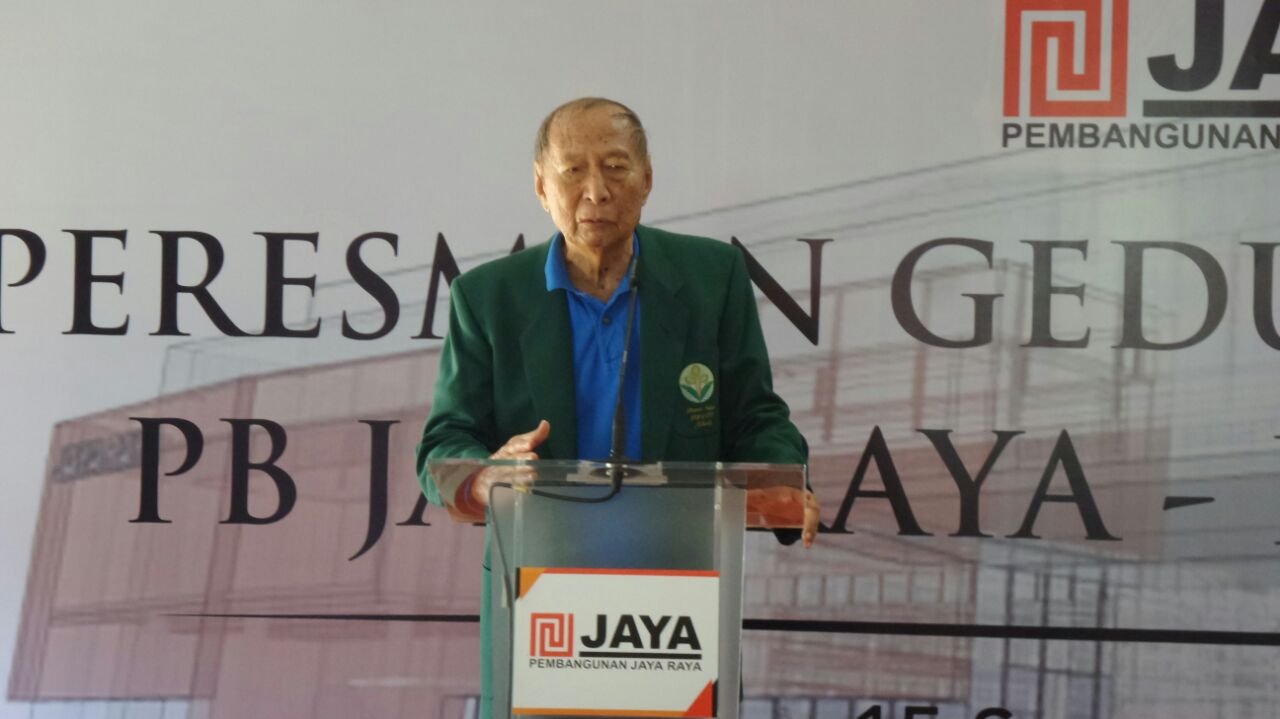
- 9. Wikimedia CommonsMartha Tilaar 2017 event photograph and rights record
The replacement image is the full 2017 government-source frame. The previous university event group photo had EXIF naming a different photographer and corporate copyright holder from its Commons uploader.