In this biography
Quick facts
- Born
- 25 April 1957
- Birthplace
- Whitton, New South Wales, Australia
- Country
- Australia
- Nationality
- Not independently established
- Known for
- Aboriginal education, parliamentary firsts, child-protection reform and the 2023 Voice campaign
- Born
- 25 April 1957, Whitton
- Education
- Teaching diploma, Mitchell College of Advanced Education
- NSW electorate
- Canterbury, 2003–2016
- Federal electorate
- Barton, 2016–2025
- Federal ministry
- Indigenous Australians, 1 June 2022–29 July 2024
- Later service
- UTS Council, appointed 2026
Why this life matters
Her career links community advocacy with the difficult responsibilities of executive government. Parliamentary milestones sit alongside contested child-protection reform and the defeated Voice referendum, rather than supplying a simple story of uninterrupted progress.
Timeline
Key moments
Riverina upbringing and teacher training
Raised in Whitton by her great-aunt and great-uncle, she studies at Mitchell College.
Teaching and public administration
Western Sydney teaching precedes education-policy work and leadership in Aboriginal affairs.
NSW Parliament
She wins Canterbury, becoming the state Parliament’s first Aboriginal member.
Community Services
Her ministry includes the Keep Them Safe response to the Wood inquiry.
Federal representation
She wins Barton in 2016 and becomes Indigenous Australians minister in June 2022.
Defeat, retirement and a university role
The Voice referendum fails; she leaves the ministry in July 2024, retires before the 2025 election and joins UTS Council in 2026.
A Riverina childhood shaped her account of public service
Born in Whitton on 25 April 1957, Burney grew up with her mother’s aunt and uncle, Nina and Billy Laing. In her 2008 Henry Parkes Oration she described their influence on her values and the racism she encountered at school. She also recalled meeting her Aboriginal father as an adult.
This is her own account of a childhood marked by both affection and exclusion. It helps explain the importance she attached to education and recognition without turning one person’s experience into a universal account of Aboriginal life. Her Wiradjuri identity remained central to her public career.
Teaching developed into education advocacy and administration
Burney trained at Mitchell College of Advanced Education and began teaching at Lethbridge Park Public School in western Sydney in 1979. She subsequently worked on Aboriginal education policy and held leadership roles in the NSW Aboriginal Education Consultative Group.
Her work moved between classrooms, community representation and government administration. Before election she became Director-General of the NSW Department of Aboriginal Affairs. These experiences gave her a public-service career before she became a parliamentarian, and help explain why her political interests extended beyond the symbolism of parliamentary firsts.
NSW office brought responsibility for a contested protection system
Winning Canterbury in 2003 made Burney the first Aboriginal person elected to the NSW Parliament. She entered the ministry in 2007 and became Community Services minister in 2008. The following year she helped present Keep Them Safe, the government’s response to the Wood child-protection inquiry.
Its emphasis on earlier help and shared agency responsibility came with a higher reporting threshold. Critics feared children could be missed. Later Ombudsman scrutiny identified both improved accountability and continuing practice problems. The plan was an important responsibility in her career, not proof that the system’s longstanding difficulties were solved.
Federal election opened a different parliamentary role
After serving as NSW deputy opposition leader, Burney resigned her state seat in 2016 and won Barton federally. She became the House of Representatives’ first Aboriginal woman, entering a chamber where her presence carried historical significance alongside ordinary electorate and party responsibilities.
In opposition she held social-policy and Indigenous-affairs shadow portfolios. Labor’s 2022 victory brought her appointment as Indigenous Australians minister. Moving from advocacy to cabinet meant working within a government’s collective decisions and negotiating with organisations and colleagues whose responsibilities and views were not identical to her own.
The Voice defeat exposed limits to ministerial influence
Burney was a prominent advocate for the proposed Aboriginal and Torres Strait Islander Voice. The 2023 referendum failed nationally and in every state. That result rejected the proposed constitutional alteration; it did not mean Aboriginal and Torres Strait Islander people held a single position on representation.
NITV’s retirement coverage also recorded criticism of Labor over treaty discussions and the response to Alice Springs curfews. Such disputes belong alongside her milestones. A minister’s commitment to reform and her personal connection to an issue did not guarantee agreement about policy or secure a referendum majority.
Retirement from Parliament did not end institutional service
She announced in July 2024 that she would leave the ministry and not contest the next election. Her ministerial service ended on 29 July; she remained a backbencher before retiring from federal Parliament in 2025.
UTS announced her Council appointment in February 2026, and its current membership list confirms that role at review. This later university responsibility reconnects with her education background. Her record is best understood across teaching, administration and politics, with both barriers crossed and difficult outcomes that recognition alone could not determine.
Quick answers
Frequently asked questions about Linda Burney
- What were Linda Burney’s parliamentary firsts?
- She was NSW Parliament’s first Aboriginal member and the first Aboriginal woman elected to the federal House of Representatives.
- Was she still a federal minister in October 2026?
- No. Her Indigenous Australians ministry ended in July 2024, and she retired before the 2025 election.
- Did the Voice referendum pass?
- No. The proposed constitutional alteration failed nationally and in all six states in 2023.
- What later role is verified?
- UTS appointed her to its Council in 2026 and lists her among its current members.
Keep exploring
Lives connected to this story
- Pat Dodson
Compare a different pathway from reconciliation advocacy to federal Parliament.
- Anthony Albanese
Read the prime minister whose first cabinet included Burney.
- Tanya Plibersek
Compare another Labor minister’s work across social-policy systems.
Sources and further reading
Explore the evidence
These references support the biography and offer further reading. Official records, first-person accounts and independent reporting provide different perspectives; image records document attribution and licensing.
- 1. Parliament of AustraliaLinda Burney: former-member service, personal details and qualifications
The former-member record establishes service dates. Its honorary-degree shorthand is not treated as an earned doctorate. Optional nationality is omitted rather than inferred from office.
- 2. Parliament of AustraliaLinda Burney: historical portrait biography and education
- 3. Henry Parkes FoundationLinda Burney’s 2008 Henry Parkes Oration: selected autobiographical passage
Selected autobiographical opening only, not the whole oration. Her personal experience is attributed, not generalised to all Indigenous people.
- 4. NSW Electoral CommissionCanterbury: historical parliamentary representation
- 5. SBS NITVBurney announces retirement: milestones, Voice campaign and criticism, 25 July 2024
- 6. Australian Electoral Commission2023 referendum: final national and state results
- 7. University of Technology SydneyLinda Burney joins UTS Council, 19 February 2026
- 8. University of Technology SydneyCouncil membership: Linda Burney’s current listing and term
Current Council listing checked at review. It gives a 2 February term start, while the 19 February announcement says the appointment takes effect immediately; the narrative uses the unambiguous month rather than merging these dates.
- 9. ABC NewsKeep Them Safe announcement and reporting-threshold debate, 3 March 2009
- 10. NSW OmbudsmanAre things improving? April 2014: selected governance discussion and recommendations
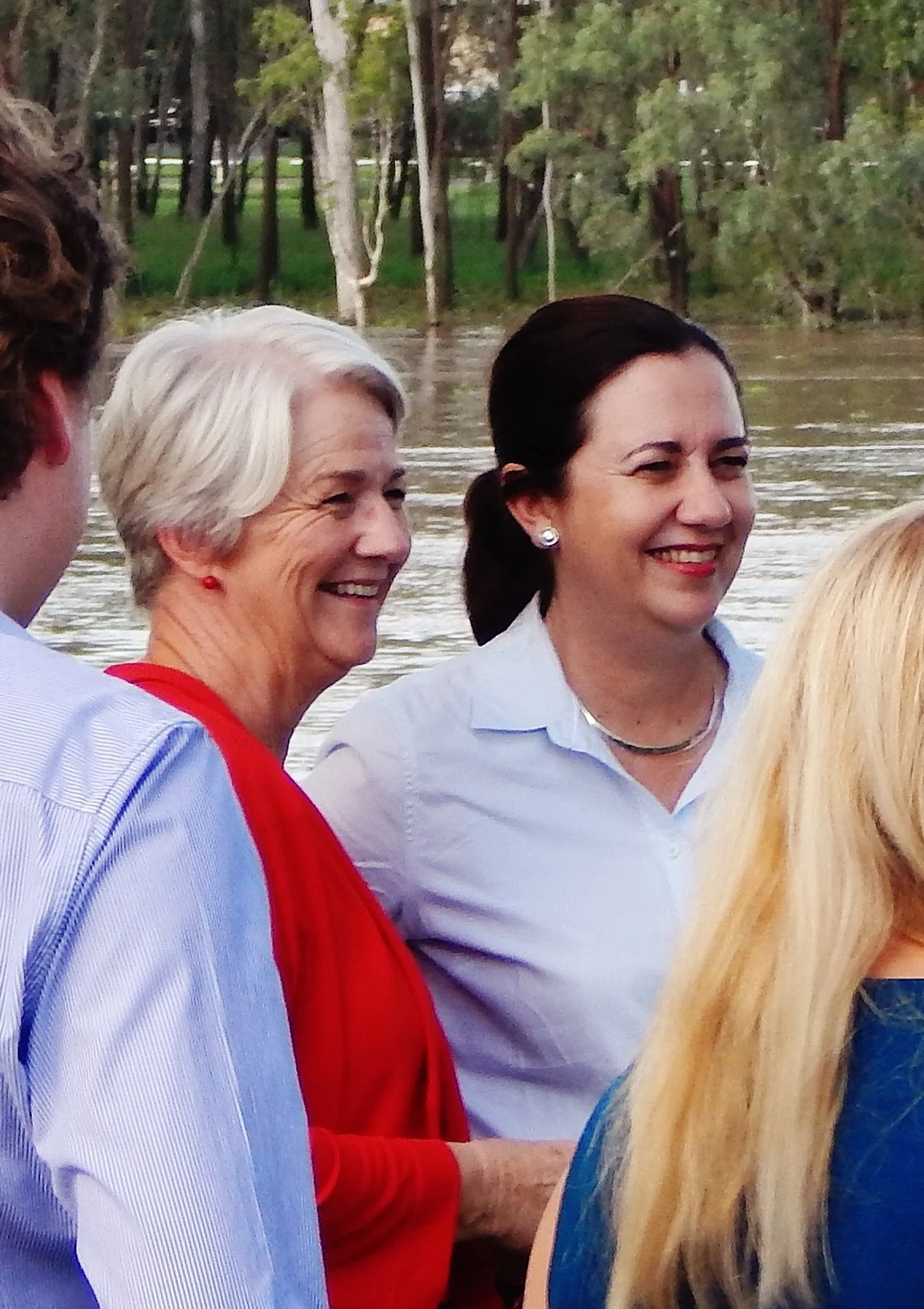
- 11. Dale Gillard / FlickrLinda Burney MP, Joseph Majambere, Allison Porter: full original photograph, CC BY 2.0