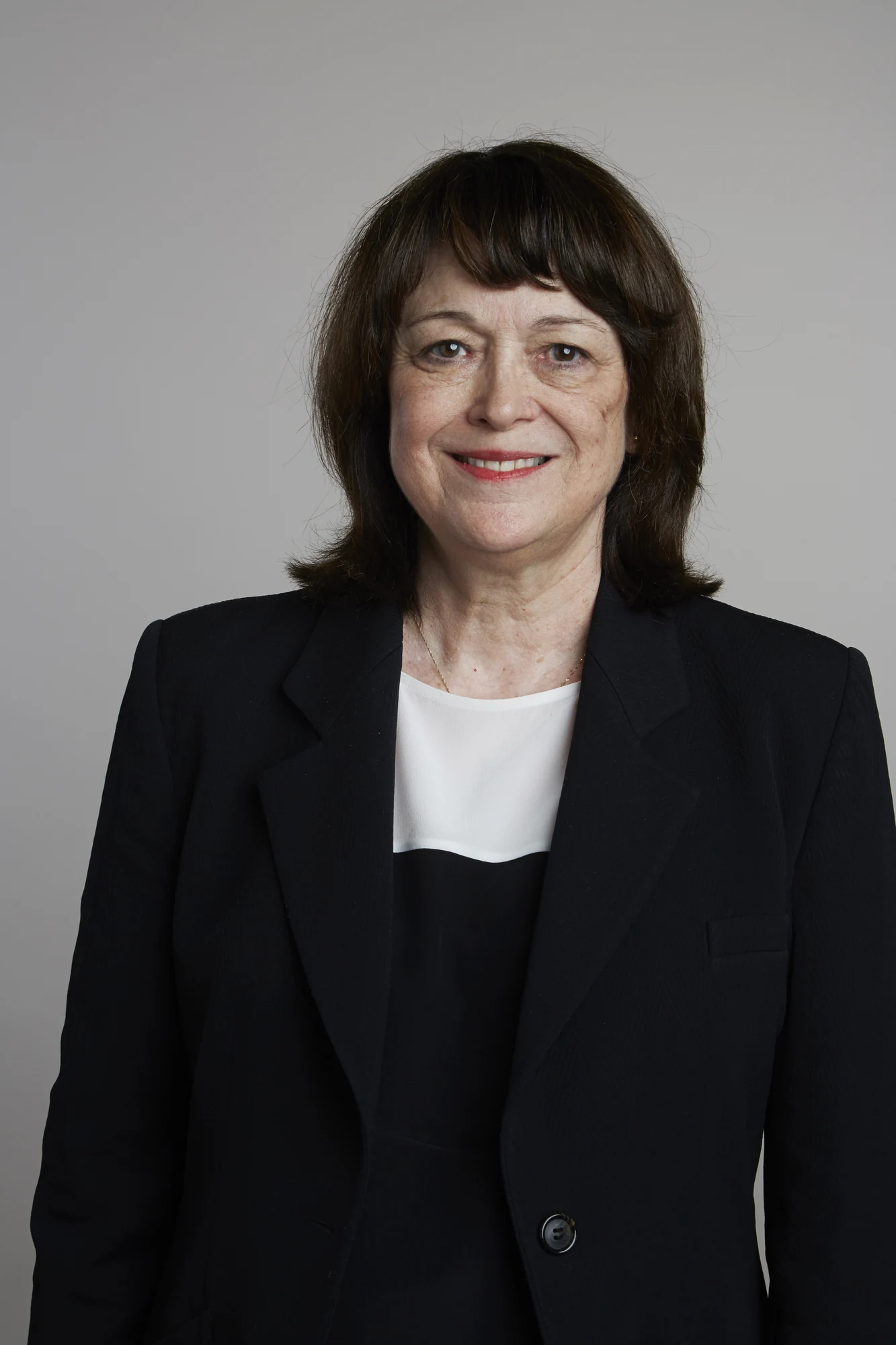
In this biography
Quick facts
- Born
- 1947
- Birthplace
- Seattle, Washington, United States
- Country
- United States
- Nationality
- Not independently established
- Known for
- Odorant receptors and olfactory organization
Why this life matters
Her work with Richard Axel identified a large candidate receptor family and opened a way to map olfactory input.
Timeline
Key moments
Receptor-family paper
Buck and Axel publish their candidate family in Cell.
Nobel Prize
Buck and Axel share the award.
Molecular training and a sensory question
Buck grew up in Seattle, studied at the University of Washington and trained in immunology at the University of Texas Southwestern Medical Center. At Columbia she continued in immunology before moving into neuroscience. Techniques for finding a family of related genes became useful to a sensory question: how could the nose contain receptors able to begin distinguishing a very large range of odors?
A search organized by predictions
In her Nobel lecture, Buck recalls starting with predictions about where the candidate genes would be active, what broad protein family they might resemble, and why several related members might be needed. A search designed around a family could find evidence even before a particular molecule could be paired with the receptor that responded to it. The resulting comparison was between related sequences and the tissue where the genes were expressed.
The 1991 paper and what followed
Buck and Richard Axel reported a large family of candidate odorant receptors in Cell in 1991. The title described what the family might encode, reflecting the distinction between molecular evidence and tests of how individual receptors respond. Buck’s later research, including work at Harvard, followed receptor expression and the organization of signals beyond the sensory cells. She later worked at Fred Hutch in Seattle.
From a gene catalogue to a sensory system
Buck and Axel shared the 2004 Nobel Prize in Physiology or Medicine for discoveries about odorant receptors and the organization of smell. One strand of the work explains how candidate receptors became accessible to genetic study. Another asks where cells expressing those receptors send their signals. Reading the initial paper and the later lecture together shows why an identified gene family was the starting point for tracing a system.
Quick answers
Frequently asked questions about Linda Buck
- Who coauthored the 1991 odorant-receptor paper?
- Linda Buck and Richard Axel were the two authors.
Keep exploring
Lives connected to this story
- Paul Nurse
Read another discovery where a candidate gene opened further experiments.
- Ralph Steinman
Compare how scientists distinguish cell identity from a proposed function.
- Richard Axel
Add a contextual research comparison where the existing article discusses olfactory sensory maps.
- David Julius
Add a contextual research comparison where the existing article discusses heat sensation.
Sources and further reading
Explore the evidence
These references support the biography and offer further reading. Official records, first-person accounts and independent reporting provide different perspectives; image records document attribution and licensing.
- 1. Buck Laboratory, Fred Hutch Cancer CenterLinda Buck: Education and Experience
- 2. Linda B. Buck and Richard Axel, Cell, 1991A novel multigene family may encode odorant receptors
Use the original publication title and abstract to distinguish candidate-family evidence from later functional work.
- 3. Linda B. Buck, Nobel lecture, 2004Unraveling the Sense of Smell
- 4. Nobel Prize OutreachLinda B. Buck: Facts