In this biography
Quick facts
- Born
- 8 October 1864
- Died
- 3 May 1936
- Birthplace
- Kyoto, Japan
- Country
- Japan
- Nationality
- Not independently established
- Known for
- Identifying glutamate’s role in umami and developing a seasoning process
- Education
- Chemistry graduate, 1889
- Professorship
- Tokyo Imperial University, 1901–1923
- Patent
- Japanese patent No. 14805, 1908
- Paper
- New Seasonings, Tokyo Chemical Society Journal, 1909
Why this life matters
His achievement connected an already familiar food experience to a chemical investigation, a named taste category and a practical manufacturing project.
Timeline
Key moments
Born in Kyoto
Born on 8 October in the Gregorian date used by the National Diet Library.
Chemistry graduation
Completed chemistry studies at the university in Tokyo.
European study
Studied physical chemistry with Wilhelm Ostwald and spent time in Britain.
Tokyo professorship
Began the professorship dated 1901–1923 by the university library.
Kombu investigation
Investigated the broth’s taste and developed a glutamate seasoning process.
Paper and product
Published New Seasonings; the Suzuki enterprise marketed Ajinomoto.
RIKEN’s establishment
Participated in the establishment of the research institute.
Death
Died on 3 May.
A chemist before the famous seasoning
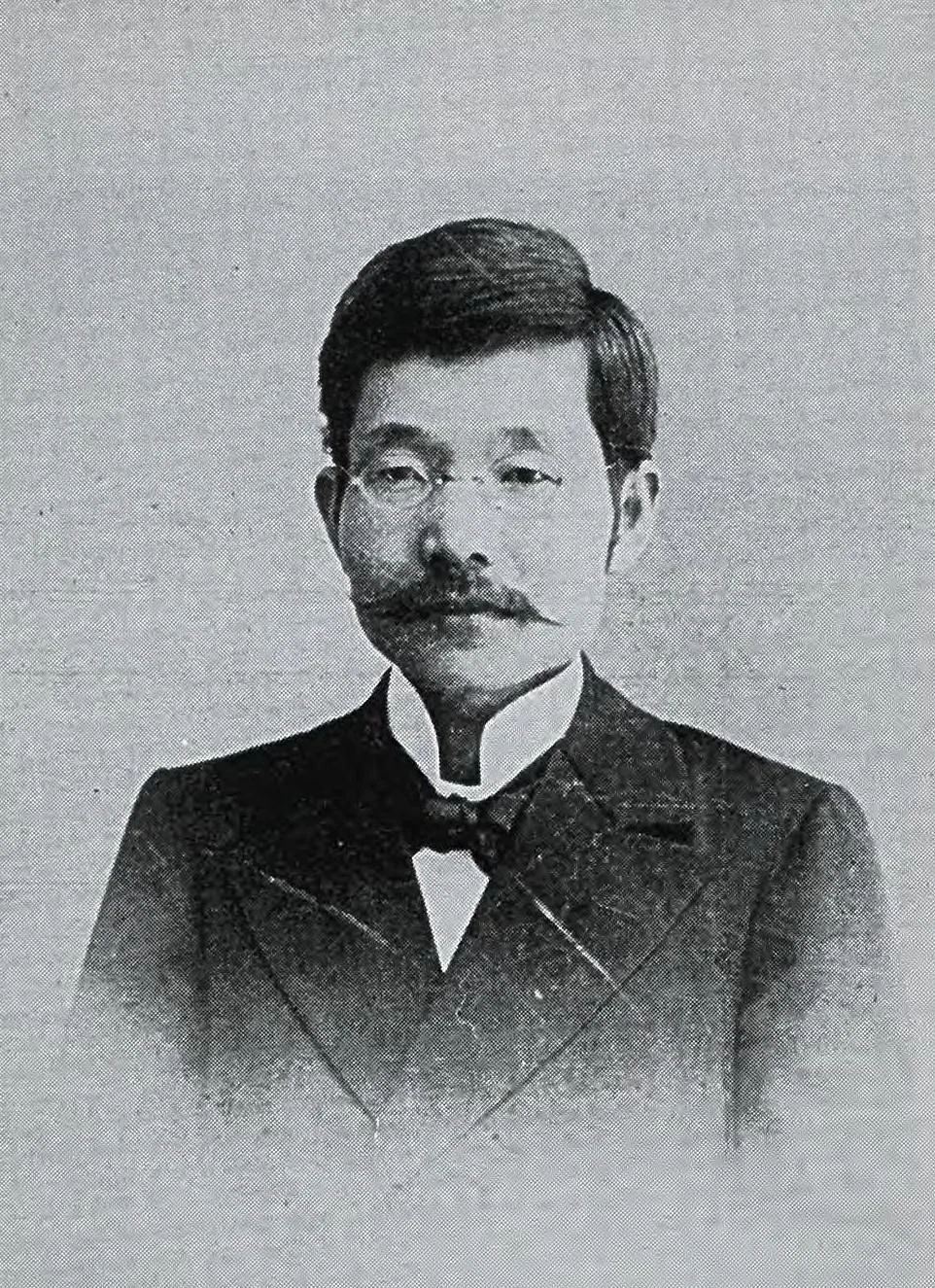
Ikeda was born in Kyoto in 1864 and graduated in chemistry in 1889. Teaching and university appointments preceded his widely remembered kombu research. Between 1899 and 1901 he studied physical chemistry with Wilhelm Ostwald in Leipzig, then spent time in Britain. The National Diet Library records his friendship with Natsume Sōseki, formed during the London period. Tokyo’s university library dates his professorship from 1901 to 1923. This background matters because his later taste investigation was not simply a cook’s lucky discovery: it drew on a scientific career concerned with properties, composition and ways to connect theoretical chemistry with practical problems.
An everyday taste became a research problem
Broths and foods with what would later be called umami were familiar long before Ikeda’s experiments. His question was what chemical component helped account for a taste he considered distinct from the four conventional categories. Retrospective accounts often begin with kombu purchased by his wife, Tei. The National Diet Library traces that story to Ikeda’s own later recollection and discusses uncertainty around parts of the familiar discovery narrative. The account is useful evidence of how he explained his motivation, but not a reason to present every remembered detail as a contemporaneous laboratory entry. The library also names assistant Kurihara among those who worked with him.
Isolation and comparison did different jobs
The original 1909 paper describes obtaining a substance from kombu, identifying it as glutamic acid and examining the properties and tastes of its salts. A chemical identification and a sensory judgment are related but different pieces of evidence. Identifying an acid does not mean every solution containing it has the same taste or suitability as a seasoning. The paper discusses how neutralisation and the accompanying ion affect the result. Its observations supported a research argument about a previously poorly classified taste, not a complete modern account of receptors, nutrition or every savoury food. Reading those distinctions gives more information than treating “umami,” “glutamate” and a branded product as interchangeable names.
The patent and the people who made a product
Ikeda’s process was patented in 1908 as Japanese patent No. 14805. The Japan Patent Office identifies the invention as the industrial preparation of a glutamate seasoning and credits Saburosuke Suzuki with its commercialisation. Accounts of the project distinguish the scientist’s identification and process from the enterprise needed to manufacture, package and sell a product. Ajinomoto entered the market in 1909. The business relationship did not turn Ikeda into the sole worker behind every subsequent production method, and the product’s later success does not retrospectively establish every health-related hope expressed at its beginning. A patent records an invention claim; a taste experiment answers another kind of question.
Publication made the reasoning inspectable
New Seasonings appeared in volume 30 of the Tokyo Chemical Society’s journal, on pages 820–836 in 1909. The surviving scan includes discussion of chemistry, sensory comparison and reciprocal concentration values. On printed page 828, for example, the reported threshold comparison puts sodium glutamate at one part in three thousand. That is a historical observation in the paper’s setting, not a universal threshold for every observer and food. An English translation was published much later; the original Japanese paper and later retelling should not be confused. The related guide works through selected original pages and the kinds of conclusion each observation can support.
A broader scientific life
Ikeda also worked on physical-chemical and industrial problems beyond seasoning and participated in RIKEN’s establishment in 1917. He died on 3 May 1936. His scientific legacy is strongest when it keeps the familiar taste, isolated material, experimental comparison, patent and manufacturing organisation distinct. These connections explain how research travels into ordinary life without requiring a lone-inventor story. They also leave room for assistants, entrepreneurs, earlier food knowledge and later scientists whose work addressed questions the 1909 investigation could not yet answer.
Quick answers
Frequently asked questions about Kikunae Ikeda
- Did Ikeda invent the taste of umami?
- People already knew the savoury character of foods such as kombu broth. He investigated its chemical basis and named a scientific taste category.
- Was Ajinomoto produced by Ikeda alone?
- No. The 1908 process and subsequent commercialisation involved a manufacturing partnership with the Suzuki enterprise and other workers.
Keep exploring
Lives connected to this story
- Natsume Sōseki
Read the writer with whom Ikeda formed a documented friendship during his time in London.
- Shinya Yamanaka
Compare a much later Japanese researcher’s different route from an experimental finding to applied-research institutions.
- Satoshi Ōmura
Compare a later natural-products programme linking microbial screening, chemical analysis and international collaboration.
Sources and further reading
Explore the evidence
These references support the biography and offer further reading. Official records, first-person accounts and independent reporting provide different perspectives; image records document attribution and licensing.
- 1. National Diet Library, JapanIkeda Kikunae: Portraits of Modern Japanese Historical Figures
- 2. National Diet Library, JapanThe discovery of umami: Books Kaleidoscope, chapter 3
The library distinguishes later autobiographical motivation from a straightforward discovery legend and notes a problem identifying a cited historical medical article. The biographical account retains this distinction.
- 3. University of Tokyo Library SystemKikunae Ikeda: His Life and Achievements, 2022 library exhibition
- 4. Kikunae Ikeda; Chemical Society of Japan / J-STAGENew Seasonings, Tokyo Chemical Society Journal 30(8), 820–836, 1909
The actual 17-page original scan was acquired. Printed pages 820–821 and 826–828 were visually inspected; garbled extracted text is not used as a reliable transcription. No complete translation or modern sensory replication is claimed.
- 5. Umami Information CenterKikunae Ikeda: the discoverer of umami
- 6. Japan Patent OfficeKikunae Ikeda: Sodium Glutamate, ten Japanese inventors
The Patent Office’s indexed invention account was read; direct page and brochure downloads were blocked. Its dates and role distinction are corroborated by the library and institutional history, without claiming inspection of the original patent file.