In this biography
Quick facts
- Born
- 26 August 1918
- Died
- 24 February 2020
- Birthplace
- White Sulphur Springs, West Virginia, United States
- Country
- United States
- Nationality
- Not independently established
- Known for
- Flight research, orbital calculations and verification for early US spaceflight
- Earned degree
- BS, Mathematics and French, West Virginia State College, 1937
- NACA entry
- June 1953
- Technical paper
- Coauthor with T. H. Skopinski, NASA TN D-233, 1960
- Retirement
- 1986
Why this life matters
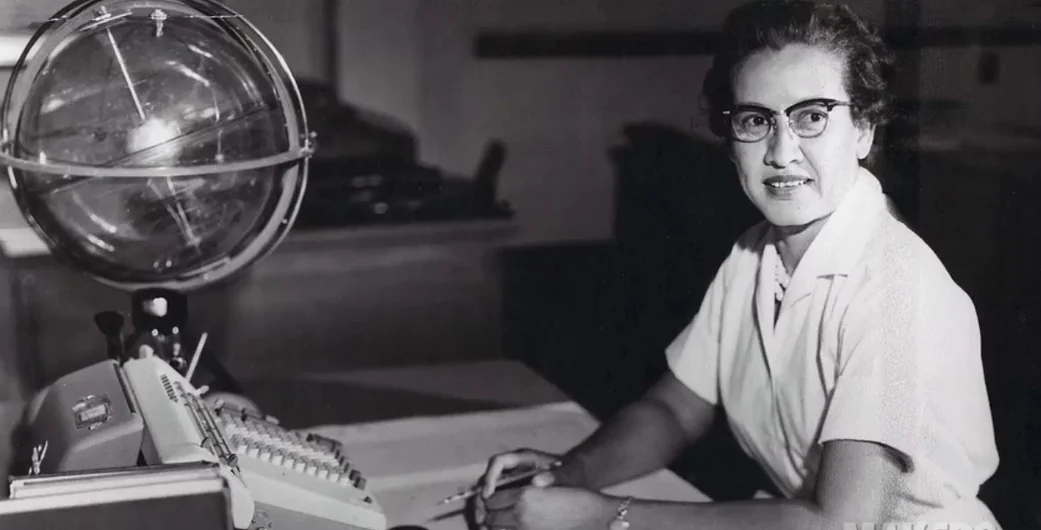
Katherine Johnson applied mathematics to flight research and space trajectories at Langley. Her career joined calculation, verification and published technical work within engineering teams, while challenging the racial and gender barriers around that work.
Timeline
Key moments
Birth in West Virginia
Born on 26 August.
College graduation
Completed her degree at West Virginia State College.
Graduate study
Entered, then left, the graduate mathematics programme at West Virginia University.
Langley employment
Joined NACA and soon moved into flight-research work.
Orbital technical note
Published TN D-233 with Skopinski.
Mercury work
Worked on Shepard’s trajectory and checked calculations for Glenn’s orbital mission.
Retirement
Completed 33 years at Langley.
Death
Died on 24 February, aged 101.
An education beyond the opportunities locally available
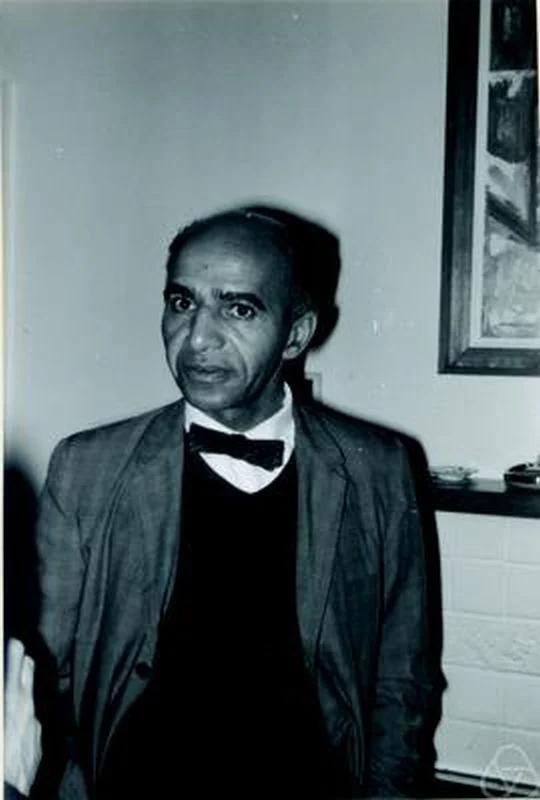
Katherine Coleman was born in White Sulphur Springs, West Virginia, on 26 August 1918. Her family arranged for her to continue school at Institute, where she attended the high school associated with West Virginia State College. At college she found a mentor in mathematician W. W. Schieffelin Claytor. She graduated in 1937 with a degree in mathematics and French and began teaching.
In 1939 she was among the Black students selected to enter West Virginia University’s graduate programmes as the state began integrating them. She left after the first session to start a family. That period of graduate study was not a completed doctorate; later honorary degrees and public honours should remain separate from the qualifications she earned as a student.
From West Computing to flight research
Johnson joined the National Advisory Committee for Aeronautics at Langley in June 1953. Dorothy Vaughan assigned her from West Area Computing to work with the Maneuver Loads Branch of the Flight Research Division. The temporary assignment became permanent. Before the space programme, she analysed flight-test data, including work connected to wake turbulence.
The institutional setting matters. Human computers worked with instruments, calculating machines, data and engineers, rather than supplying effortless answers from memory. Segregation restricted facilities and opportunities, and Johnson pressed to understand the reasoning behind assignments and to take part in research discussions. Her later recollections describe both her pleasure in mathematics and the team setting in which it became useful.
What the 1960 technical paper actually examined
T. H. Skopinski and Katherine G. Johnson coauthored NASA Technical Note D-233, published in September 1960. It examined the burnout azimuth needed for an orbit to pass over a selected position on the rotating Earth after a specified number of revolutions. The paper begins with a simplified orbital model, then includes corrections for Earth’s oblateness and compares example results with an electronic calculation.
The author list and the report itself give concrete evidence of her research contribution. They do not make the note a complete design of a spacecraft or a record of an actual Moon landing. An early spaceflight calculation required carefully stated initial conditions, a model and a way to check the result. The linked study guide explains those distinctions using the original report and a small teaching exercise.
Mercury, later work and public recognition
Johnson calculated the trajectory for Alan Shepard’s 1961 Freedom 7 mission and checked the electronic calculations prepared for John Glenn’s 1962 Friendship 7 flight. These were different tasks for a suborbital mission and an orbital mission. Her career continued through Apollo-related work and later programmes until retirement in 1986. No single calculation replaced the work of the flight, engineering and operations teams.
She received the Presidential Medal of Freedom in 2015. Congress authorised gold medals honouring her and other women in 2019; the Mint records the later 2024 presentation of the medals. Authorisation and presentation should not be collapsed into the same date. Johnson died on 24 February 2020. NASA’s statement and her first-person recollections preserve a legacy in calculation and opportunity, while the technical publications allow a reader to examine something more specific than an inspirational slogan.
Quick answers
Frequently asked questions about Katherine Johnson
- What did Katherine Johnson calculate?
- Her work included flight-test analysis, orbital research, a trajectory for Shepard’s 1961 mission and checks on electronic calculations for Glenn’s 1962 orbit.
- Who coauthored her 1960 orbital report?
- T. H. Skopinski and Katherine G. Johnson are the named authors of NASA Technical Note D-233.
- Did she work alone on US spaceflight?
- No. Her mathematics was part of research, engineering and operations carried out by many people. Her own recollections explicitly acknowledge that collective work.
Keep exploring
Lives connected to this story
- Dorothy Vaughan
Read the computing supervisor whose West Area group Johnson initially joined.
Sources and further reading
Explore the evidence
These references support the biography and offer further reading. Official records, first-person accounts and independent reporting provide different perspectives; image records document attribution and licensing.
- 1. NASAMargot Lee Shetterly: Katherine Johnson biography
The 1939 graduate-study date is used; a separate 2022 NASA news release misprints it as 1929. No graduate degree is invented.
- 2. NASA ScienceKatherine Johnson: life and first-person recollections
- 3. NASA Langley Research CenterDetermination of Azimuth Angle at Burnout, NASA TN D-233
The report, including the example comparison and printed pages 13–14, was inspected. An OCR misreading of the internal 1959 date as 1999 was checked against the scan.
- 4. NASA Technical Reports ServerTechnical-note catalogue record
- 5. NASAStatement on Johnson’s death, 24 February 2020
- 6. United States Congress / GovInfoHidden Figures Congressional Gold Medal Act, 2019
2019 is the enacted authorisation date. The Mint’s 2024 presentation is a separate later event.
- 7. United States MintHidden Figures medals and 2024 recognition