In this biography
Quick facts
- Born
- 21 August 1934
- Birthplace
- Denver, CO, USA
- Country
- United States
- Nationality
- Not independently established
- Known for
- Developing precision laser methods and optical frequency-comb measurements
Why this life matters
Developing precision laser methods and optical frequency-comb measurements
Timeline
Key moments
Birth
John L. Hall was born in Denver, CO, USA.
Microwave–optical link
Coauthored a direct frequency link using a femtosecond laser comb.
Nobel recognition
Received Nobel recognition for the work described in the official award record.
Denver to experimental physics
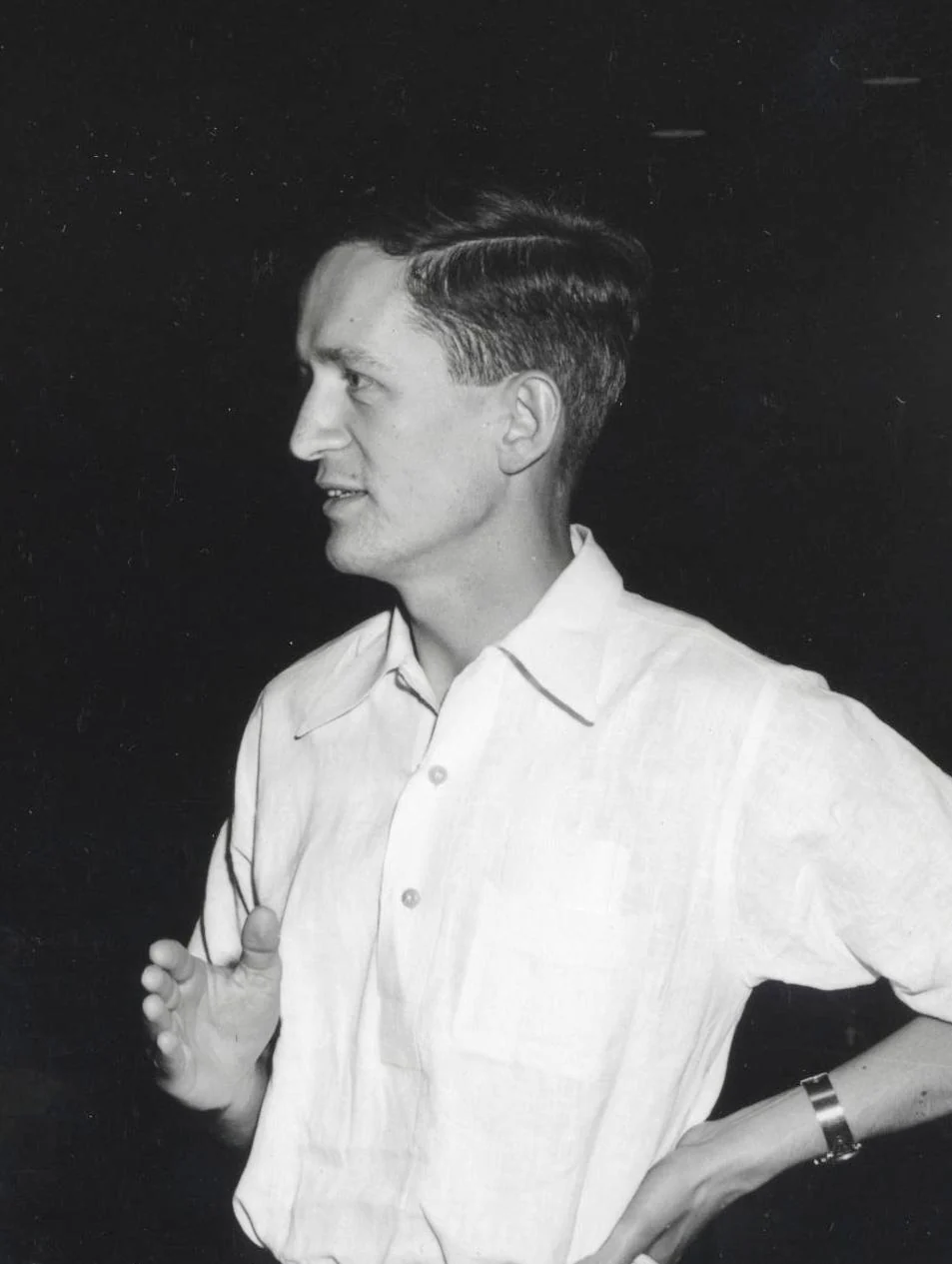
John Lewis Hall, widely known as Jan Hall, was born in Denver in 1934. His interests in electricity and radio developed alongside encouragement from his parents. At the Carnegie Institute of Technology he earned physics degrees in 1956, 1958 and 1961. His doctoral work with Robert Schumacher used a microwave spin-resonance instrument he built himself to investigate hydrogen in crystals. The combination of instrument construction and accurate spectral measurement became characteristic of his later research.
A long programme at JILA
After a National Research Council fellowship at the National Bureau of Standards, Hall joined the new Boulder research group that became JILA in 1962. His work involved stabilising lasers and using them as precise tools for spectroscopy. The institutional setting connected university research with national measurement standards. Rather than treating a laser as merely a bright source, this programme asked how reliably its frequency could be controlled, compared and connected with an independently defined reference. Such questions required sustained improvements in several experimental techniques.
Combining technologies into a frequency link
The optical frequency-comb work brought ultrafast lasers, broad spectra, nonlinear optical effects and precision stabilisation together. A 2000 paper involving Hall, Scott Diddams, David Jones, Jun Ye and other collaborators demonstrated a direct microwave–optical frequency link. Another paper by Ye, Hall and Diddams described precise control across an ultrawide-bandwidth comb. Hall’s lecture emphasises the synthesis of previously distinct technical programmes. The achievement therefore should not be compressed into one person independently inventing every component.
Recognition for precision spectroscopy
Hall shared part of the 2005 Nobel Prize in Physics with Theodor Hänsch for precision spectroscopy, including the optical frequency-comb technique. Roy Glauber received the other half for quantum optical coherence theory. Hall’s contribution made frequency relationships experimentally accessible across a very large range. It also illustrates a distinction between regular spacing and absolute calibration: knowing that marks form a comb is different from knowing exactly where that comb sits on a frequency scale. His research connected those requirements through controlled measurement.
Quick answers
Frequently asked questions about John L. Hall
- Is John L. Hall the armory inventor John H. Hall?
- No. This profile concerns the physicist born in Denver in 1934, associated with JILA and laser spectroscopy.
- What is Jan Hall’s formal name?
- John Lewis Hall; Jan is the familiar name used in his official biography.
Keep exploring
Lives connected to this story
- Arthur Schawlow
Compare precision laser measurement with earlier laser and spectroscopy research.
Sources and further reading
Explore the evidence
These references support the biography and offer further reading. Official records, first-person accounts and independent reporting provide different perspectives; image records document attribution and licensing.
- 1. Physical Review Letters, 2000Direct Link between Microwave and Optical Frequencies with a300 THz Femtosecond Laser Comb
- 2. Ye, Hall and Diddams, Optics Letters, 2000Precision phase control of an ultrawide-bandwidth femtosecond laser: a network of ultrastable frequency marks across the visible spectrum
- 3. Nobel Prize OutreachJohn L. Hall — Nobel lecture
- 4. Nobel Prize OutreachJohn L. Hall — Facts
- 5. Nobel Prize OutreachJohn L. Hall — Biographical