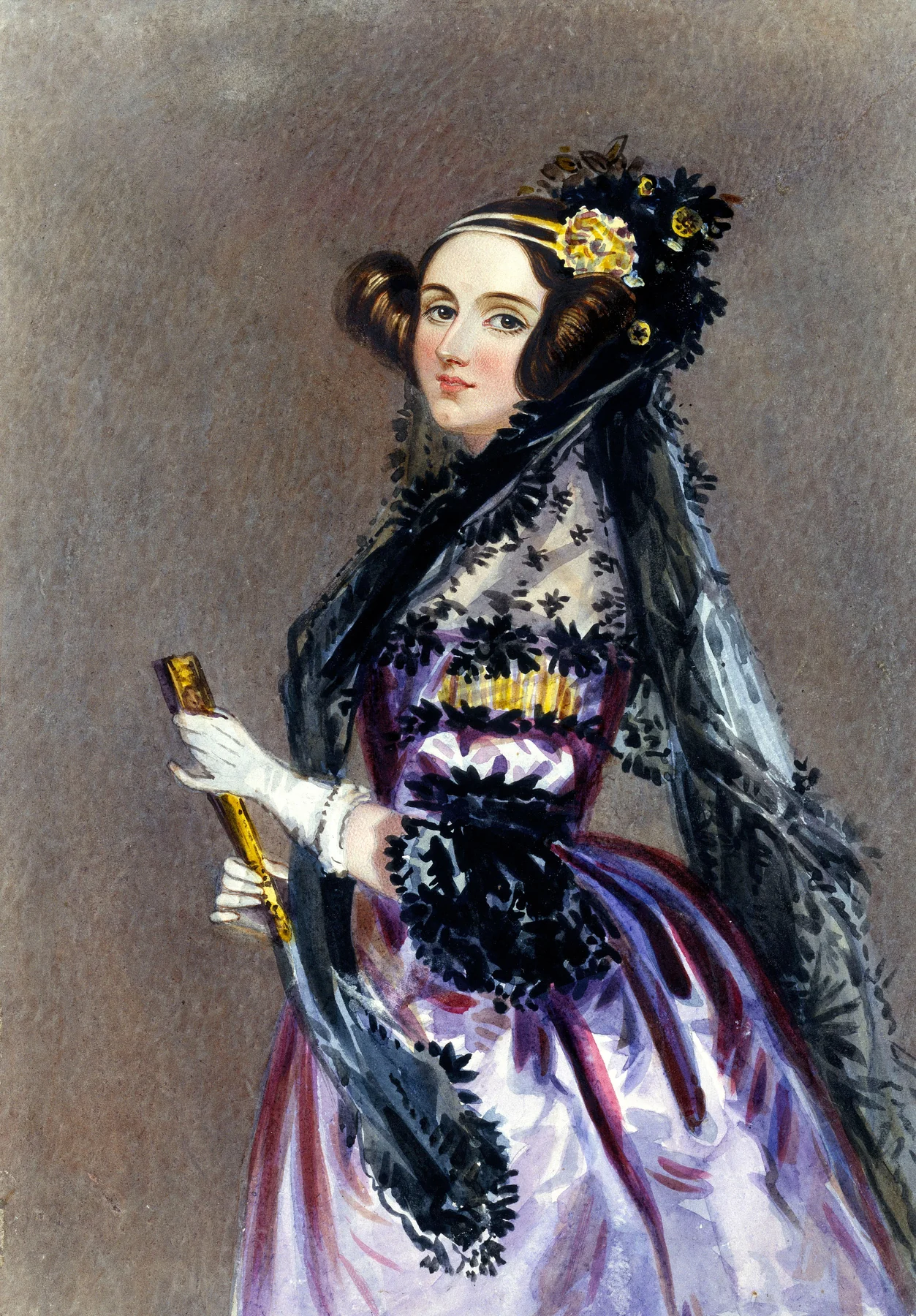
In this biography
Quick facts
- Born
- 4 January 1643
- Died
- 31 March 1727
- Birthplace
- Woolsthorpe, Lincolnshire, England
- Country
- United Kingdom
- Nationality
- Not independently established
- Known for
- Principia, optics and the Royal Mint
- Research area
- Mathematician and natural philosopher
- Major work
- Principia, optics and the Royal Mint
Why this life matters
His mathematical treatment gave motion and gravitation a shared framework, while his optical experiments tested competing explanations. His later roles also reveal the relationship between scientific authority and institutional power.
Timeline
Key moments
Cambridge
Entered Trinity College.
Lucasian chair
Succeeded Isaac Barrow.
Light and colours
Published his experimental letter.
Principia
Published the work with Halley’s support.
Mint Warden
Began public administration in London.
Opticks
Published his major optical book.
A Cambridge career, with two calendars
Newton was born at Woolsthorpe on 25 December 1642 in England’s Julian calendar: 4 January 1643 Gregorian. The Gregorian date is used here. His father died before his birth; after his mother remarried, his grandmother cared for him. He entered Trinity College, Cambridge, in 1661 and became Lucasian Professor of Mathematics in 1669.
Plague interruptions sent him back to Woolsthorpe in 1665–1667, when he developed early work on mathematical series, fluxions and optics. These years were productive, but they did not contain a finished Principia. Newton’s account of universal gravitation took roughly two further decades to reach publication.
Sources for this section: [1]
Light, instruments and a published argument
His 1672 letter describes sunlight passing through a prism into a darkened room. An unexpectedly elongated spectrum led him to compare alternative explanations involving the glass, aperture and incident rays. A second prism tested selected portions of the first spectrum. The argument concerned different degrees of refraction within the incident light.
Newton also connected the problem to telescope design: shaping a lens could not, in his analysis, make differently refracted rays behave identically. This was a documented experimental argument, not simply a story about seeing a rainbow. Opticks, published in 1704, developed his optical programme further.
Principia, collaborators and authority
Edmond Halley’s encouragement and financial support helped bring the Principia to print in 1687. Its treatment of motion, fluids and gravitation made Newton internationally prominent. His exchanges with Robert Hooke and astronomer John Flamsteed were also part of the work’s development, even when relations became strained.
Newton’s rivalry with Gottfried Wilhelm Leibniz over calculus later involved institutional power. As Royal Society president, Newton shaped the committee’s inquiry and its report. Mathematical priority and a fair assessment of independent work are different questions; his authority did not make him an impartial adjudicator.
Sources for this section: [1]
Coins and a wider intellectual life
Appointed Warden of the Royal Mint in 1696, Newton worked through the Great Recoinage and investigated counterfeiting. His Mastership took effect on Christmas Day 1699 in the English calendar. The Mint Museum credits his sustained attention to accuracy while rejecting the stronger claim that he comprehensively reorganised the institution.
Newton’s surviving papers also document alchemy, biblical chronology and unorthodox theology. Those interests complicate the familiar image of an exclusively modern mathematical scientist. He died on 20 March 1727 Julian, 31 March Gregorian, after a career that joined experimental inquiry, scholarly controversy and public administration.
Quick answers
Frequently asked questions about Isaac Newton
- What is Isaac Newton known for?
- Isaac Newton developed mathematical accounts of motion and gravitation, investigated light and colour, and later administered England’s coinage.
- Why do the dates and records matter?
- Birth and death use Gregorian equivalents; the English dates were 25 December 1642 and 20 March 1727. The Mastership began 25 December 1699 Julian.
Keep exploring
Lives connected to this story
- Michael Faraday
Compare optical experimentation with a later programme in electricity.
- James Clerk Maxwell
Follow a different mathematical account of light and fields.
Sources and further reading
Explore the evidence
These references support the biography and offer further reading. Official records, first-person accounts and independent reporting provide different perspectives; image records document attribution and licensing.
- 1. Newton Project, University of OxfordNewton’s life and work at a glance
Birth and death use Gregorian equivalents; the English dates were 25 December 1642 and 20 March 1727. The Mastership began 25 December 1699 Julian.
- 2. Isaac Newton; Newton ProjectA new theory about light and colours (1672): normalised original letter
The 1672 published letter is evidence for Newton’s reported experiments and interpretation; no experiment was independently repeated here.
- 3. Royal Mint MuseumIsaac Newton: Warden and Master of the Royal Mint