In this biography
Quick facts
- Born
- 1906
- Died
- 15 March 1993
- Birthplace
- Probably Zhejiang, China
- Country
- Singapore
- Nationality
- Singaporean
- Known for
- Developing a modern painting practice across China, Europe and Southeast Asia and teaching a generation of Singapore artists
- Chinese name
- Zhang Liying
- Primary medium
- Oil painting
- Teaching institution
- Nanyang Academy of Fine Arts
- National honour
- Cultural Medallion, 1982
Why this life matters
Chen’s transnational life complicates a purely national art history while her teaching and mature work place her firmly in Singapore’s cultural canon.
Timeline
Key moments
Studied in New York and Paris
Attended the Art Students League in New York, then the Académie Colarossi and Académie Biloul in Paris.
Exhibited in Paris
Had work accepted at the Salon d’Automne; published accounts disagree on the number of accepted paintings.
Lost Eugene Chen
Her first husband died in Hong Kong during the Second World War.
Moved to Penang
Returned to Southeast Asia and taught art at a Chinese high school before settling in Singapore.
Settled in Singapore
Made the city her permanent base after years in China, Europe and Malaya.
Joined NAFA
Began teaching at the Nanyang Academy of Fine Arts.
Received the Cultural Medallion
Was honoured for her contribution to visual art in Singapore.
National Museum exhibition
A Singapore solo exhibition presented 172 of her works.
A disputed birthplace and an international education
Georgette Chen was born Zhang Liying, probably in Zhejiang, China, in 1906. Those details need qualification: the National Gallery Singapore archive notes that her birth certificate has not been found and that her passports, marriage certificate and teacher-registration form disagree about her birth year or place. The 1906 Zhejiang account rests chiefly on her marriage certificate, while the documents also show how Chen presented a cosmopolitan identity at different moments.
Her childhood took her between China, France and the United States. She attended the Art Students League in New York in 1926, then studied at the Académie Colarossi and Académie Biloul in Paris. Her paintings entered the Paris Salon d’Automne in 1930, an important early public recognition. The Esplanade profile counts two accepted works, whereas a National Library Board account says one; the fact of participation is firmer than the precise count.
War, displacement and a return to Southeast Asia
Chen married the diplomat and political figure Eugene Chen in 1930. His work and the upheavals in China took the couple from Paris to Shanghai, back to Europe and later to Hong Kong. They were placed under house arrest by Japanese forces in Hong Kong in 1944, and Eugene died that May. This disrupted life did not end her painting career: she had exhibited in several cities and continued to build a body of portraits, landscapes and still lifes.
She married Ho Yung Chi in 1947 and returned to Asia with him, moving to Penang in 1951. There she taught art at a Chinese high school and made visits to Singapore. After that marriage ended, she moved to Singapore in 1953. The move was more than a change of address: it gave her lasting subjects, colleagues and students, and became the setting for the mature work with which Singapore audiences most often associate her.
Painting Singapore without losing a wider view
In Singapore, Chen painted local people, riverside scenes and tropical produce, including rambutans. Her training in European oil painting remained visible in the work, but she chose subjects from her daily surroundings rather than treating Southeast Asia as a decorative backdrop. The National Gallery archive preserves letters in which she described plans for a satay-seller composition and painting along the Singapore River, providing direct evidence of how she observed the city.
Chen is often grouped with the pioneers of Nanyang art. That label helps place her among artists who developed modern painting in the region, yet her Paris, New York, China and Penang years resist a single national or stylistic story. Her paintings can be read both as records of a changing Singapore and as the work of an artist who carried techniques and relationships across several art worlds.
NAFA, recognition and the works she left behind
From 1954 to 1980, Chen taught part-time at the Nanyang Academy of Fine Arts. The National Gallery identifies later artists among her students, and Esplanade records how contemporaries remembered her careful, demanding approach. Teaching was not an interruption to painting: the two ran together for more than a quarter-century, and her classroom work became part of her influence on Singapore’s visual culture.
Singapore awarded her the Cultural Medallion in 1982. A 1985 solo exhibition at the National Museum Art Gallery assembled 172 works, giving audiences a broader view of a career often reduced to a handful of familiar still lifes. Chen died on 15 March 1993; 53 works from her estate were donated to the Singapore Art Museum the following year. The exhibitions, archives and collections that followed make it possible to study her as an international modern artist as well as a Singapore pioneer.
Quick answers
Frequently asked questions about Georgette Chen
- What is Georgette Chen known for?
- She is known for oil portraits, still lifes and Southeast Asian subjects, her contribution to Singapore’s Nanyang art, and her work as an art educator.
- Where and when was Georgette Chen born?
- Her birth certificate has not been found, and archival records conflict. Her marriage certificate supports October 1906 in Zhejiang, while passports and a teaching form give different details. This biography retains a qualified 1906 China account rather than an exact, certain birthplace.
- When did Georgette Chen teach at NAFA?
- She taught part-time at the Nanyang Academy of Fine Arts from 1954 to 1980. Her teaching career was distinct from her earlier art education in Paris.
- Did Georgette Chen receive the Cultural Medallion?
- Yes. Singapore awarded her the Cultural Medallion for visual art in 1982, recognising her artistic contribution.
Keep exploring
Lives connected to this story
- Amanda Heng
Compare a later Singapore artist whose participatory performances and conversations use different approaches to everyday experience.
- Lat
Another Southeast Asian artist whose work reflects a changing society through local subjects.
- Dick Lee
A later Singapore Cultural Medallion recipient working across popular music and theatre.
- Anthony Chen
A later generation of Singapore cultural storytelling through film.
- Liu Thai Ker
Compare artistic practice with support for cultural institutions.
Sources and further reading
Explore the evidence
These references support the biography and offer further reading. Official records, first-person accounts and independent reporting provide different perspectives; image records document attribution and licensing.
- 1. National Gallery SingaporeMajor exhibition on influential artist and educator Georgette Chen
- 2. National Gallery SingaporeThe World of Georgette Chen Archive
The gallery finds no birth certificate and documents conflicting birth claims; its curators consider China most likely, with the 1906 Zhejiang account supported by Chen’s marriage certificate.
- 3. Esplanade · TributeSGGeorgette Chen Liying
- 4. National Library Board · BiblioAsiaGeorgette Chen: Artist Extraordinaire
The National Library Board says one painting entered the 1930 Salon d’Automne, while Esplanade says two. The article states participation but does not present either count as settled.
- 5. National Heritage Board · RootsSelf-Portrait by Georgette Chen
- 6. Wikimedia CommonsLiangyou cover portrait — image and licence record
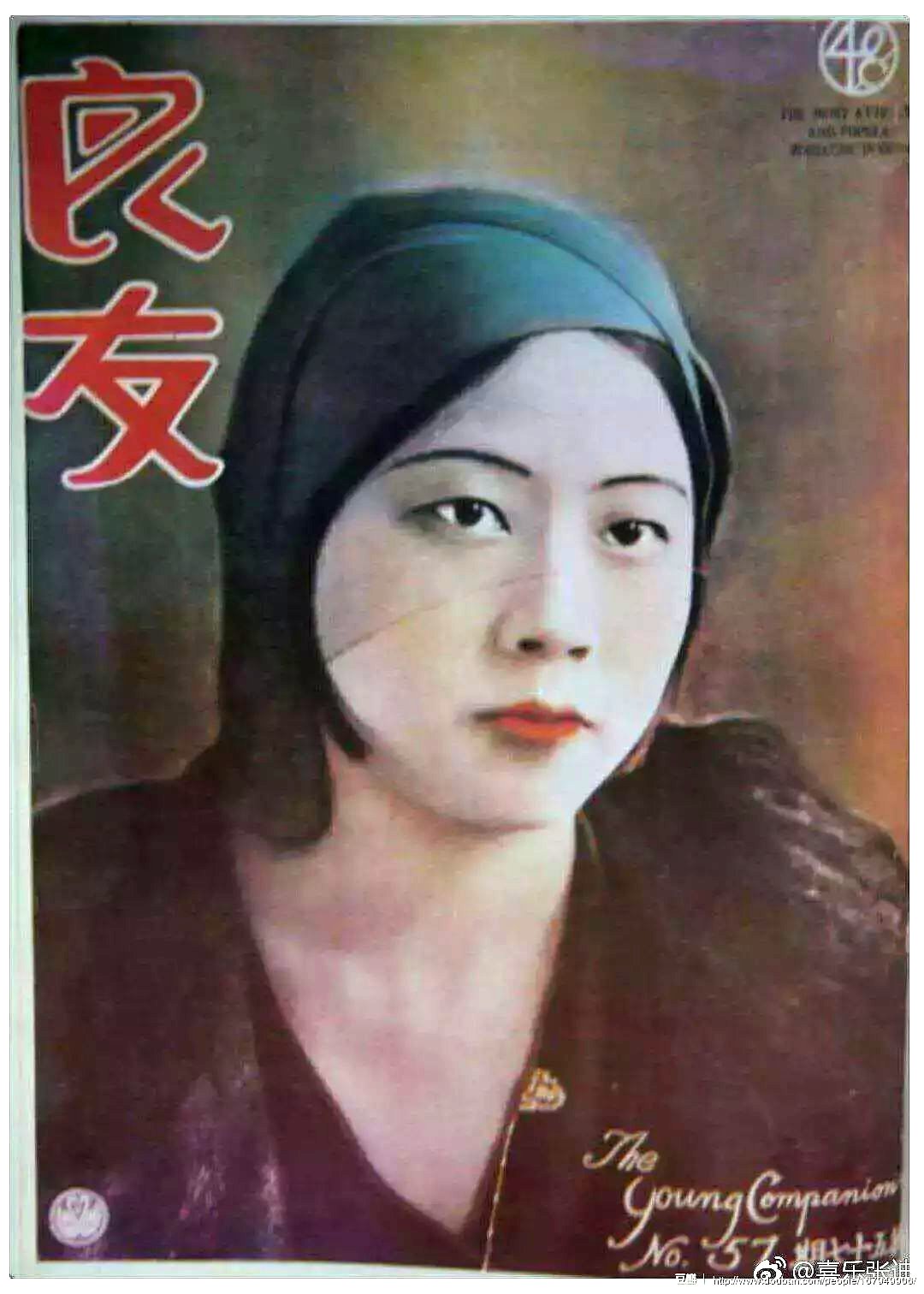
The image is a complete 1931 Liangyou magazine cover, not an isolated portrait photograph. Commons applies PD-China and PD-1996 labels, but its source is a later Douban reproduction and the original photographer is unnamed. The credit records those labels rather than independently guaranteeing rights in every jurisdiction.